By Mohammed Tafraouti
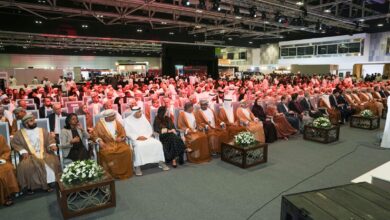
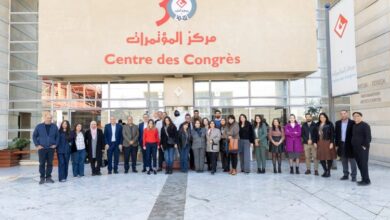
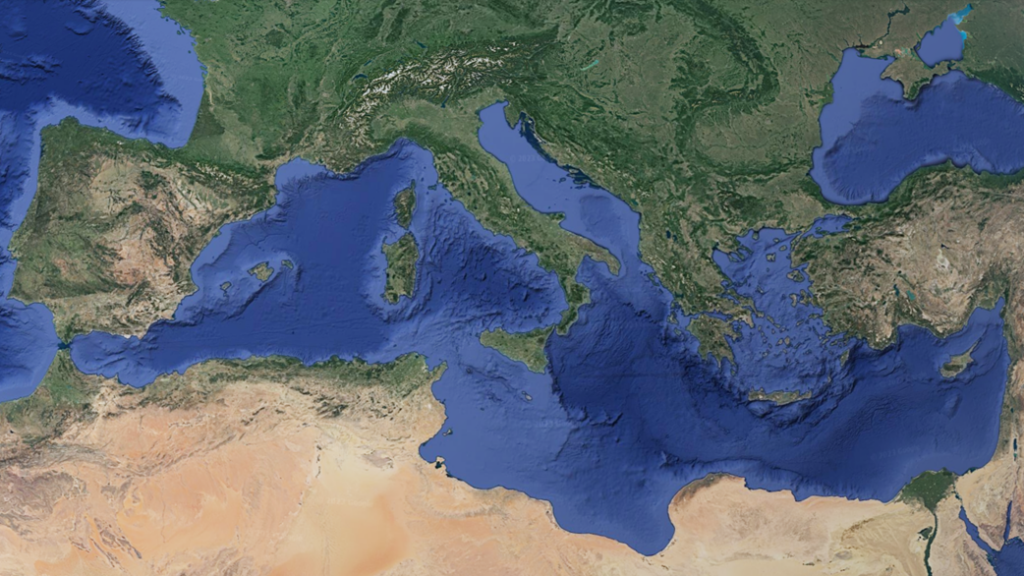
The Mediterranean region stands at the global forefront in advancing the concept of the Sustainable Blue Economy (SBE) through a unique model that combines effective regional cooperation, strategic financing, and innovation in policy and technology. This leadership was reaffirmed during a high-level forum held in Brussels and Barcelona, which brought together representatives from 43 Euro-Mediterranean countries. Participants highlighted the significant progress made since the adoption of the Union for the Mediterranean’s Ministerial Declaration on Sustainable Blue Economy in 2021, which laid out a roadmap for multisectoral cooperation aimed at sustainable development and marine environmental protection in the Mediterranean basin.
Over the past decade, the blue economy in the Mediterranean has gained increasing momentum, fueled by strong political will and ongoing coordination between public and private sectors. Innovative financing strategies have helped turn political commitments into tangible, impactful projects benefiting coastal communities and marine ecosystems.
Among the most successful financing instruments is the Blue Mediterranean Partnership (BMP), launched with the support of the European Commission, the European Bank for Reconstruction and Development (EBRD), the European Investment Bank (EIB), the French Development Agency (AFD), and several donor countries. This partnership aims to promote investments in major blue economy projects by ensuring rigorous feasibility studies to determine their financial and operational viability. The first projects were launched in Egypt, Jordan, and Morocco.
Morocco: A Key Pillar in Advancing the Sustainable Blue Economy
Morocco holds a central position in the Blue Mediterranean Partnership’s efforts as one of the region’s pioneering countries to receive substantial funding for sustainable blue economy development. The country focuses on strategic areas such as aquaculture development, marine renewable energy, and the enhancement of port infrastructure in line with environmental sustainability standards.
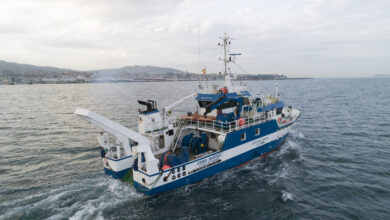
The National Agency for the Development of Aquaculture (ANDA) plays a vital role in implementing economically and ecologically viable projects, contributing to food security and the creation of sustainable jobs in coastal areas. Morocco is also showing growing interest in maritime decarbonization initiatives and the development of low-emission marine transport technologies.
Morocco’s active participation reflects its strong commitment to global goals regarding marine environmental protection and climate change adaptation, making it a regional example of integrating economic sustainability with biodiversity preservation.
Alignment with International Goals
The Mediterranean model aligns closely with international goals and agreements on ocean and biodiversity protection, including Sustainable Development Goal 14, UN climate agreements, the Convention on Biological Diversity, the UN Decade of Ocean Science for Sustainable Development, and the upcoming global treaty on plastic pollution.
This regional model promotes the transition toward a greener and more sustainable blue economy by restoring marine ecosystems, enhancing their resilience to climate change, and adopting a low-carbon circular economy, while ensuring social and economic justice across Mediterranean countries.
Forum Objectives
The forum focused on strengthening multi-stakeholder governance by integrating sectoral policies to ensure coherence and compliance with international standards for a sustainable blue economy. It also aimed to accelerate investment in blue economy projects, making them eligible for funding from major international financial institutions, while positioning the Mediterranean model as a global blueprint for replication in other regions.
Additionally, the forum aimed to enhance environmental resilience and marine ecosystem restoration through advanced marine spatial planning tools that ensure long-term resource protection and sustainability.
Mr. Kostas Kadis, EU Commissioner for Fisheries, stated:
“The Mediterranean is a global model for balancing economic growth and marine ecosystem protection.”
Ms. Teresa Ribera, Vice-President of the Spanish Government, affirmed:
“Our contribution to the Blue Partnership reflects our commitment to lead the ecological transition toward a sustainable blue economy.”
Workshops and Key Discussion Points
The forum featured numerous in-depth workshops covering various aspects of the sustainable blue economy. One of the key themes was blue financing and entrepreneurship, where participants explored the role of international funds and specialized programs such as BlueInvest and BlueInvest Africa, which actively support small and medium enterprises and foster an investment-friendly environment.
Sessions on innovation and technology showcased the experiences of Euro-Mediterranean countries like Spain and Greece in transforming ports into eco-friendly hubs, developing marine renewable energies, advancing aquaculture strategies, and decarbonizing the maritime sector. Emphasis was placed on modern, sustainable technological solutions.
Flagship projects were also presented in the areas of pollution control and marine environmental protection, including the Plastic Busters initiative led by the University of Siena in Italy, which tackles plastic waste in the Mediterranean—demonstrating the region’s commitment to safeguarding marine biodiversity and resources.
Forum Outcomes
The forum yielded notable outcomes, including the strengthening of multi-stakeholder governance and the activation of a comprehensive financial partnership through the Blue Mediterranean Partnership, contributing to the expansion of sustainable investments in the region. There was a shared agreement on replicating the Mediterranean model in other global regions, focusing on ecosystem restoration and the development of a circular economy in service of ecological and economic sustainability.
Coordination among international, regional, and local institutions was reinforced, consolidating collective efforts toward sustainable development in the blue economy, while boosting the region’s capacity to address environmental challenges such as climate change and marine pollution through an integrated and efficient regional cooperation framework.
The Mediterranean model for a sustainable blue economy clearly demonstrates that smart regional cooperation and targeted investment can establish a true balance between economic development and marine environmental protection. It thus stands as a global example in tackling the challenges of climate change and ecological degradation.