Mohammed TAFRAOUTI
A new scientific field trial is currently underway off the coast of Alicante, Spain, to evaluate an innovative fishing technology that could significantly reduce the environmental footprint of bottom trawl fisheries while maintaining the catch performance on which commercial fishers depend.
The initiative is a collaborative effort involving the General Secretariat for Fisheries of Spain’s Ministry of Agriculture, Fisheries and Food, the General Fisheries Commission for the Mediterranean (GFCM) of the Food and Agriculture Organization of the United Nations (FAO), and the Spanish Institute of Oceanography, which is leading the field activities.
The project compares the performance of semi-pelagic trawl doors, also known as “flying doors”, with that of conventional trawl doors. Designed to operate slightly above the seabed, the semi-pelagic doors are expected to reduce direct contact with the seafloor and minimize sediment disturbance while preserving the horizontal opening and stability required for efficient fishing operations.
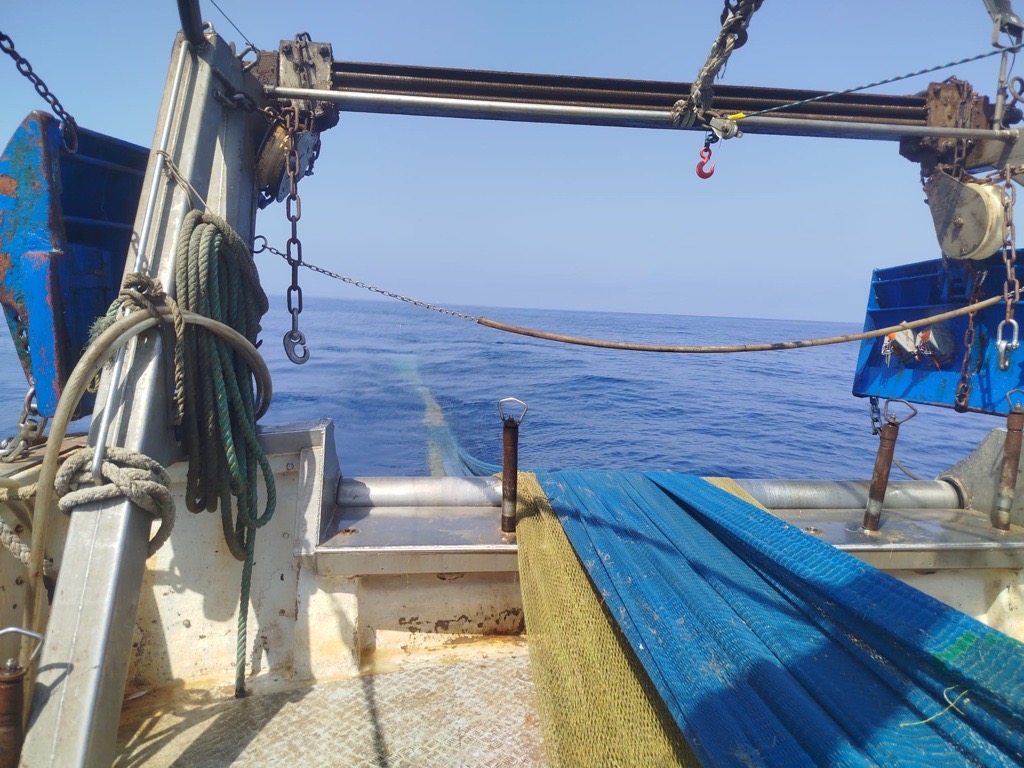
To ensure a robust scientific assessment, the trial uses a single commercial bottom trawl vessel operating successively with the two gear configurations in the same fishing grounds. This approach minimizes seasonal, environmental and spatial variability, allowing researchers to make a reliable comparison between the two technologies.
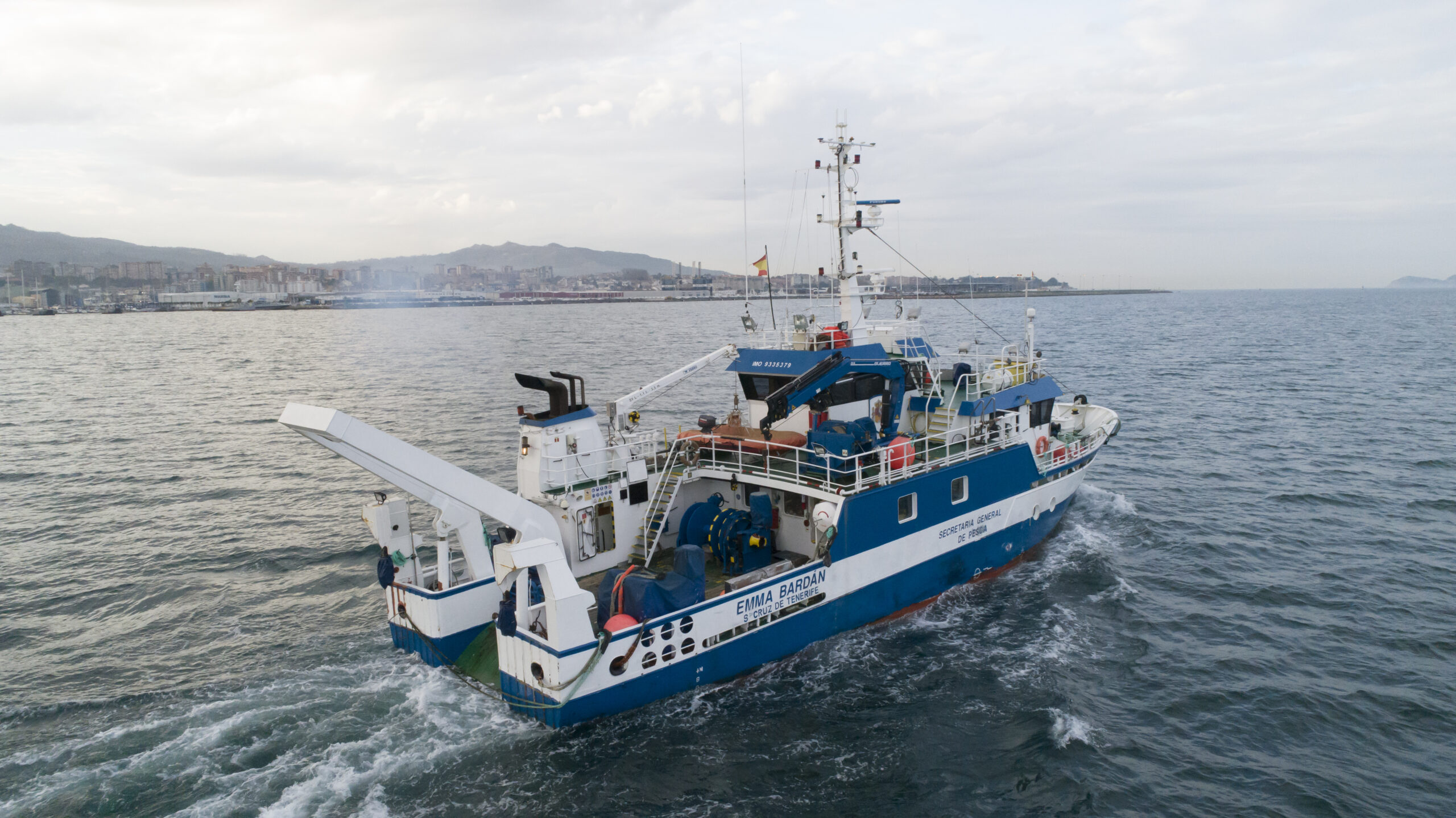
Researchers will evaluate catch rates, species composition, gear geometry, trawl door behaviour and operational efficiency. In parallel, the fisheries and oceanographic research vessel Emma Bardán will produce high-resolution maps of the seabed before and after fishing operations and monitor water turbidity to assess the extent of sediment disturbance caused by each type of trawl door.
The project is being implemented under the GFCM’s MedSea4Fish programme and directly supports the implementation of the GFCM 2030 Strategy by generating scientific evidence on lower-impact fishing technologies. Its findings are expected to inform future fisheries management decisions aimed at balancing healthy marine ecosystems with productive, sustainable and resilient fisheries across the Mediterranean.