Mohammed TAFRAOUTI
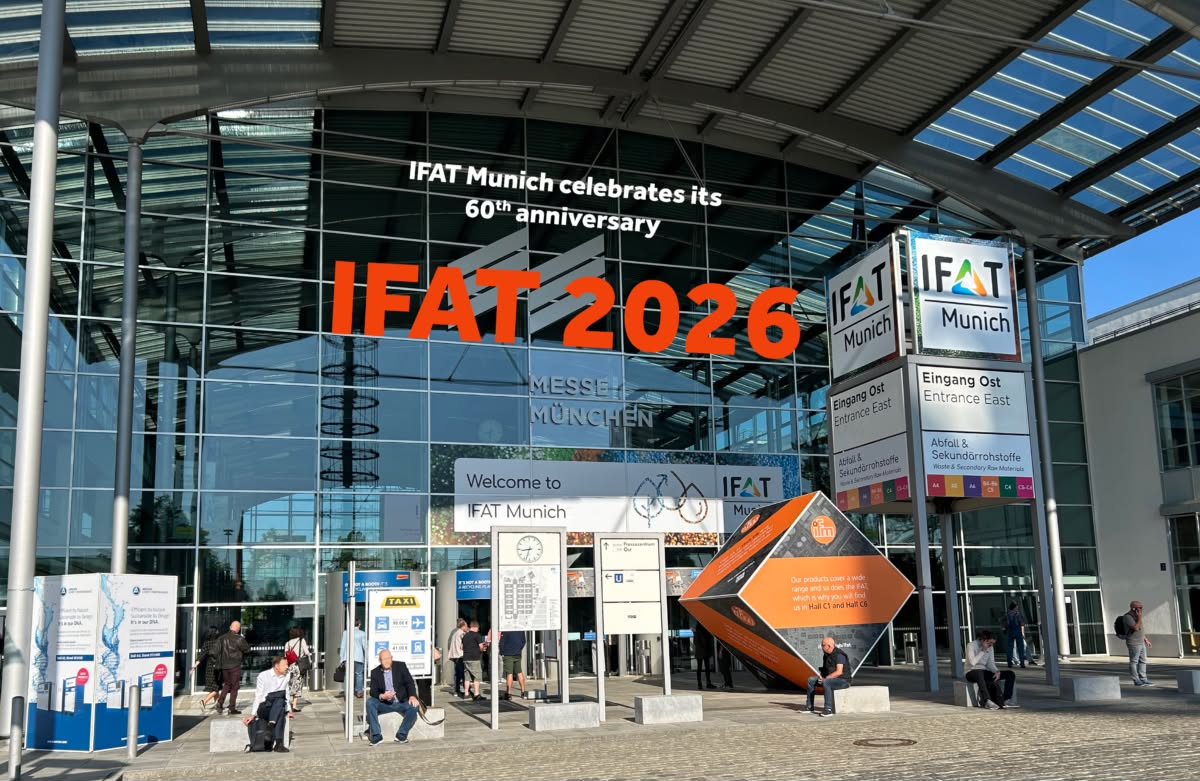
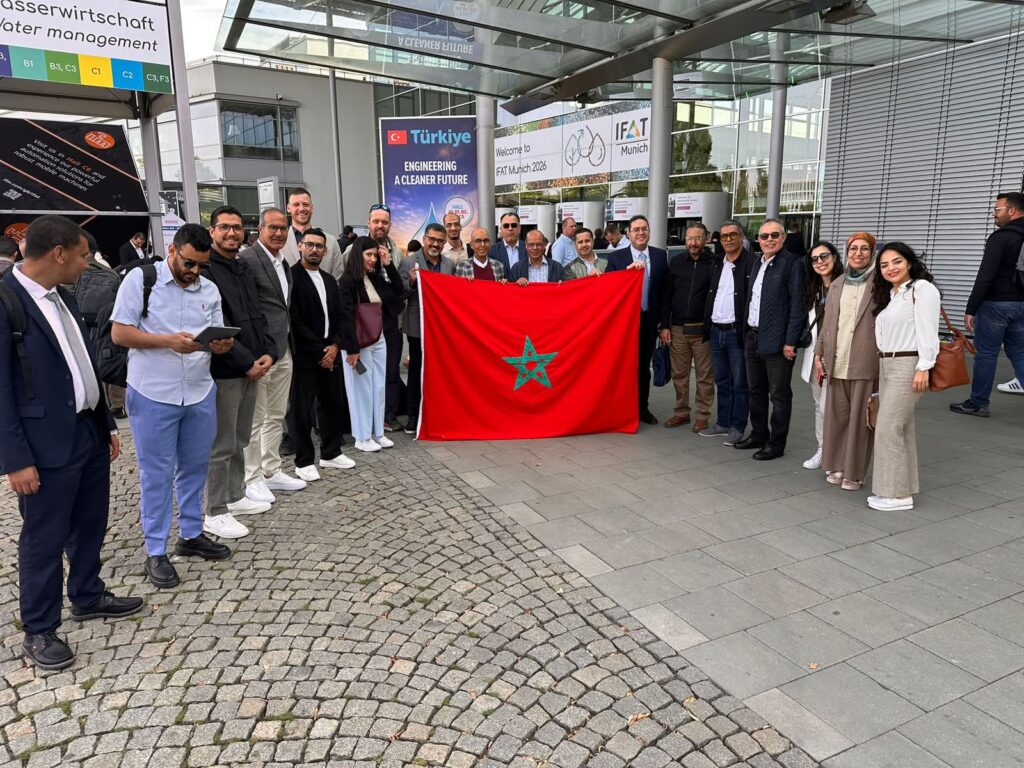
At a time when climate challenges are increasingly intertwined with water security concerns, the participation of the Souss-Massa region in the international discussions taking place at the IFAT 2026 exhibition in Munich, Germany, went far beyond a mere technical follow-up of developments in the environmental sector. It embodied a profound transformation in the region’s relationship with water, energy, and natural resources. From Agadir, a city that has experienced years of drought, declining rainfall, and shrinking groundwater reserves, to Munich, which for several days became a global laboratory for environmental innovation, a new vision has emerged under the banner of “water sovereignty,” founded on knowledge, technology, and the circular economy.
In the corridors of the exhibition, which brought together thousands of experts, companies, and international institutions operating in the fields of water, energy, and waste management, discussions were dominated by issues of climate scarcity, resource stress, and the rising costs of environmental security. The debates revealed that the world has effectively entered a new era in which water has become a strategic sovereignty issue directly linked to food security, social stability, and the ability to adapt to accelerating climate transformations. This shift was strongly reflected in the interest shown by the Souss-Massa Regional Multi-Service Company, which closely monitored the latest digital and technological solutions presented at the event, particularly those aimed at reshaping cities and territories into more resilient and sustainable spaces.
The choice of “Digital Water 4.0” as a central theme of this year’s edition was far from accidental. Smart networks powered by artificial intelligence and remote sensing technologies have become the backbone of modern management systems. For the Souss-Massa region, which faces one of the highest levels of water stress in Morocco, this transformation carries strategic dimensions that go beyond improving technical performance toward redefining the relationship between natural resources, people, and territory. Invisible water leaks, once considered “silent” losses, can now be detected in real time through satellites, acoustic sensors, and digital pressure and flow analysis systems, allowing unprecedented reductions in water losses.
In this context, the Chief Executive Officer of the Souss-Massa Regional Multi-Service Company explained that the environmental and technical data presented at the Munich exhibition confirmed that the future of water management depends not only on the search for additional resources, but also on the ability of institutions to protect existing resources and improve their efficiency. He emphasized that the region has accumulated significant experience in seawater desalination, but that the next phase requires moving from conventional infrastructure toward intelligent systems capable of forecasting and proactive intervention, in line with the climatic transformations affecting the region, where drought periods are intensifying and pressure on water resources is increasing due to urban, agricultural, and tourism expansion.
The exhibition’s outcomes also reflected a rapidly growing global trend toward what is known as “new water production,” namely transforming wastewater into a strategic reusable resource rather than treating it merely as liquid waste. In this regard, membrane bioreactor technologies emerged as some of the most advanced water treatment solutions due to their ability to produce high-quality water suitable for irrigating green spaces and supporting certain industrial activities.
For Souss-Massa, where agriculture constitutes a major economic driver, this approach is of particular importance because it reduces pressure on groundwater resources and contributes to building a more sustainable water cycle.
International discussions also highlighted the transformation taking place in wastewater treatment plants worldwide. Beyond being facilities for water purification, they are increasingly becoming units for energy generation and resource recovery. Sludge resulting from treatment processes is now being used to produce biogas and generate electricity within a circular economic model that reduces carbon emissions and lowers operating costs. The Souss-Massa Regional Multi-Service Company sees this model as a practical pathway for the future development of its infrastructure, especially in light of rising energy costs and the need to strengthen the energy autonomy of public utilities.
One of the key messages conveyed by the Munich exhibition was that sustainable cities are no longer built solely with concrete and physical infrastructure, but also with data, intelligent systems, and predictive capabilities. This explains the growing prominence of “digital twin” applications for cities, virtual systems capable of simulating urban and water networks in order to anticipate breakdowns, floods, and distribution imbalances before they occur. This approach is particularly significant for Agadir and the rapidly expanding cities of the Souss-Massa region, given the severe climate changes that increasingly generate contradictory phenomena ranging from acute droughts to intense rainfall and sudden floods.
Another major area of focus at the exhibition was seawater desalination technologies, particularly those based on advanced low-energy membranes. Technical presentations demonstrated that current research is moving toward reducing the energy cost of desalination, extending membrane lifespan, and minimizing the environmental impact of brine discharge into the sea. These developments carry important implications for Souss-Massa, where desalination has become a national model for securing drinking water supplies and protecting agricultural activities in the Chtouka and Greater Agadir areas.
Solid waste management was also prominently featured in the major environmental debates at the exhibition, where new models for smart sorting, recycling, compost production, and waste-to-energy systems were presented. These solutions are gaining increasing importance for the region given its urban and tourism dynamics, as well as the need to reduce pressure on conventional landfills and strengthen the local green economy, particularly through the valorization of organic waste to support the agricultural sector, one of the pillars of the regional economy.
Amid these transformations, the “technological watch” undertaken by the Souss-Massa Regional Multi-Service Company appears to be part of a broader vision aimed at turning the region into a Moroccan laboratory for environmental resilience and climate adaptation. The challenge is no longer merely technical; it is civilizational and developmental, linked to how the rights of future generations to water, energy, and a healthy environment can be guaranteed in a world where resource vulnerability is deepening and climate impacts are intensifying.
From Munich to Agadir, the contours of a new era are becoming clearer, one in which the strength of cities and regions is measured by their ability to manage scarcity intelligently, transform environmental crises into opportunities for innovation and sustainability, and build development models that are more aligned with the limits of nature and the constraints of the future.
On the sidelines of this major global environmental forum, an in-depth interview was conducted with Mr. Mohammed Amrzak, Chief Executive Officer of the Souss-Massa Regional Multi-Service Company.
Environmental and Technological Vision Interview: How the Souss-Massa Regional Multi-Service Company Draws Inspiration from IFAT 2026 Munich
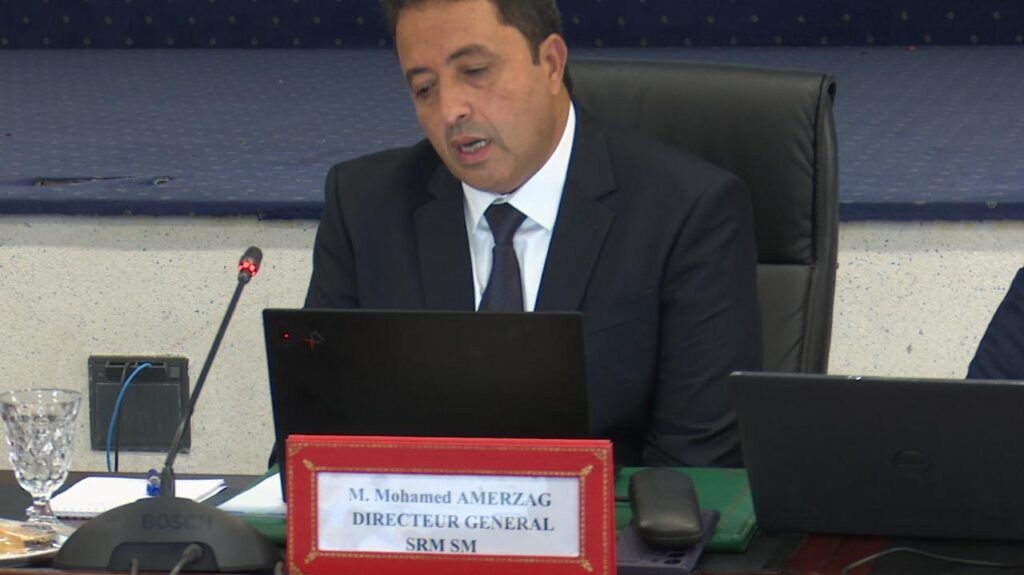
In the context of rapidly evolving global environmental transformations, and amid the pressing challenges of water stress and climate change that require rethinking the management of natural resources, the Souss-Massa Regional Multi-Service Company closely followed the outcomes of the IFAT exhibition in Munich, Germany, recognized as the world’s leading platform for environmental, water, energy, and waste technologies. In this interview, the company’s Chief Executive Officer sheds light on emerging environmental challenges and the prospects for integrating smart solutions and circular economy approaches into water management in the Souss-Massa region.
Question: IFAT 2026 was a global opportunity to showcase the latest environmental and water technologies. How do you assess the importance of this event for a region facing increasing water challenges such as Souss-Massa?
Chief Executive Officer:
What we observed in Munich confirms that the world has entered a new phase in the management of natural resources, marked by a transition from the logic of “resource consumption” to that of “ensuring resource sustainability.” For the Souss-Massa region, which has for years faced growing water pressure due to recurring droughts, declining rainfall, and rising water demand, these discussions have become a strategic necessity. The exhibition demonstrated that water security is now closely linked to innovation, digitalization, and predictive capacity, not merely to the construction of conventional infrastructure.
Today, the challenge is no longer simply to provide water, but to manage every drop efficiently, reduce losses, reuse non-conventional water resources, and integrate renewable energy into management systems. This transformation aligns with the vision pursued by the Souss-Massa Regional Multi-Service Company, particularly in light of the climate transformations reshaping the relationship between cities and natural resources.
Question: The concept of “Digital Water 4.0” was one of the major themes of the exhibition. How can this technology transform the management of water networks in the region?
Chief Executive Officer:
Digital technology has become an essential component of modern environmental governance. In the past, water networks relied on intervention only after failures or leaks occurred. Today, we are witnessing the emergence of a new generation of smart networks capable of predicting problems before they happen. At the Munich exhibition, systems based on artificial intelligence, smart sensors, and satellite technologies were presented to analyze water flows and detect hidden leaks with remarkable precision.
This is extremely important for Souss-Massa because part of the water challenge is linked not only to resource scarcity, but also to non-revenue water lost within the networks. We are therefore working on developing an approach based on the gradual digitalization of infrastructure in order to improve network efficiency, reduce losses, and allocate resources more fairly and effectively, especially during peak consumption periods and the summer season.
These solutions also provide institutions with greater responsiveness to disruptions, help reduce the cost of technical interventions, and strengthen the sustainability of public services in the face of climate fluctuations.
Question: In the context of water stress affecting Morocco, improving water network efficiency has become a major issue. How do you view this challenge for the Souss-Massa region?
Chief Executive Officer:
Improving the efficiency of water distribution networks is no longer merely a technical issue related to reducing leaks or enhancing performance indicators. It has become a strategic challenge directly linked to water security. In the face of climate change, declining water resources, and rising demand, every drop of water has increasing value, which requires adopting new approaches to optimize available resources and improve their efficient use.
In this regard, we are accelerating the modernization of water infrastructure and integrating digital tools and smart technologies into network management. We are now speaking about advanced real-time data collection systems, remote management solutions, and artificial intelligence technologies capable of identifying potential leakage zones and directing interventions more effectively.
We are also adopting approaches based on dividing networks into precise management zones, optimizing pressure management within pipelines according to consumption periods, and developing geographic information systems and digital applications for field technical teams. The objective is not only to reduce losses, but also to build a more resilient, sustainable system capable of adapting to future challenges.
Today, improving efficiency has become a genuine instrument for strengthening the sustainability of water resources and ensuring the continuity of public services under optimal conditions.
Question: The exhibition showed strong interest in wastewater reuse and transforming treatment plants into energy production units. Could this become a practical model for Souss-Massa?
Chief Executive Officer:
Absolutely. The world is moving decisively toward a circular environmental economy, meaning the transformation of waste and by-products into valuable resources. This also applies to the water sector. The experiences showcased in Munich demonstrated that modern wastewater treatment plants are becoming spaces for producing treated water, energy, and recoverable materials.
In the Souss-Massa region, we consider wastewater reuse a strategic option to reduce pressure on conventional resources, particularly for irrigating green spaces and supporting certain economic activities. Moreover, valorizing sludge generated through treatment processes to produce biogas and electricity represents a promising pathway for reducing the sector’s carbon footprint and improving the energy efficiency of public facilities.
This approach not only generates environmental benefits, but also opens significant economic opportunities, because water, energy, and waste are now interconnected sectors within a new development model based on sustainability and the green economy.
Question: One of the major issues discussed at IFAT was adaptation to extreme climate phenomena such as floods and droughts. How do you perceive this challenge at the regional level?
Chief Executive Officer:
Climate change has become a tangible reality, and the Souss-Massa region is already experiencing its effects directly. On the one hand, we are facing increasing water scarcity, and on the other hand, severe climatic disturbances that sometimes result in intense rainfall and flash floods affecting infrastructure and networks.
In Munich, advanced digital systems were presented for flood simulation and proactive environmental crisis management, and these solutions are extremely important for modern cities. We are following these experiences closely because the future requires building cities that are more resilient and adaptive through the integration of technology into urban planning and environmental management.
It is no longer sufficient to simply build networks; we must build intelligent systems capable of forecasting, rapid response, and coordination among all stakeholders. This also requires strengthening environmental awareness among citizens, because adapting to climate change is a collective responsibility, not merely a technical issue.
Question: Morocco is also implementing a national program for compact modular water treatment plants. How do you evaluate the importance of this project in addressing water stress challenges?
Chief Executive Officer:
This project represents one of the key structural initiatives reflecting Morocco’s orientation toward diversifying water sources and strengthening water security. Water stress challenges now require innovative and rapidly deployable solutions capable of responding to the growing needs of citizens.
Compact modular treatment plants are characterized by integrated designs that combine all treatment stages within a single unit, allowing rapid implementation and operational flexibility in both urban and remote areas.
In the Souss-Massa region, we consider this type of solution fully aligned with a vision based on anticipation and resilience, particularly given the need to strengthen the sustainability of drinking water supply and support ongoing climatic and demographic transformations.
What matters most today is that water management can no longer rely solely on mobilizing conventional resources. It must increasingly depend on innovation, technology, and long-term planning in order to build a water system capable of withstanding future challenges.
Question: How will this digital and environmental transformation affect the company’s relationship with citizens and consumers?
Chief Executive Officer:
Digital transformation is not an objective in itself; it is a means to improve service quality and reinforce trust and transparency. One of the most significant innovations presented at IFAT was the development of smart metering systems and digital applications enabling citizens to monitor their daily water consumption, detect household leaks at an early stage, and rationalize water use.
These solutions contribute to creating a new relationship between institutions and citizens based on interaction and shared knowledge of resources. They also help strengthen awareness regarding the importance of water conservation, especially in regions suffering from water stress.
We firmly believe that the environmental future of the region depends on our ability to involve citizens in a culture of sustainability, because protecting natural resources begins with everyday behavior and with collective awareness of the strategic value of water for future generations.