By Mohammed TAFRAOUTI
Since its emergence as a geographical space linking continents, the Mediterranean Sea has transcended natural boundaries to become a dynamic arena of environmental and human interaction. At the heart of this expanse lies the Strait of Gibraltar, a strategic meeting point crossed by marine currents and biological species, as well as by the pathways of human history. This exceptional location has made the Mediterranean, for thousands of years, a bridge connecting Africa, Asia, and Europe, where great civilizations such as the Phoenicians, Greeks, and Romans flourished, followed by the Islamic civilization, which transformed it into a space for trade, navigation, and the exchange of knowledge and cultures. While the Mediterranean served as a realm of coexistence and cultural interaction, it also remained a stage for competition and conflict, acquiring extraordinary strategic significance throughout history.
Yet, the natural and cultural interconnectedness that characterized the Mediterranean for centuries now faces mounting environmental challenges. Growing pressure on its natural resources, driven by urban expansion, industrial and maritime activities, and increasing human exploitation of coastal and marine ecosystems, has transformed the Mediterranean environment from a domain of natural balance into a region confronted with complex ecological disruptions that demand a fundamental rethinking of its management and protection.
From Geography to the Marine Biosphere
Throughout its long history, the Mediterranean has been a hub of cultural and commercial exchange among peoples, while also constituting a rich living environment where intricate ecosystems have evolved over thousands of years. The natural characteristics of this semi-enclosed sea, its varied underwater topography, and the interaction of its currents have generated an exceptional biodiversity, making it one of the world’s most important reservoirs of marine life.
In this context, northern Morocco stands out as an environmentally significant area within the Mediterranean basin. Its coastlines encompass a wide range of habitats, including bays, estuaries, rocky and sandy shores, seagrass meadows, and deep-sea environments, making them vital breeding and nursery grounds for fish and numerous marine species. Northern Morocco’s location at the gateway of the Strait of Gibraltar also gives it a strategic role in maintaining the Mediterranean’s ecological balance. At the same time, however, it exposes the region to increasing pressures such as coastal pollution, intensive fishing, and climate change, highlighting the need to treat this natural heritage as an integral component of regional environmental and food security.
Today, discussions about the Mediterranean extend beyond its historical and geographical dimensions. It is increasingly understood as a complex biosphere requiring sophisticated scientific tools to understand and protect its dynamics. In this regard, advanced regional scientific initiatives such as the MedKeyHabitats project have redirected attention toward essential marine habitats as the cornerstone of Mediterranean ecosystem balance. The project’s findings demonstrate that biodiversity conservation cannot be achieved without a detailed understanding of seabed structures and species distribution. Advanced technologies, including side-scan sonar and bathymetric mapping, have therefore been employed to identify and characterize marine habitats.
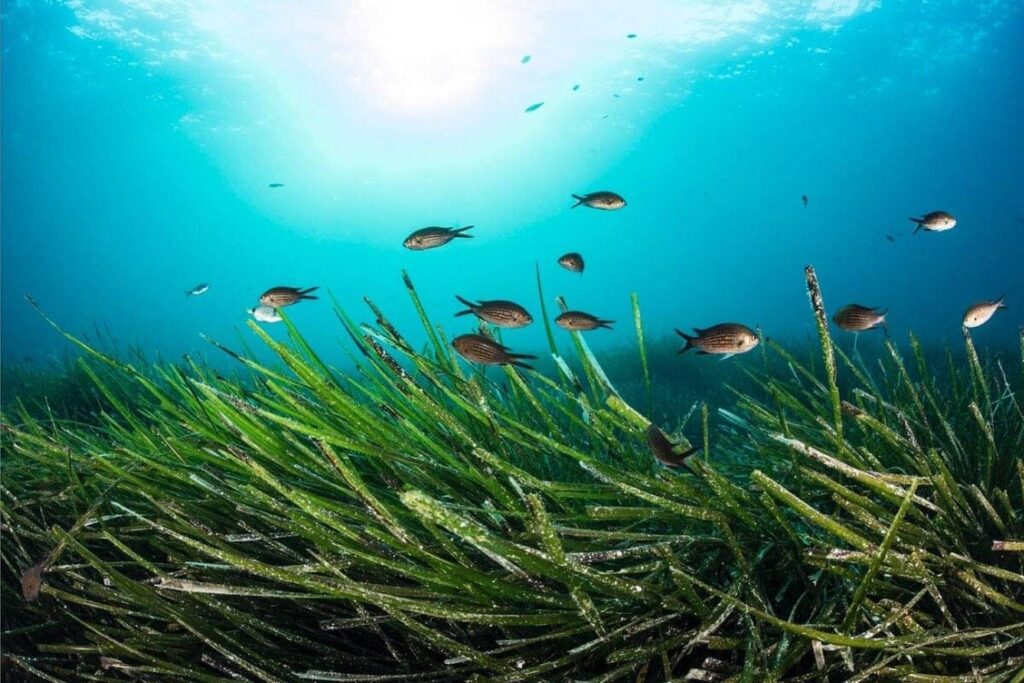
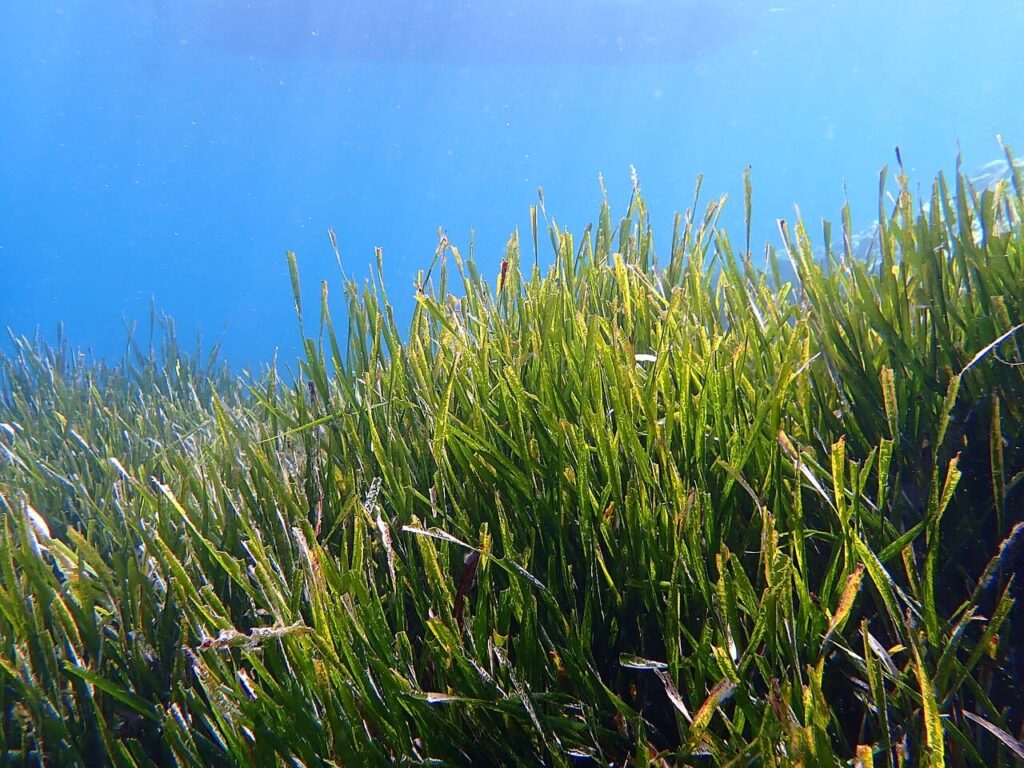
Research has revealed the crucial importance of marine plant habitats such as Posidonia oceanica and Zostera marina, which function as true ecological lungs of the Mediterranean through oxygen production, carbon sequestration, and shoreline protection against erosion. Studies have also highlighted the richness of calcareous coral ecosystems and the presence of sensitive species such as the red coral (Corallium rubrum), underscoring the fragility of this ecological balance in the face of human and climatic pressures.
Within this framework, the concept of Biosphere Reserves, developed by UNESCO, has emerged as a model that integrates biodiversity conservation with sustainable development. The Intercontinental Mediterranean Biosphere Reserve exemplifies this approach, representing an advanced effort to reposition the relationship between humans and the environment within a shared space based on balancing natural resource conservation, socioeconomic development, and cross-border cooperation.
Rather than replacing legally designated Marine Protected Areas, the biosphere reserve approach complements them through integrated environmental governance, linking conservation to local development, scientific research, and international collaboration. This perspective allows the Mediterranean to be viewed as an interconnected ecological system that transcends geographical and environmental fragmentation.
Morocco: Environmental Wealth Under Pressure
Along the southern Mediterranean shore, Morocco provides a compelling example of the complexities involved in managing marine biospheres, where ecological specificities intersect with development imperatives and social pressures.
Morocco’s Mediterranean coastline, stretching from Tangier to Saïdia, hosts a rich diversity of marine habitats, particularly in areas such as the Strait of Gibraltar and Jbel Moussa, where Atlantic and Mediterranean currents converge, generating high biological productivity. However, this environmental richness is increasingly threatened by coastal urbanization, expanding port activities, industrial and plastic pollution, and the overexploitation of fishery resources.
Scientific data, particularly from the MedKeyHabitats project, indicate that sensitive habitats in northern Morocco, including Zostera marina seagrass meadows, are experiencing decline despite their critical role in sediment stabilization and providing nursery grounds for juvenile fish. Climate change, through rising water temperatures and increasing ocean acidification, is also disrupting ecosystem balance, including coral communities such as the red coral (Corallium rubrum).

These environmental challenges are inseparable from their socio-economic dimensions. Large segments of local populations depend on artisanal fisheries as their primary source of income, meaning that any decline in fish stocks directly exacerbates social vulnerability. Furthermore, the lack of sustainable economic alternatives and the limited involvement of local communities in the management of Marine Protected Areas complicate efforts to reconcile environmental conservation with development objectives.
The Strait of Gibraltar: An Intercontinental Biosphere
Established in October 2008, the Intercontinental Biosphere Reserve of the Mediterranean (RBIM) covers nearly one million hectares, shared almost equally between Morocco and Spain.
On the Moroccan side, the reserve extends across seven provinces and prefectures: Chefchaouen (32% of the reserve’s total area), Tetouan (28%), Larache (23%), Ouazzane (10%), Fahs-Anjra (5%), M’diq-Fnideq (2%), and Tangier-Assilah (0.21%). The reserve encompasses a remarkable diversity of natural ecosystems.
Within the broader Mediterranean context, the Intercontinental Mediterranean Biosphere Reserve represents a unique model for managing transboundary environmental areas. Stretching between southern Spain (Andalusia) and northern Morocco (the Tangier Peninsula), it forms an ecological and strategic arc across the Strait of Gibraltar, linking the African and European continents.
The reserve encompasses extensive terrestrial landscapes alongside rich marine environments, making it one of the most significant international examples of integrating biodiversity conservation with cross-border cooperation. It has become a pioneering model of shared environmental governance, aiming not only to protect ecosystems and natural habitats but also to regulate the relationship between people and nature within a common space where biological migrations intersect with cultural and historical exchanges.
This region serves as a major migratory corridor for birds moving between Africa and Europe, while marine species travel through the interconnected Atlantic and Mediterranean currents. Simultaneously, human cultures and communities continue to interact across both shores, creating a space where geographical boundaries fade in favor of profound ecological and cultural connectivity.
The Strait of Gibraltar is among the world’s most important biological migration routes, with large numbers of migratory birds, particularly raptors and storks, crossing annually between the two continents. During peak migration seasons, the area witnesses an intense and continuous flow of birds, reflecting its global ecological significance.
The region is also a vital transit zone for marine organisms and hosts species of high conservation value, including dolphins and the Mediterranean monk seal. As a meeting point of Atlantic, Mediterranean, and Macaronesian ecosystems, it possesses extraordinary biological richness and ecological diversity.
From Isolation to Coexistence: Toward an Integrated Model for Marine Biodiversity Conservation
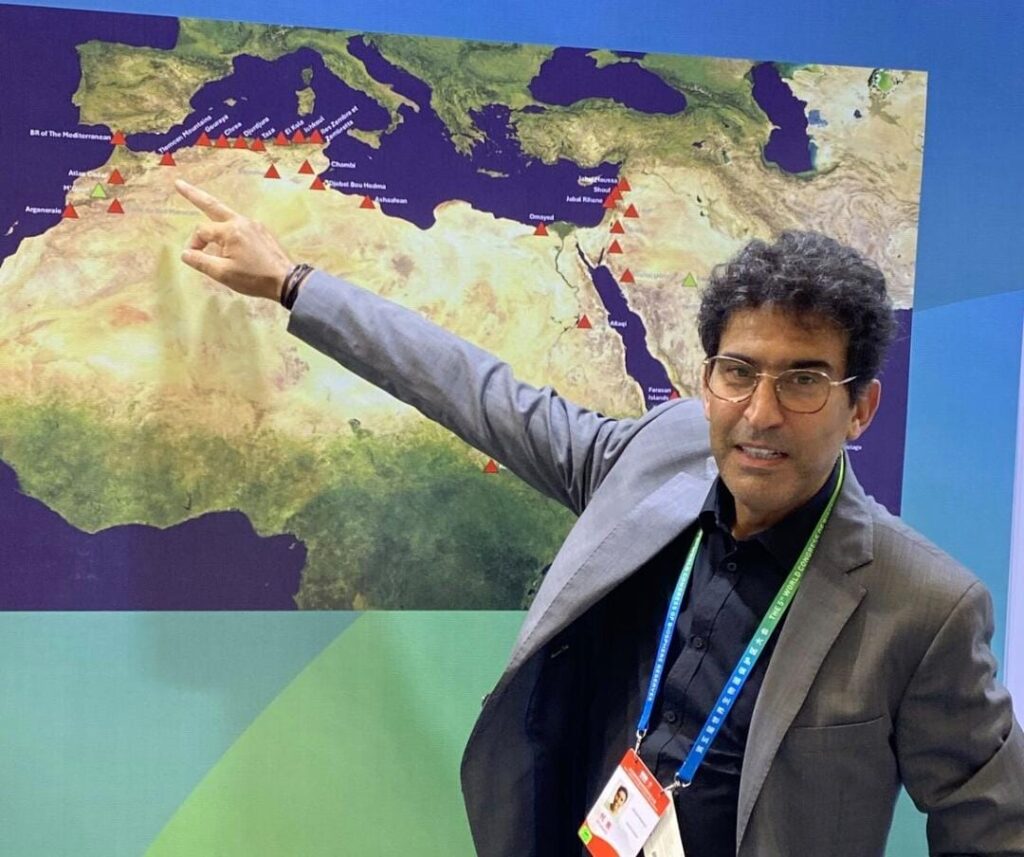
According to Dr. Mohsen Mansour, President of the French association Solutions Nature, protecting marine biodiversity in the Mediterranean can no longer rely solely on conservation policies that isolate nature within artificial boundaries. Instead, a transition toward sustainable reconciliation between humans and their environment is required, transforming biosphere reserves into living laboratories rather than isolated sanctuaries.
Dr. Mansour argues that the marine biosphere should not be viewed as a space detached from the wider world but as a platform for sustainable development that transcends traditional conservation approaches based on excluding human activities. He advocates for an integrated model that combines strict protection of sensitive ecosystems with transitional zones supporting sustainable economic activities, while placing local communities at the center of governance.
He also stresses that granting biosphere reserve status to a coastal area requires fulfilling three interconnected functions: biodiversity conservation, local economic development, and logistical support through scientific research and education.
In developing a roadmap to enhance resilience and local participation in addressing climate emergencies and pollution, Dr. Mansour highlights the importance of citizen science, integrating the traditional knowledge of artisanal fishers with scientific data to monitor invasive species and fish stocks. He further calls for the development of an inclusive blue economy that supports local initiatives valuing ecosystem services without depleting them, emphasizing that the resilience of the Mediterranean ultimately depends on transforming every citizen and every sea user into a genuine guardian of its biodiversity.
Toward a Mediterranean Environmental Diplomacy
Amid these rapid transformations, the Mediterranean is no longer merely a geographical space or a shared historical heritage. It has become a living arena testing the ability of states and societies to reposition themselves within a complex equation that combines environment, development, and sovereignty. The challenges facing the Mediterranean marine biosphere, from habitat degradation and resource depletion to the escalating impacts of climate change, demonstrate that the future of this sea requires a comprehensive and transboundary vision rather than fragmented sectoral policies.
There is an urgent need to establish a new model for Mediterranean governance, one that combines rigorous scientific knowledge, as provided by initiatives such as MedKeyHabitats, with integrated environmental governance mechanisms that restore the central role of marine habitats in maintaining ecological balance. Current realities also demand a shift from a logic of exploitation toward one of productive conservation, where ecosystems such as Posidonia oceanica meadows are recognized as strategic natural capital no less important than traditional economic resources.
The challenge today is not only to preserve biodiversity but also to rebuild a balanced relationship between humans and the sea, one capable of ensuring long-term environmental and food security while restoring the Mediterranean’s role as a space of integration rather than competition. In this regard, countries of the southern Mediterranean shore, particularly Morocco and Tunisia, are called upon to play a leading role in shaping a Mediterranean environmental diplomacy capable of uniting efforts, enhancing resource stewardship, and safeguarding this shared heritage.
Despite all the challenges it faces, the Mediterranean remains an open horizon of possibilities. Its value lies not only in its historical legacy but also in the future it can help build if its biosphere is managed as a shared asset and a collective responsibility. Today, the environment remains the only truly common language capable of uniting both shores of the Mediterranean, transcending political tensions and shaping a shared ecological destiny that cannot be divided