The Mediterranean at a Crossroads
By Mohammed Tafraouti
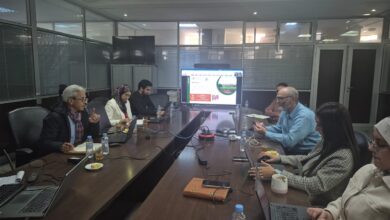
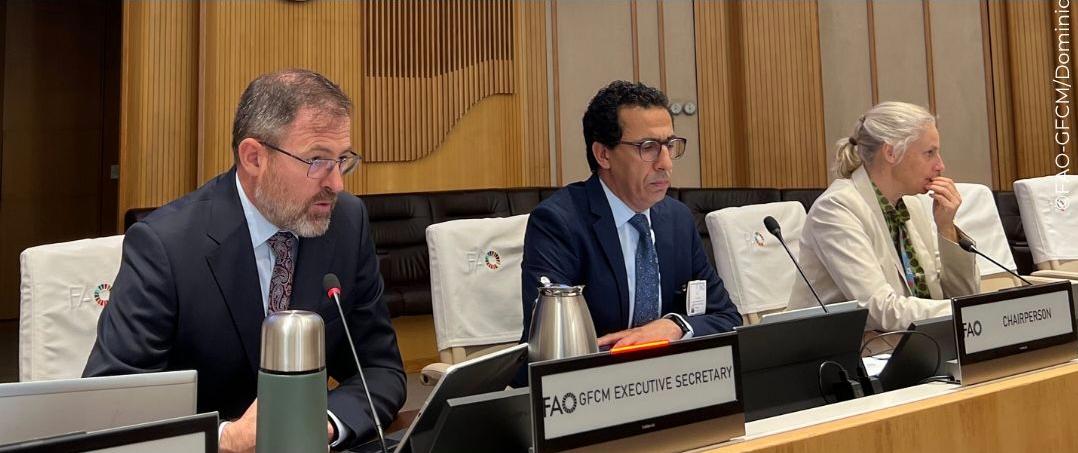
The proceedings of the twenty-fifth session of the Scientific Advisory Committee (SAC) of the General Fisheries Commission for the Mediterranean (GFCM) have commenced at the headquarters of the Food and Agriculture Organization of the United Nations (FAO). This meeting is widely regarded as a decisive turning point in the management of marine resources in one of the seas most vulnerable to environmental and economic pressures.
In this context, the Scientific Advisory Committee on Fisheries continues its work under the chairmanship of the Moroccan expert, Dr. Mohamed Idrissi Moulouli, whose mandate was renewed for a second consecutive term at the helm of this GFCM scientific body. This reappointment underscores the recognition of Moroccan expertise in marine research and fisheries management, while illustrating Morocco’s growing role in strengthening regional scientific cooperation and the sustainable governance of marine resources in the Mediterranean and the Black Sea.
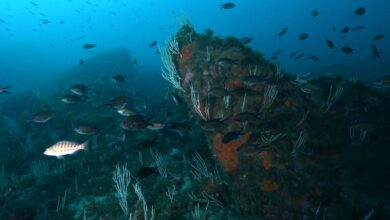
The convened experts are reviewing the outcomes of activities conducted over the past year, notably the assessment of fish stock status, the analysis of scientific data, the monitoring of vulnerable species, and the study of complex interactions between fisheries and marine ecosystems. However, what lends this session particular significance is the sheer scale of the challenges facing the Mediterranean: the climate crisis is compounded by the overexploitation of fish stocks, while concerns regarding the erosion of marine biodiversity continue to escalate.
At the heart of these debates, scientific research emerges as an indispensable lever for generating reliable data and developing innovative solutions. Scientists are notably working on the development of tools such as marine spatial planning, designed to mitigate conflicts between economic activities and ecosystem preservation. They are also exploring new avenues to decarbonize the fishing sector, thereby bolstering the region’s contribution to climate change mitigation efforts.
The economic stakes are equally critical. The Committee seeks to ensure the sustainability of value chains tied to artisanal and small-scale fisheries, which constitute a vital source of income for thousands of coastal families. A pivotal question remains: how to reconcile the interests of local fishers with the pressures of global markets driven by the demand for scarce marine products, even as the need for investment in more efficient and less destructive fishing techniques becomes increasingly urgent?
To this already complex equation, a geopolitical dimension is added. The Mediterranean remains a space where the sometimes divergent interests of Northern and Southern countries intersect regarding the exploitation of marine resources. Within this context, the General Fisheries Commission for the Mediterranean plays a key role by fostering dialogue, promoting regional cooperation, and bridging differences through a perspective of environmental justice and shared responsibility.
As this session takes place, anticipation runs high surrounding the conclusions of discussions related to the 2026–2028 Work Plan. Will the Committee succeed in translating scientific research outcomes into ambitious policy decisions capable of halting the depletion of marine resources? Will the Mediterranean find the path to sustainability in the face of such intricately intertwined challenges? The answers to these questions may well shape the ecological, economic, and social future of the entire Mediterranean basin.