MOHAMMED TAFRAOUTI
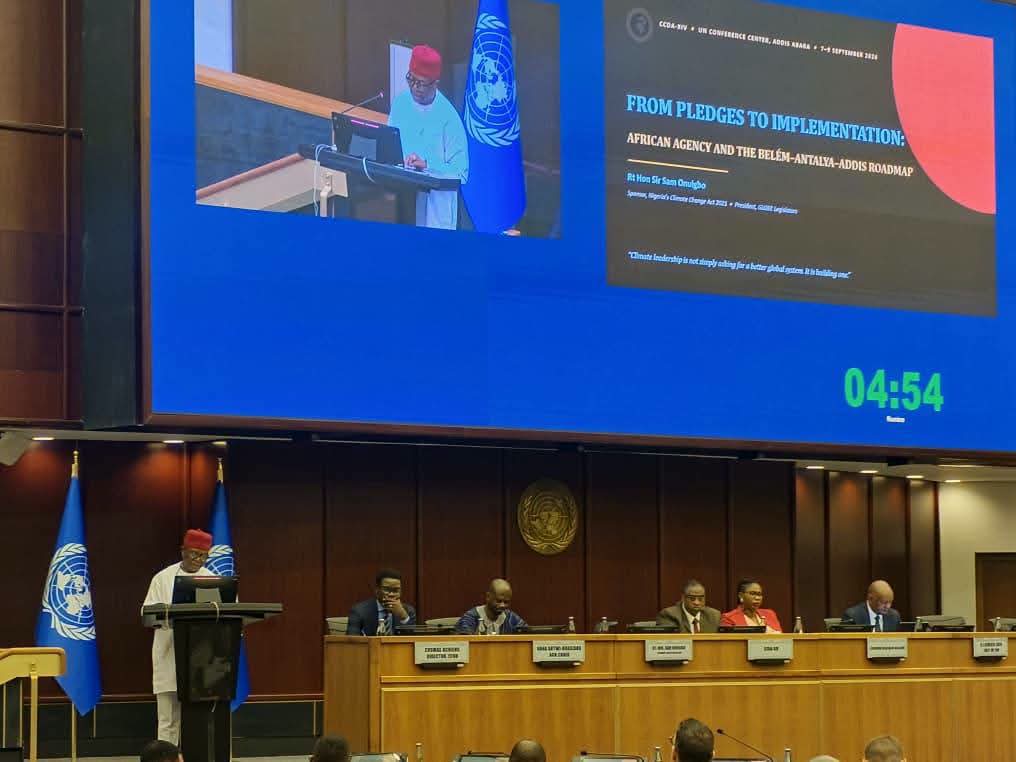
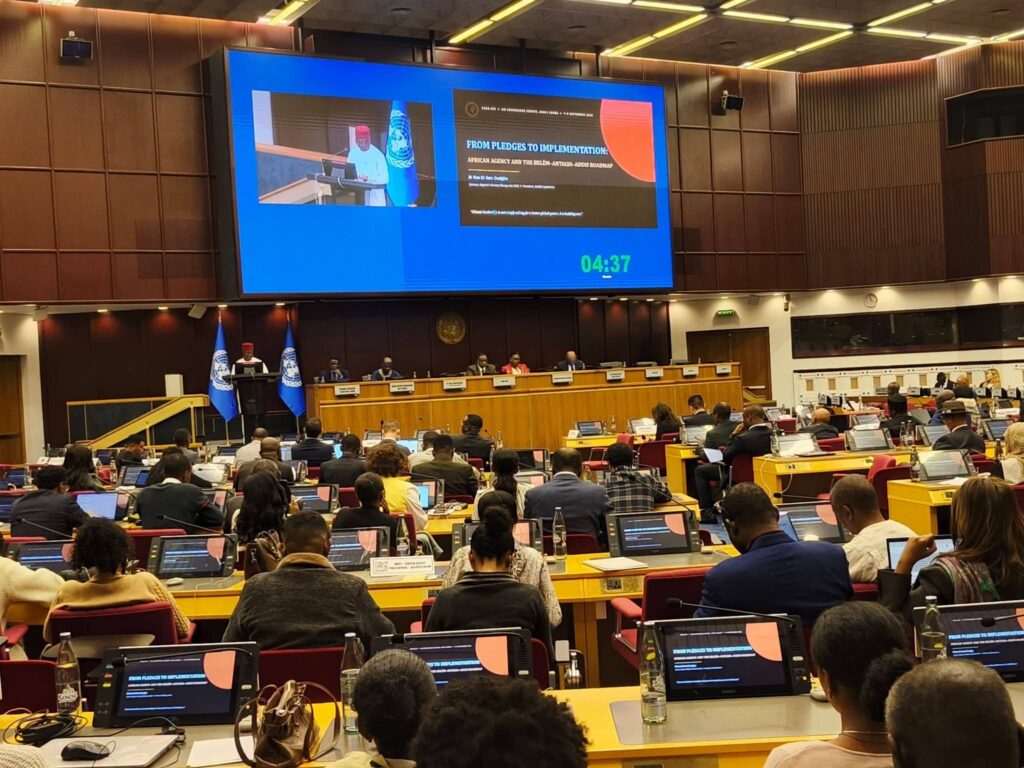
Africa has entered a new phase in its response to climate change in recent years. Extreme climate events are placing simultaneous pressure on agriculture, water, health, infrastructure and local economies, while the continent’s contribution to global greenhouse gas emissions remains below 4 percent. This paradox places Africa at the heart of a global equation where climate justice intersects with development, finance, energy, trade and sovereignty over natural resources. It was against this backdrop that the 14th Climate Change and Development in Africa Conference (CCDA-XIV) was held in Addis Ababa from 7 to 9 September 2026, under a highly significant theme: “From Commitments to Implementation: The Belém-Antalya-Addis Ababa Roadmap.”
The conference took place at a particularly sensitive moment for African climate diplomacy, following the seventh African Climate Talks (ACT7), the 64th session of the Subsidiary Bodies of the United Nations Framework Convention on Climate Change (SB64), and ahead of the 31st Conference of the Parties (COP31) in Antalya, Türkiye, as well as in anticipation of COP32, which Addis Ababa is preparing to host in 2027. Yet the significance of CCDA-XIV went beyond preparations for two major international climate events. The conference sought to redefine Africa’s position within the global climate governance system: moving from defending African priorities towards developing the capacity to influence the rules, institutions, standards and implementation mechanisms that will shape the future of global climate action. This shift in the understanding of African leadership is, in itself, one of the conference’s most important political messages.
Africa faces the implementation question
The continent has made its case for climate justice repeatedly. It has presented negotiating positions on adaptation, climate finance, loss and damage, technology transfer, equity and common but differentiated responsibilities.
In Addis Ababa, however, the challenge was framed in much more practical terms: how can these positions, commitments and national plans be transformed into investments, policies and projects whose results are actually felt by African citizens? This question featured prominently from the opening of the conference. Claver Gatete, Executive Secretary of the United Nations Economic Commission for Africa, noted that Africa needs around $277 billion annually through 2030 to implement its nationally determined contributions (NDCs), while current climate finance flows cover only around 11 percent of these needs.
This is the gap that CCDA-XIV sought to place at the centre of the discussion: the gap between commitments and financing, between plans and implementation, and between international promises and local impact. From this perspective, climate action is measured by a farmer’s ability to cope with drought, by the protection of communities from climate shocks, by households’ and businesses’ access to reliable electricity, and by the capacity of African economies to create value and jobs from their natural resources. This shift from the language of commitments to the language of results gives the conference theme its real weight.
Climate finance: the issue is also about the terms of finance
Climate finance has remained at the heart of African priorities. Yet discussions in Addis Ababa went beyond simply calling for larger financial flows. The question also concerns the cost of finance, access conditions, the nature of financial instruments and their ability to support development without deepening debt burdens.
The conference’s official discourse stressed the importance of grants and concessional finance, alongside the mobilisation of private capital, as essential components for accelerating implementation.
This issue is particularly important for African countries facing enormous needs in water, energy, transport, health, agriculture, cities and infrastructure while operating within limited fiscal space. A genuine reform of climate finance therefore requires moving beyond announcing financial figures towards building financial systems that allow African countries to access resources on more favourable terms, reduce investment risks and support scalable local and regional projects.
Energy: climate as a gateway to development
The conference placed energy once again at the centre of the African climate debate. More than 600 million Africans still lack access to electricity, while the continent has enormous potential in solar, wind, hydropower and other renewable energy sources.
This creates a specific African equation. The energy transition is not only about reducing emissions. It is also about expanding access to energy, supporting industrialisation, improving living conditions and creating jobs.
This approach is strategically important for Morocco as well. In recent years, the country has placed renewable energy and green hydrogen at the heart of its energy and economic transformation, while remaining connected to European and African energy networks as well as trade and investment flows.These developments give Morocco an opportunity to strengthen its position as a bridge between Europe, Africa and the Mediterranean, particularly in renewable energy, green hydrogen, industrial value chains and clean technologies.
Critical minerals: can African wealth become African value?
Critical minerals may be among the issues most directly connected to the transformations taking place in the global economy. The shift towards electric vehicles, batteries, renewable energy, smart grids and low-carbon technologies is increasing demand for a wide range of minerals of which Africa possesses significant reserves.
Yet the fundamental question emerging in the context of CCDA-XIV goes beyond the size of these resources. Where is the economic value of this wealth being created?
If the continent continues to export mainly raw materials, most of the added value, technology and employment will continue to be generated outside Africa.
Building regional value chains, developing processing and manufacturing activities, transferring technology and strengthening human capacities could instead turn critical minerals into a driver of African industrial development.This is why the conference connected climate, energy, minerals, trade and industrialisation. These issues are increasingly interconnected within the emerging global economy.
From this perspective, the African Continental Free Trade Area (AfCFTA) becomes a strategic instrument for connecting resources, markets and production chains across the continent. The conference’s official discourse highlighted its potential to transform African wealth into energy, industry and jobs.
Science and data: from knowledge to decision-making
No effective climate policy can be built without science and data.
The CCDA-XIV agenda placed particular emphasis on climate information services, early warning systems, Earth observation, scientific research and data as essential tools for understanding risks, directing investment and improving planning.
This issue is especially important for a continent where climate risks vary considerably between arid, coastal, tropical and urban areas.
Data ownership and capacity also provide Africa with an additional tool in international negotiations. A country or continent capable of producing scientific knowledge, developing scenarios, assessing risks and measuring losses can defend its priorities with stronger evidence.Investment in universities, research centres, climate observatories and digital systems therefore becomes part of investing in climate sovereignty.
Adaptation: from response to resilience
Adaptation occupies a central position in Africa’s agenda given the scale of the risks facing societies and economies.
Drought, floods, rising temperatures, land degradation, coastal risks and water pressures all require long-term policies.
The conference demonstrated that adaptation needs to move from fragmented projects towards national and regional systems linking planning, finance, data, infrastructure and local communities.
Africa can therefore move from being a recipient of expertise to becoming a producer of knowledge. African experience in managing drylands, water resources, traditional agriculture, ecosystem protection and risk management represents a valuable knowledge base that can make a genuine contribution to the global adaptation debate.
This is particularly relevant for Morocco, which faces growing pressure on its water resources, agriculture, drylands and coastal areas.
Morocco and the Mediterranean within the African equation
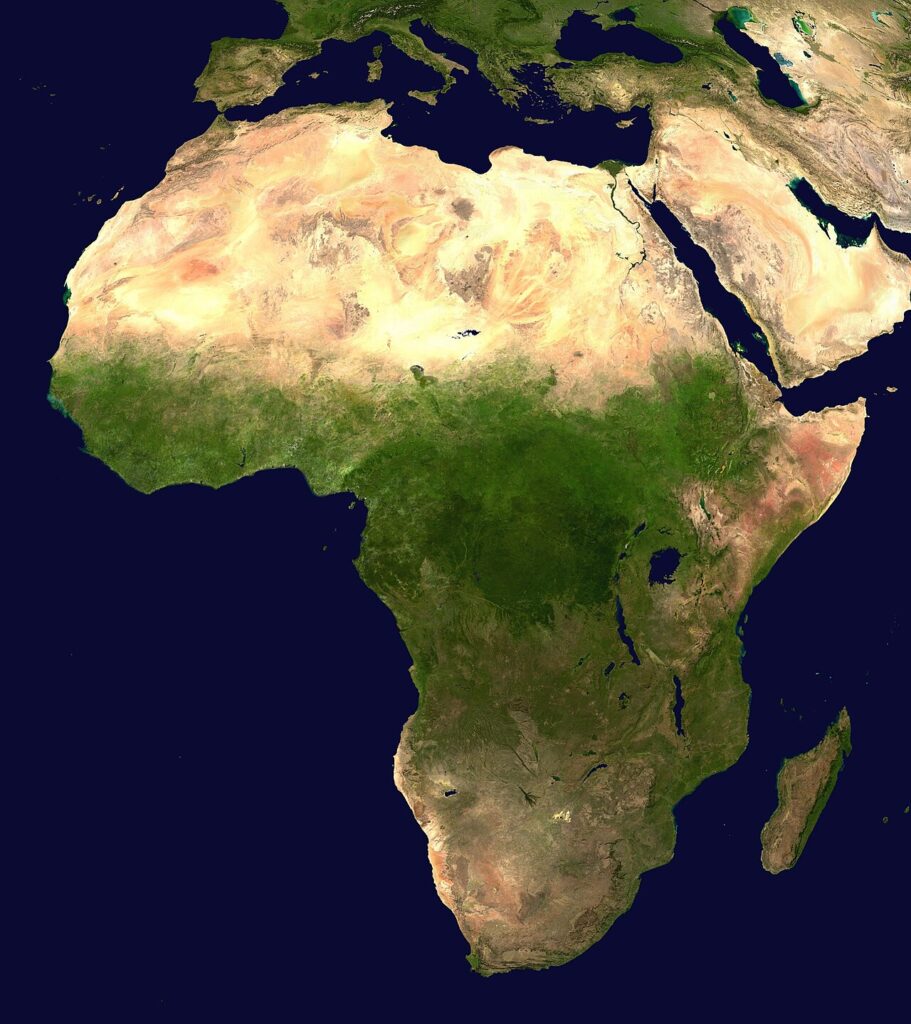
Morocco’s geographical position gives it a distinctive role in these transformations. The Kingdom lies at the intersection of three strategic spaces: Africa, the Mediterranean and Europe.
This position means that Morocco’s climate challenges are simultaneously connected to water, food and energy security, as well as to its economic relations with Europe and Africa.
The challenges facing Morocco, particularly water scarcity, drought and pressure on coastal areas, intersect with wider challenges across the Mediterranean basin and the African continent.
From this perspective, Morocco’s contribution to shaping the African climate agenda can draw on its experience in renewable energy, water desalination, water management, drought-adapted agriculture, the blue economy and ecosystem protection.
Morocco can also contribute to building bridges between African priorities and the Mediterranean agenda, particularly on water, energy, food, climate, migration and coastal development.
This makes it increasingly important to view the Mediterranean as a shared space of risks and solutions, rather than simply as a geographical boundary between North and South.
Africa wants to influence the rules of the game
One of the most significant developments associated with CCDA-XIV concerns the concept of African Agency.
The conference’s official documents emphasise that climate leadership cannot be reduced to defending African interests within negotiations. It also requires the capacity to identify problems, produce solutions, build alliances and influence the rules, institutions and structures that govern global climate action.
Africa is seeking to move from the question, “What will the world provide for us?” to a more strategic one: “What can Africa propose and build, and how can it secure a place for its solutions in the new global economy?”
This shift concerns energy, minerals, trade, technology, finance, data and industry. It also depends on the ability to build a coordinated African position and transform it into political and economic alliances capable of influencing international negotiations.
One of the conference’s most important practical roles was to prepare the African ground for participation in COP31 in Antalya.
The Economic Commission for Africa indicated that the discussions would feed into the Addis Ababa Climate Action Messages, expected to include practical African proposals to be taken to COP31, while laying the foundations for the pathway towards COP32 in Addis Ababa.
This gives CCDA-XIV significance beyond that of a consultative conference. The real value of its outcomes will emerge from their capacity to become a clear African negotiating agenda and to influence discussions on finance, adaptation, energy, technology, trade, industrialisation and climate justice.
The real test will be whether messages can become negotiating positions, negotiating positions can become alliances, and alliances can ultimately produ
ce decisions, financing mechanisms and implementation.
Addis Ababa prepares the ground for COP32
The forthcoming hosting of COP32 in Addis Ababa in 2027 gives this process an additional strategic dimension.
CCDA-XIV devoted part of its discussions to the role Ethiopia could play during its COP32 presidency, distinguishing between Africa’s collective negotiating role and the responsibilities required of a COP presidency in terms of mediation and consensus-building. This distinction matters.
The success of COP32 will not be measured simply by the fact that a global climate conference is hosted by an African country. It will depend on its ability to produce results of genuine value to the global climate system while giving greater weight to African priorities within that system. The period between COP31 and COP32 therefore represents an opportunity to build a clear African agenda supported by science, finance, practical proposals and political alliances.
The real outcome begins after the conference
For years, Africa has accumulated a substantial body of strategies, declarations, positions and commitments. The continent has also developed significant experience in climate negotiations. The fundamental challenge, however, lies in the distance between decision and implementation. The value of the Addis Ababa messages will therefore depend on their ability to answer practical questions: Who will implement them? Who will finance them? When? Through which instruments? How will results be measured? What mechanisms will ensure accountability?
These questions will determine whether the theme “From Commitments to Implementation” becomes a genuine new pathway or remains an attractive title for another conference. Climate decisions require budgets. Institutions require capacity. Projects require finance. Communities require effective protection. The private sector requires a clear investment environment.Implementation is, at its core, a question of governance.
Africa between justice and effectiveness
CCDA-XIV sent a clear signal that Africa intends to preserve its climate justice agenda while expanding the space for action and proposals.
This is an important equation. Climate justice remains fundamental to Africa’s position, given the continent’s relatively small contribution to global emissions compared with the scale of the impacts it faces. At the same time, Africa needs to strengthen its capacity to mobilise its own resources, develop its markets, invest in its scientists and young people, process its resources, expand intra-African trade, strengthen its financial institutions and turn its renewable energy potential and natural wealth into economic and social value.
From this perspective, justice and effectiveness reinforce one another. Justice needs economic, scientific and institutional tools capable of giving greater weight to African demands.
The message that goes beyond Addis Ababa
Perhaps the most important message carried by CCDA-XIV is that the future of African climate leadership will be measured as much by the continent’s capacity to produce solutions as by its ability to demand support.
This opens a broad field for Morocco and other North African countries to contribute to this dynamic, particularly by building stronger bridges between Africa, the Mediterranean and Europe and developing cooperation on water, energy, food, technology and the blue economy. It also creates greater space for universities, research centres, civil society and environmental media to produce knowledge, monitor the implementation of commitments and transform climate issues from negotiating files into questions directly connected to people’s lives.
From Belém to Antalya, then Addis Ababa
Ultimately, the Belém-Antalya-Addis Ababa pathway carries a meaning that goes beyond the sequence of cities and conferences.
It seeks to reshape the relationship between commitments and implementation, between climate and development, and between Africa and the global system. The journey began in Belém with the search for global solutions. It moves through Antalya at COP31, where countries will test their ability to translate commitments into new understandings, and then reaches Addis Ababa for COP32, where Africa will have a historic opportunity to present a broader vision for the future of global climate action. The success of this vision, however, will depend on what happens after the conferences end. Will resources reach farmers? Will cities and communities become better able to cope with floods, drought and extreme heat? Will electricity reach more Africans?
Will African minerals be transformed into African industries? Will renewable energy become a driver of development? Will data and science become an effective part of decision-making? Can Africa move from defending its interests to actively participating in shaping the rules of the global climate and economic system?
These are the questions that will give the Addis Ababa Climate Action Messages their real value. In this sense, the real test of CCDA-XIV begins after the conference doors close.
A successful conference is one that leaves behind clearer policies, fairer financing, stronger institutions, investments more closely connected to realities on the ground and more resilient communities.
When Africa moves from commitments to implementation, from demands to proposals, and from exporting raw resources to building value, it will strengthen its capacity to address climate change while also increasing its influence over the shape of the global economy emerging before our eyes.
This is precisely where the strategic value of the Belém-Antalya-Addis Ababa pathway lies: in making Africa a partner in writing the rules of the climate future, and in transforming its voice from that of a continent confronting crisis into that of a continent participating in the design of solutions and helping shape their direction.