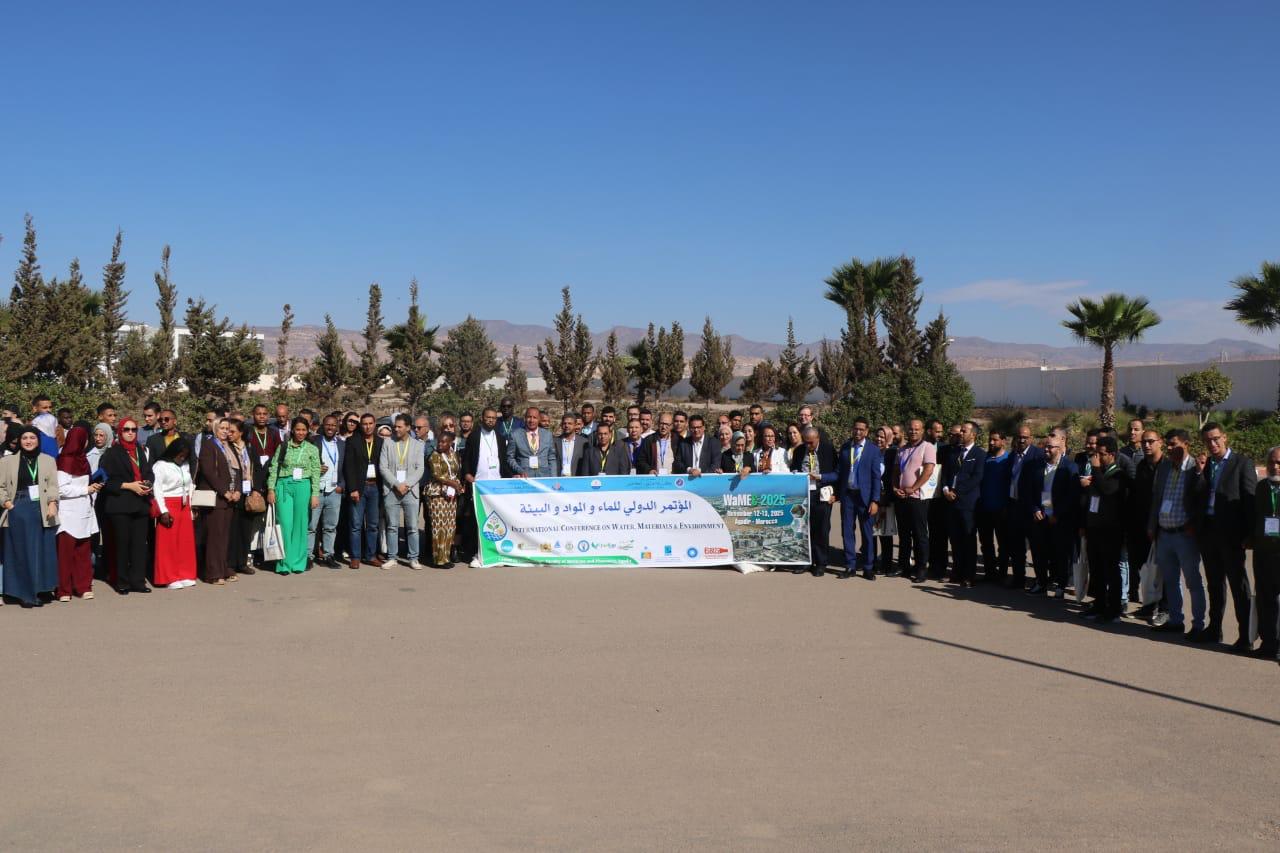
First International Conference on Water, Materials and Environment (WaMEC 2025)
By Mohammed Tafraouti
In the heart of Agadir, where the Atlantic breeze meets the spirit of innovation, the WaMEC 2025 conference transformed into a vibrant hub bringing together engineering, environmental sciences, advanced technologies, energy and artificial intelligence. Over two days, the center of conferences of the Faculty of Medicine and Pharmacy became an open global laboratory where scientists, engineers, climate experts and materials specialists shared a common ambition: How can science serve humanity, and how can humanity shape its future through science?
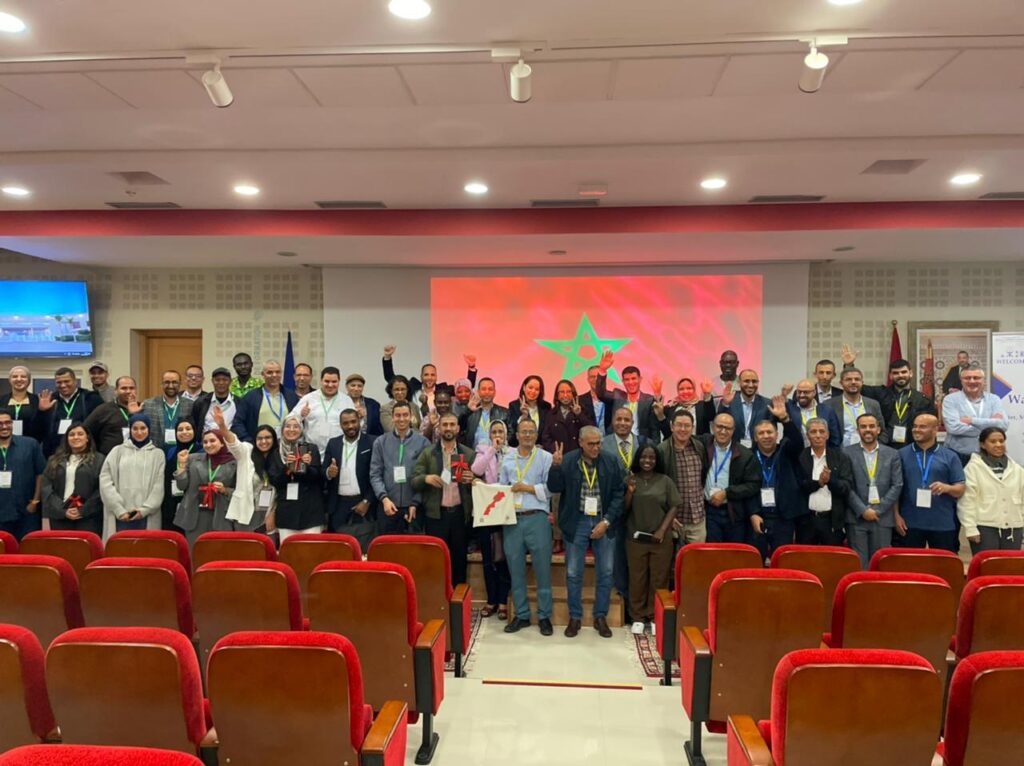
The First International Conference on Water, Materials and Environment, organized by the Laboratory of Applied Chemistry and Environment (LACAPE) at the Faculty of Sciences of Agadir, in partnership with the Multidisciplinary Research and Innovation Laboratory (LMRI) of the Polydisciplinary Faculty of Khouribga and the Moroccan Association of Applied Sciences and Environment (AMSAE), builds on the success of JIME2019. It reaffirms the pioneering role of Moroccan universities in scientific research and knowledge exchange.
Throughout the sessions, participants discussed the latest innovations in water resource management, wastewater treatment, materials and nanomaterials, membrane technologies and desalination, valorization of natural resources, renewable energies, climate change and circular economy. The congress positioned itself as an international platform for collective reflection and the formulation of concrete solutions, placing Morocco at the center of the global debate.
Professor Ahmed Belmouden, Dean of the Faculty of Sciences of Agadir, described this meeting as a crucial moment in the face of growing pressures on water resources and the effects of climate change in the region. He emphasized that integrated solutions can only emerge from scientific research. He also highlighted the modern analytical platform made available to researchers, equipped with state of the art instruments such as the scanning electron microscope, X-ray diffraction and Raman microscopy, open to national and international researchers at symbolic costs under the motto: “Scientific equipment must serve the entire scientific community.” He called on students and young researchers to engage boldly and build strong partnerships.
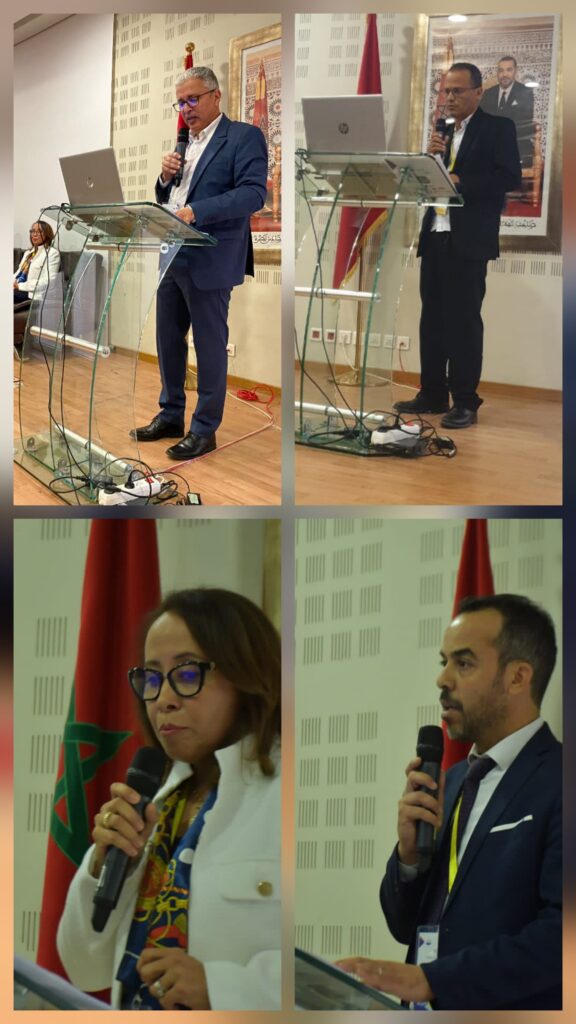
Professor Mohammed Chiban, the conference chair and the president of the Moroccan Association of Applied Sciences and Environment (AMSAE), recalled that the world is facing major environmental challenges—water scarcity, droughts, floods and rising temperatures, which threaten agriculture, the economy and ecosystems, particularly in the Agadir region, heavily dependent on farming. He hailed the conference as a space of cooperation and innovation that enabled the emergence of new partnerships and practical solutions to meet these challenges. He highlighted the importance of this conference as a platform for cooperation, scientific exchange, and innovation, fostering new partnerships and practical solutions to address these pressing global challenges. He also warmly welcomed all participants and sponsors to WaMEC 2025, expressing his appreciation for their presence and their valuable contributions to the success of this international event.
Professor Fatima El Baz, Acting Director of LACAPE, stated that the conference is part of a national context full of hope and pride. She recalled the objectives of the event: strengthening ties between the university and the socio-economic sector, promoting research and innovation, and developing new collaborations. She explained that the laboratory is leading several innovative Master’s programs in water science and technology, applied chemistry, environmental engineering and climate change, linking research and practice through projects focused on water management, pollution control, waste valorization and the development of innovative materials for environmental and energy applications.
Mr. Adel Moufakir, Vice-President of the Souss–Massa Region, stressed the need to develop innovative water-management solutions and accelerate the transition to a circular economy based on environmentally friendly materials, noting that scientific cooperation is essential to face future challenges.
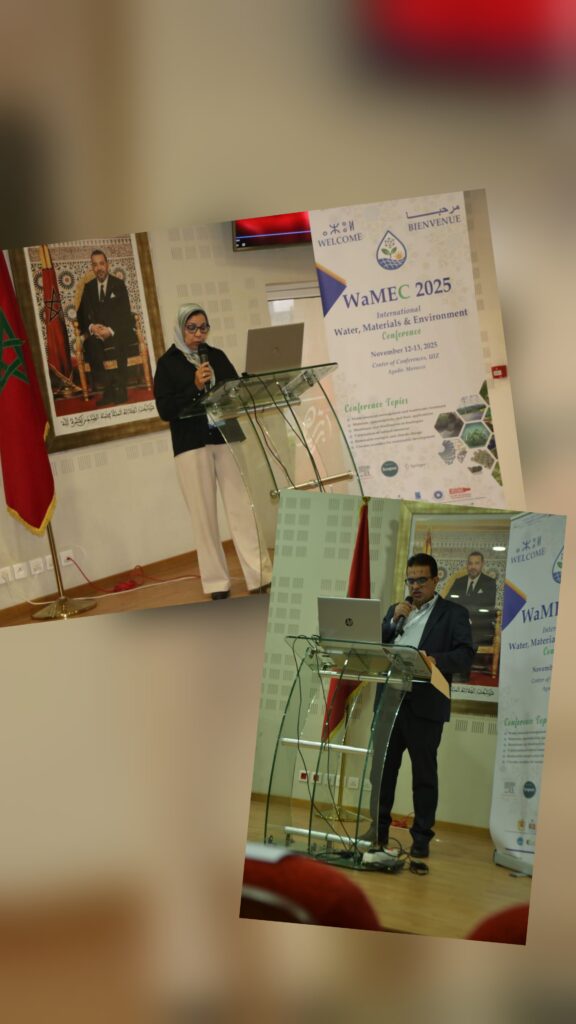
Ms. Khadija Sami, Regional Director of Environment, affirmed that the topics of the congress are fully aligned with the national strategy for sustainable development. She cited the framework agreement between the Ministries of Energy Transition and Higher Education supporting doctoral training in energy and environmental fields until 2028.
Mr. Noureddine Baraka, Vice-Dean of the Polydisciplinary Faculty of Khouribga, reminded attendees that Morocco is facing an unprecedented water challenge requiring collective mobilization in line with Royal directives on rational and solidarity-based resource management. He noted that the conference brought together more than 200 researchers and experts from 15 countries to discuss water management, desalination, valorization of non-conventional resources and renewable energies.
Crossed Scientific Perspectives
Water Resource Management: A Moroccan Vision
On the first day, Professor Lhoussaine Bouchaou presented a talk entitled “New Technologies for Water Resource Management: Moroccan Perspectives.” He highlighted the national water situation, where agriculture consumes nearly 85% of available resources amid growing pressures from climate change and overexploitation.
He proposed an integrated vision based on advanced tools: high-precision field measurements, satellite monitoring, multidisciplinary modeling, smart irrigation management protocols based on agrometeorology, and collective intelligence to build a sustainable model.
The expected impact goes beyond technical aspects toward a true digital transformation of the water and agricultural sectors, improving farmers’ living conditions, productivity and the sector’s attractiveness for youth. The debate also addressed constraints related to human resource shortages and limited databases, adopting a structured methodology based on key questions (What? Who? Where? When? How? How much? Why?), to ensure clarity and effective task distribution.
Valorization of Agricultural Resources through Enzymes
Professor Renato Froidevaux of University of Lille, France presented “Enzymes and Biocatalysis for the Valorization of Agricultural Resources.”
He explained that the international classification of enzymes distinguishes seven major categories (EC1–EC7), illustrating the immense potential of transforming agricultural residues into high-value products: biofuels, green chemicals, food ingredients, and more.
However, this field faces several challenges: resource seasonality, ethical debates surrounding the “food vs. fuel” dilemma, costly technological barriers, and market and policy constraints.
Meanwhile, innovative trends are emerging: development of enzymatic cocktails, use of immobilized enzymes, exploration of metagenomic-derived enzymes, and creation of integrated biorefineries. These advances place biocatalysis at the heart of a sustainable circular-economy model that reconciles environmental concerns with economic profitability.
Desalination in Morocco: Strengths and Challenges
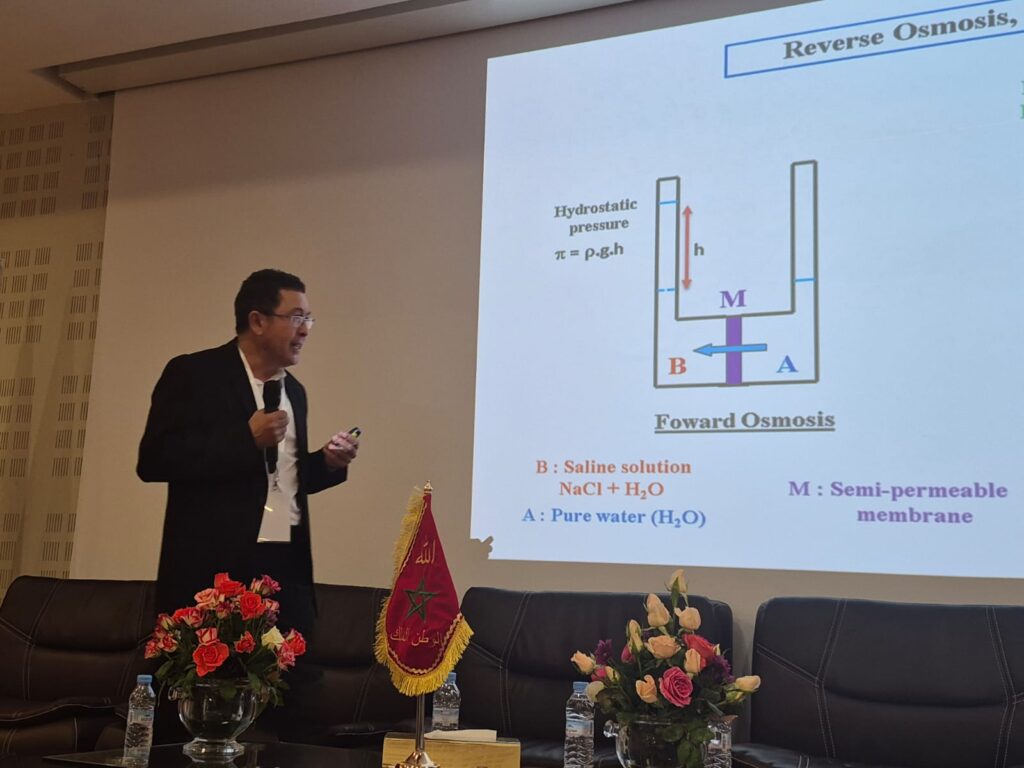
Professor Mohamed Taky of Ibn Tofaïl University delivered a presentation titled “Desalination in Morocco: Strengths, Challenges and Research Perspectives.”
He pointed out that Morocco’s annual per-capita water availability is around 540 m³, close to the critical threshold of 500 m³, making non-conventional solutions indispensable.
For two decades, Morocco has relied on reverse osmosis, offering hydric autonomy, high quality and technical flexibility. But challenges remain: energy consumption (3–5 kWh/m³), high investment costs, membrane aging, boron issues, and the environmental impact of brine and CO₂ emissions.
These challenges are in fact research opportunities: improving pretreatment, developing aquaporin-inspired membranes, recycling used membranes, reducing energy consumption through renewable energies, and innovative brine management through zero-liquid-discharge systems. Morocco has committed to this path by launching major projects in Casablanca, Rabat and Tangier, but the sustainability of this strategy requires addressing its economic, environmental and human challenges.
Nanoparticles for Clean Energy
Professor Gabriela Cârja (Technical University “Gh. Asachi” of Iași, Romania) delivered an advanced talk titled:
“PICS in Sustainable Catalysis: Confinement of Metallic Nanoparticles in Layered Double Hydroxide Matrices.”
She highlighted major advances in sustainable nanostructured catalysis, explaining how metallic nanoparticles (gold, copper, nickel…) can be confined within layered double hydroxide (LDH) structures. These architectures offer ideal environments for controlling chemical reactions, opening vast perspectives for catalysis and clean-energy production.
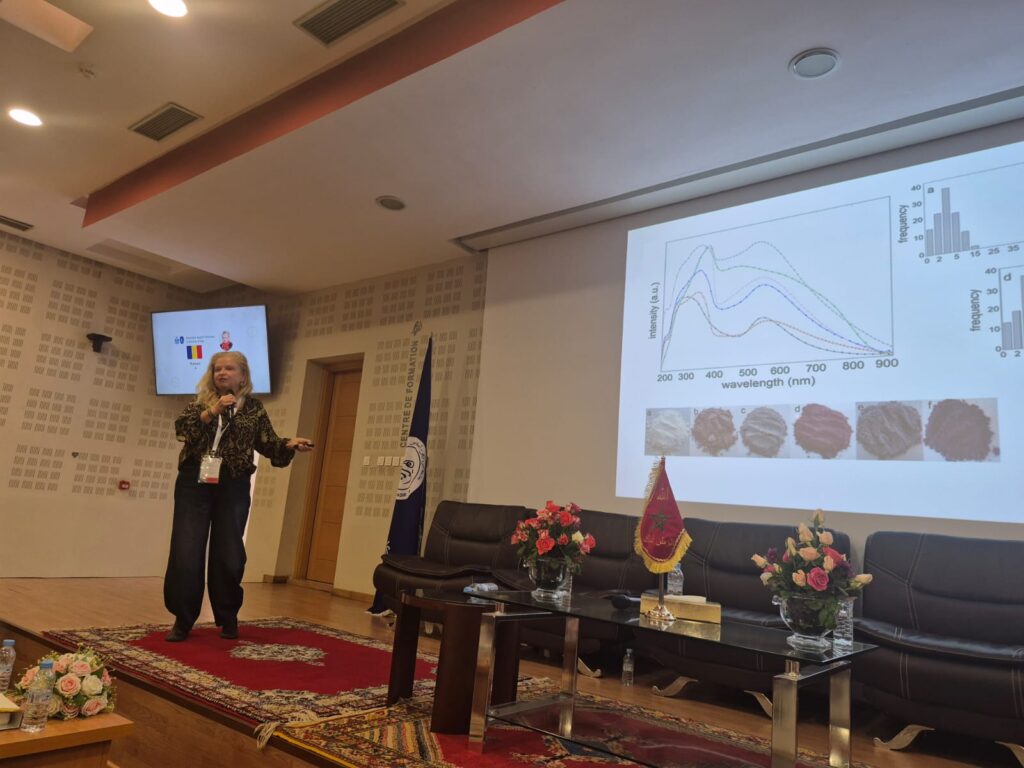
She demonstrated how interactions between nanoparticles and matrices enhance catalytic activity through phenomena such as plasmon-induced charge separation (PICS). These studies pave the way for complex nanometric architectures essential to the development of sustainable energy and environmental solutions.
Detoxifying Lead-Contaminated Cupels for Engineering Applications
The team from KNUST University, Ghana (B. Koomson, E. Pabwie, P. Boakye), presented a study titled “Detoxification of Used Cupels for Engineering Applications.”
The researchers addressed the issue of waste generated from gold analysis, containing up to 45% lead oxide, posing major health and environmental risks. The study proposes a green approach based on lead extraction using weak organic acids (acetic and citric), after grinding to enhance permeability. Results showed the superior efficiency of acetic acid and the decisive influence of particle size. The method makes it possible to recycle hazardous materials and transform them into eco-friendly engineering materials, reinforcing circular economy in the industrial sector.
Closing of the First Day: Science, Practice and Cooperation
The first day ended with a rich debate between researchers and students, emphasizing the need to align scientific research with field applications to address water, energy and environmental challenges, and to strengthen collaboration between Moroccan and international universities.
Second Day: A Remarkable Scientific Effervescence
The second day of WaMEC 2025 featured a series of presentations covering numerous scientific fields.
Professor Luigi Rizzo (University of Salerno) discussed the challenges of tertiary and quaternary wastewater treatment in Europe, within a demanding regulatory framework targeting micropollutant removal and energy neutrality.
Professor Ahmed S. G. Khalil (Fayoum University) presented his innovations in nanocomposite membranes.
Researcher El-Houssine Ablou (UM6P) detailed his work on biodegradable biopolymers for controlled-release fertilizers.
Dr. Sophie Cernot presented the performance of hydrophobic ceramic membranes for membrane distillation.
Several parallel sessions addressed artificial intelligence, climate risks, advanced materials, remote sensing, hydrology, and natural-resource valorization. Moroccan, European and African teams presented studies combining modeling, laboratory experiments, field tests and operational solutions.
Innovative research also explored the use of natural flocculants as sustainable alternatives to synthetic polymers, the assessment of health risks linked to sachet water in Niger, and new approaches to dam inspection using GPR and seismic tomography. Other studies examined catalysts derived from eggshells, the design of carbon–biopolymer composite materials for dye adsorption, and the development of super-absorbent nanocellulosic hydrogels for agriculture. Researchers also examined the use of AI to predict phosphorus and nitrogen removal, as well as the geomechanical study of Boke clay between Guinea and Senegal for ecological construction applications.
This scientific richness illustrates the dynamism of the congress as an international platform for co-creating solutions to water, energy and environmental challenges.