By: Mohammed TAFRAOUTI*
In recent years, climate disinformation has become one of the most serious challenges facing global environmental action. Its influence has intensified on digital platforms and in the media, distorting scientific facts and disrupting the development of climate policies. This issue featured prominently on the COP30 agenda, where the severity of misleading information and its role in hindering emission reduction efforts were recognized for the first time. On this occasion, we interviewed Mohcin Mansour, director and founder of the French association Solutions Nature, which works to promote nature-based solutions for sustainable development, to shed light on the significance of this recognition and to explore how civil society can strengthen information integrity in the fight against climate change.
Interview on Climate Disinformation and COP30 Outcomes with the Director and Founder of the Solutions Nature Association, holder of a PhD in Public Law.

Question 1: How does the Solutions Nature association assess the COP30 decision to officially recognize climate disinformation and establish mechanisms to penalize it?
Answer: According to Solutions Nature,it is first and foremost encouraging to finally see the importance of the right to access information in the environmental sector being recognized. It is also relevant to see the international community acknowledge climate disinformation as a major obstacle in their daily efforts to protect the environment. This is a historic step, as the declaration establishes a link between the responsibility of actors who spread false information and the effects they cause by hindering climate policies. The decisions taken at COP30 pave the way for the international community, civil society, like our association Solutions Nature, and the private sector to engage in a coordinated international mobilization aimed at ensuring reliable and transparent climate information. For Solutions Nature, the declaration is a recognition of their role in raising awareness about environmental issues, based on scientific evidence.
Question 2: Do you believe the measures adopted at COP30 are sufficient to reduce climate disinformation in the media and digital spaces?
Answer: In his view,the decisions are important, but they are not sufficient on their own. What is needed now is rigorous implementation, along with close cooperation between governments, environmental institutions, and digital platforms. Climate disinformation has become a veritable industry, with considerable budgets. Tackling a phenomenon of this scale therefore requires resources, communication strategies, and continuous scientific education for citizens, not just laws.
Question 3: What are the main types of climate disinformation you are observing today,and how can civil society counter them?
Answer: The most common forms include discrediting climate science,overestimating immature technologies to divert attention from emission reductions, and campaigns aimed at discrediting climate activists. They are also observing another worrying trend: an increase in disinformation at the local level, often concerning ecological issues, biodiversity, and the concept of ‘nature-based solutions’. The issues are complex and interconnected: biodiversity is both a victim of and a solution to climate change. Civil society can respond by monitoring public discourse, disseminating simplified and accessible scientific data, and launching educational initiatives, not only on climate issues but also on biodiversity.
Question 4: In your opinion,what are the urgent measures that need to be implemented after COP30 to translate its commitments into concrete results?
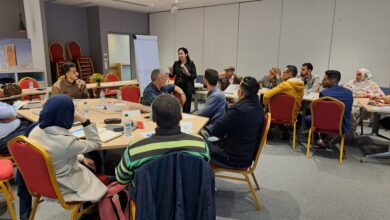
Answer: The association’s founder states that it is necessary,above all, to establish a system for monitoring and enforcing decisions related to environmental disinformation, then to integrate environmental education into school curricula, and to oblige companies to publish transparent reports on their environmental impact. Scientific journalism must also be strengthened, as it constitutes the first line of defense against any disinformation campaign. It is important to note that the Declaration calls on governments to adopt human rights-respecting laws to guarantee the reliability of climate information, protect journalists and researchers, facilitate access to climate data, fund research on climate disinformation, hold digital platforms accountable, and strengthen climate education. Their association Solutions Nature proposes workshops bringing together citizens, researchers, journalists, and digital content creators. The idea is simple: the more aware and informed citizens are, the more they will seek solutions that reconcile development with the preservation of the common good.
Mohammed TAFRAOUTI, Writer, Environmental Journalist / Earth Network.