By: Mohammed TAFRAOUTI
A Scientific Lecture by Professor Michael Jacobson in Agadir, Organized by the International Center for Argan
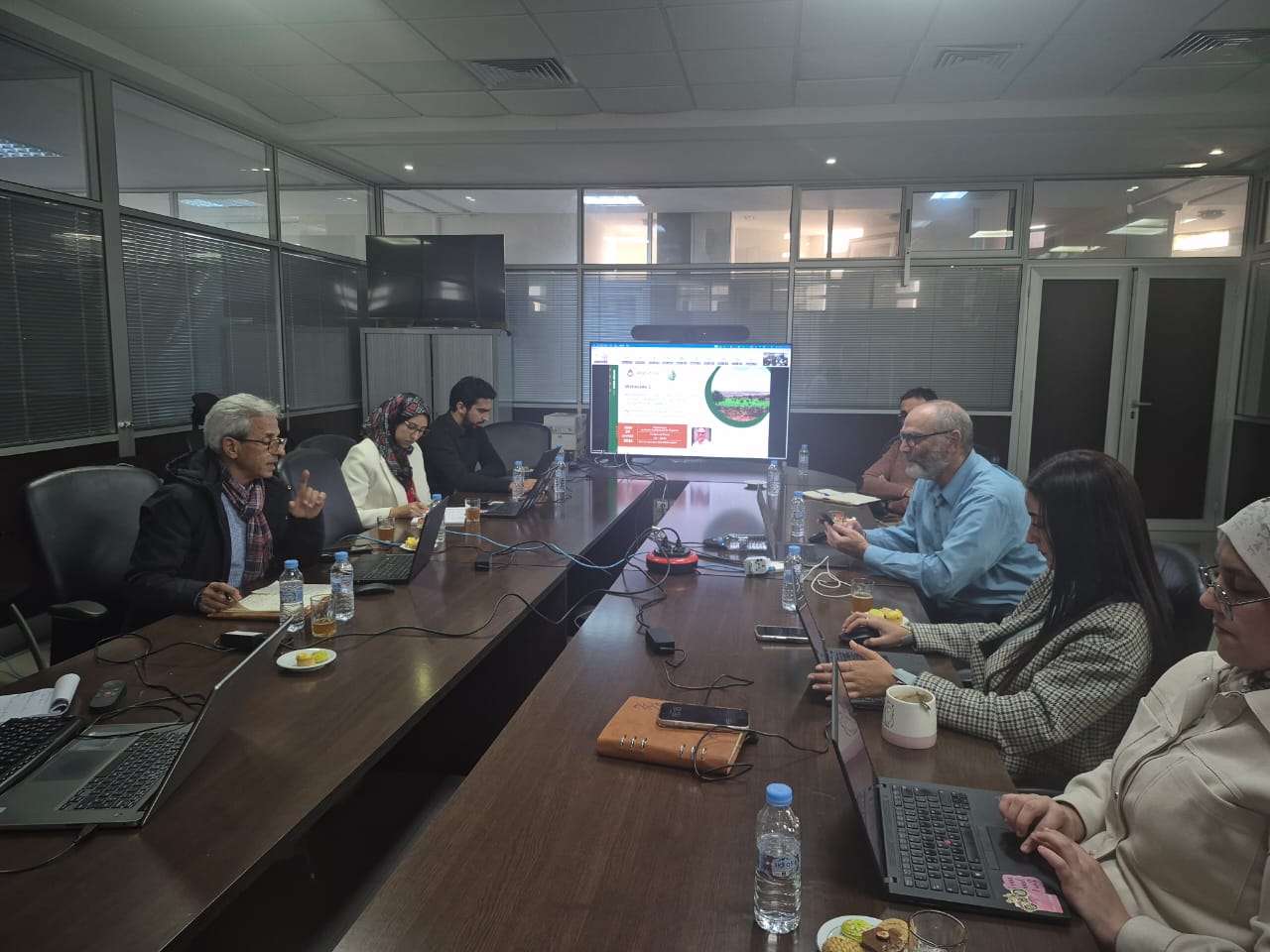
The International Center for Argan, affiliated with the National Agency for the Development of Oasis and Argan Zones (ANDZOA), organized a scientific meeting on Thursday, January 29, 2026, during which Dr. Michael Jacobson (Michael Jacobson, Ph.D.) delivered a lecture addressing agroforestry in dry regions in terms of concepts, practices, and future prospects.
A significant part of the event was devoted to the agricultural Argan system as a multifunctional environmental and social model. The speaker also reviewed successful international experiences in this field. The meeting featured discussions on ways to adopt and adapt agroforestry practices at the local level.
Within the framework of growing scientific debates on strengthening ecosystem resilience in arid and semi-arid areas, Professor Michael Jacobson, Professor of Forest Resources at Pennsylvania State University, presented an in-depth scientific lecture at the International Argan Center in Agadir entitled “Agroforestry in Arid Landscapes: Concepts, Practices, and Prospects within the Argan System.”
Why Agroforestry in Drylands?
Jacobson opened his presentation by explaining his focus on traditional agroforestry systems in dry regions, stressing that the world is moving toward a hotter and drier climate. These regions, which cover nearly 42 percent of the Earth’s land surface, are home to more than one billion people, yet they remain insufficiently addressed in both research and policy. He noted that semi-arid lands, despite their fragility, hold considerable potential for improving livelihoods, provided that integrated approaches are adopted, approaches that consider the relationship between trees, soil, and crops rather than relying on monocultural production logic.
Agroforestry: A Modern Science with Traditional Roots
Professor Jacobson explained that agroforestry, as a scientific concept, only crystallized in the late 1970s due to the historical divide between the agricultural and forestry sectors. For centuries, farmers practiced agroforestry without being recognized as natural resource managers; they were often portrayed instead as a threat to forests.
He added that the development of this scientific field evolved from a narrow focus on farm plots and micro-biological interactions toward a broader landscape-level approach concerned with food security, biodiversity, carbon storage, and water regulation.
The Multifunctionality Paradox
The speaker referred to what he termed the “multifunctionality paradox” of agroforestry. Its capacity to produce food, fodder, fuelwood, protect soil, and enhance climate resilience makes it difficult to measure using conventional indicators dominated by yield, income, or carbon alone. What cannot be easily measured, he emphasized, is often neither funded nor supported, explaining the marginalization of such systems despite their environmental and social effectiveness.
Argan: From Local Governance to Market Logic
Jacobson devoted a central part of his lecture to the Argan system, outlining its historical evolution through three major phases:
Pre-colonial period:
The Argan tree was a sacred and central element in Amazigh community life, embedded in an integrated agro-pastoral system regulated by local customary laws governing grazing, fruit harvesting, and wood cutting. Farmers acted as credible risk managers, balancing climatic uncertainty with livelihood needs.
Colonial period:
Argan was portrayed as a degraded system, with grazing blamed for desertification. This led to the weakening of customary institutions and the imposition of centralized, monocultural forest management, producing negative consequences for both soils and livelihoods.
Modern period:
Argan was rebranded as “green gold,” particularly after the region’s designation as a UNESCO Biosphere Reserve and the surge in industrial demand for Argan oil. While this created economic opportunities, it also intensified pressures of commodification and over-exploitation.
Current Challenges: Climate and Migration
Jacobson explained that the Argan system today faces a vicious cycle combining drought, declining productivity, rural migration, and erosion of local knowledge. The loss of active rural populations weakens the maintenance of terraces and traditional agricultural systems, making the landscape more vulnerable to climate change. Field studies, he noted, show that remittances from migrants are rarely invested in agricultural innovation or ecosystem restoration.
Carbon Is Not Everything
The lecturer addressed the issue of carbon storage in newly established Argan plantations, arguing that an exclusive focus on this function, especially in early planting stages, fails to reflect the true value of the system and should not be used to justify neglecting its food and social functions.
Toward a New Governance of Argan
In his conclusion, Michael Jacobson stressed that the future of agroforestry, and of the Argan system in particular, depends largely on policies and governance frameworks. Success, he argued, does not lie in imposing ready-made technical packages, but in supporting farmer-led innovation and recognizing farmers as credible risk managers capable of reconciling production, resilience, and territorial equity.
He added that the role of science should be to clarify trade-offs, facilitate collective learning, and build bridges between local knowledge and decision-making, prioritizing long-term resilience over short-term gains.
This meeting underscored the importance of rethinking agroforestry systems as a strategic option for the future of dry regions.
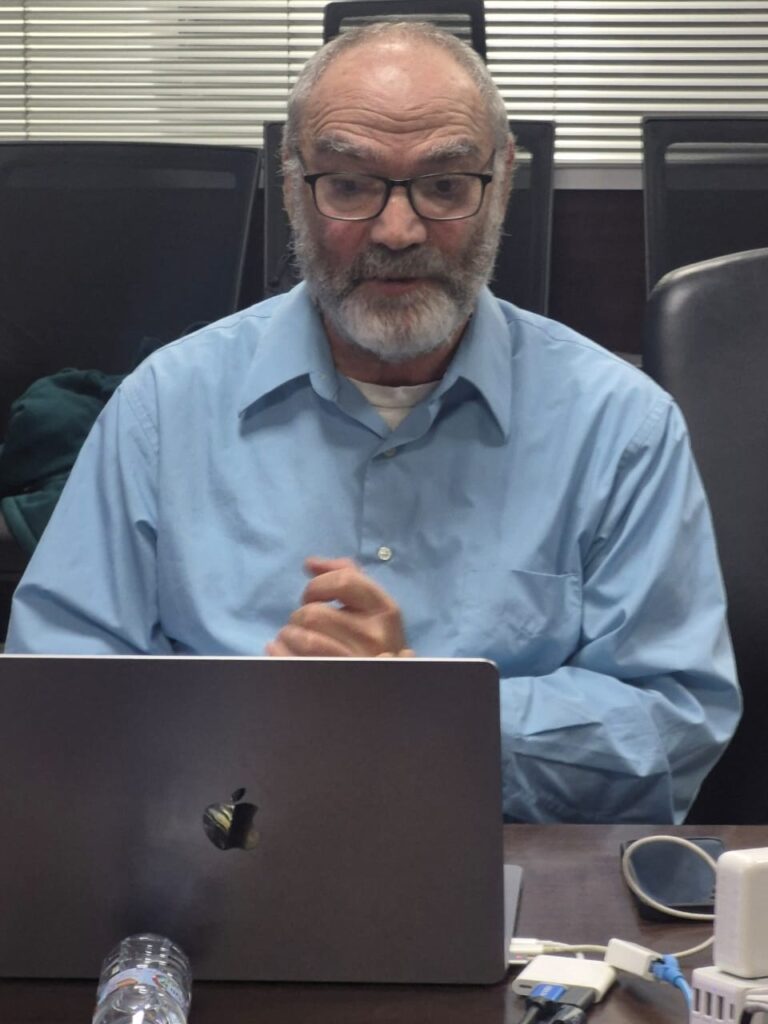
By the way, a brief interview was conducted with Dr. Michael Jacobson, Ph.D., on the sidelines of the meeting to further clarify several key ideas, as follows:
Question 1:
Regarding the evolution of agroforestry science, you described a shift from a plot-level focus, tree, crop, and soil interactions, toward a broader landscape and livelihood perspective that includes biodiversity, carbon, and trade-offs. Given that the future remains institutionally constrained, what policy or institutional change do you consider most important to fully enable this multifunctional approach?
Answer:
The main challenge remains institutional. Agroforestry needs to be formally integrated into legal frameworks and clearly recognized within both agricultural and forestry policies. This also requires breaking down barriers between the relevant ministries. In addition, strengthening local governance and granting local communities and civil society organizations a greater role in land-management decision-making is essential, since the effectiveness of this approach depends on the ability of local actors to determine what is most suitable for their environments.
Question 2:
On adoption challenges, you emphasized that adoption is a process of learning and adaptation rather than absolute success, and that non-adoption can be a rational choice. Based on the Zambia case study, what should agroforestry research and extension programs do differently?
Answer:
The core problem is that innovations are often delivered top-down as ready-made technical packages, based on the assumption that experts know best. In reality, farmers understand their land better than any external specialist. In Zambia, for instance, soil fertility was not farmers’ top priority; they valued other tree benefits such as income, fruits, and fuelwood. This highlights the need to truly understand farmers’ priorities. What is required are stronger extension systems that connect scientific research directly with farmers, allowing innovation to emerge from the ground up based on their needs rather than external assumptions.
Question 3:
In the Argan case study, the system appears to have shifted from a sacred, community-managed resource to a state-controlled and market-driven one, now facing climate threats. Who are the primary experts that should manage these systems, and how can science support them?
Answer:
The real experts in the credibility and sustainability of these systems are the farmers and local inhabitants themselves. The challenge, however, is that many farmers migrate, leaving only a limited number in villages, although those who remain are often the most committed to continuing agricultural activity. The greatest risk is the loss of traditional land-based knowledge. This knowledge must therefore be preserved and transmitted to younger generations. The role of science is to support, document, and connect this knowledge with modern data on climate, water, and soils, not to replace it. Farmers remain at the heart of the solution, while science plays a supportive and enabling role.
More than 80 national and international participants (USA, Canada, France, Spain, portugal, Türkiye,…) followed and interacted with the webinar.