The General Fisheries Commission for the Mediterranean between Reform Ambitions and the Constraints of Maritime Lobbies
By Mohamed Tafraouti
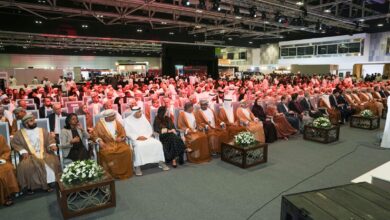
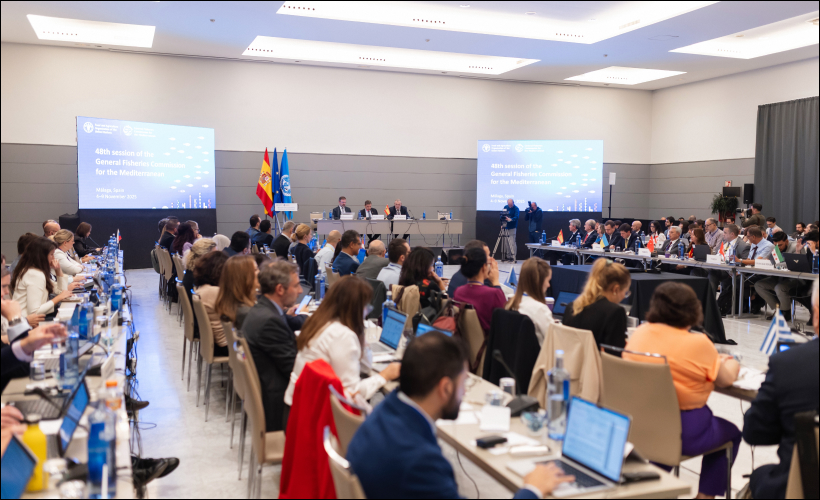
Between two shores sharing history and destiny, Mediterranean countries gathered in the Spanish city of Málaga to renew their commitments to sustainable fisheries, within the framework of the 48th session of the General Fisheries Commission for the Mediterranean (GFCM).
In a festive atmosphere bringing together 24 countries from both sides of the Mediterranean and the European Union under the umbrella of the Food and Agriculture Organization (FAO), the scene resembled an environmental diplomatic celebration, dominated by the slogans of “cooperation” and “sustainability.”
In this celebratory setting, 24 countries from both Mediterranean shores and the EU reaffirmed their commitment to sustainable fisheries and aquaculture. Yet behind the diplomatic phrases and official images broadcast by the GFCM lies a more complex reality. The balance between economic and environmental sustainability remains unsettled, with national interests and industrial pressures defining the boundaries of the proclaimed “green ambition.”
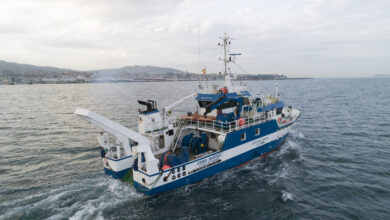
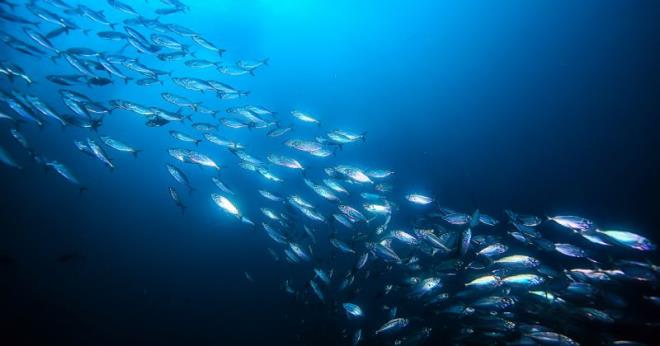
The glowing speeches and official photographs did not conceal the growing contradiction between environmental aspirations and the strained maritime reality. The Mediterranean, once cradle of civilizations, now faces biological and economic depletion caused by intensive fishing practices, industrial lobbies driven solely by market logic, as well as severe pressures from pollution, climate change, habitat loss, mass tourism, and dense maritime traffic. The equation between economic profitability and ecological balance remains skewed.
©FAO-GFCM/Carlos Diaz
In this context, Spanish Agriculture Minister Luis Planas stated during the summit that “the session of the General Fisheries Commission for the Mediterranean symbolizes the union of two sister seas sharing history, culture, and life, and represents an opportunity to move forward toward sustainable fisheries and aquaculture.”
He called for “strengthening cooperation among countries to secure the future of fisheries and fishing communities, where profitability must go hand in hand with sustainability.”
Reforms on Paper or Transformations at Sea?
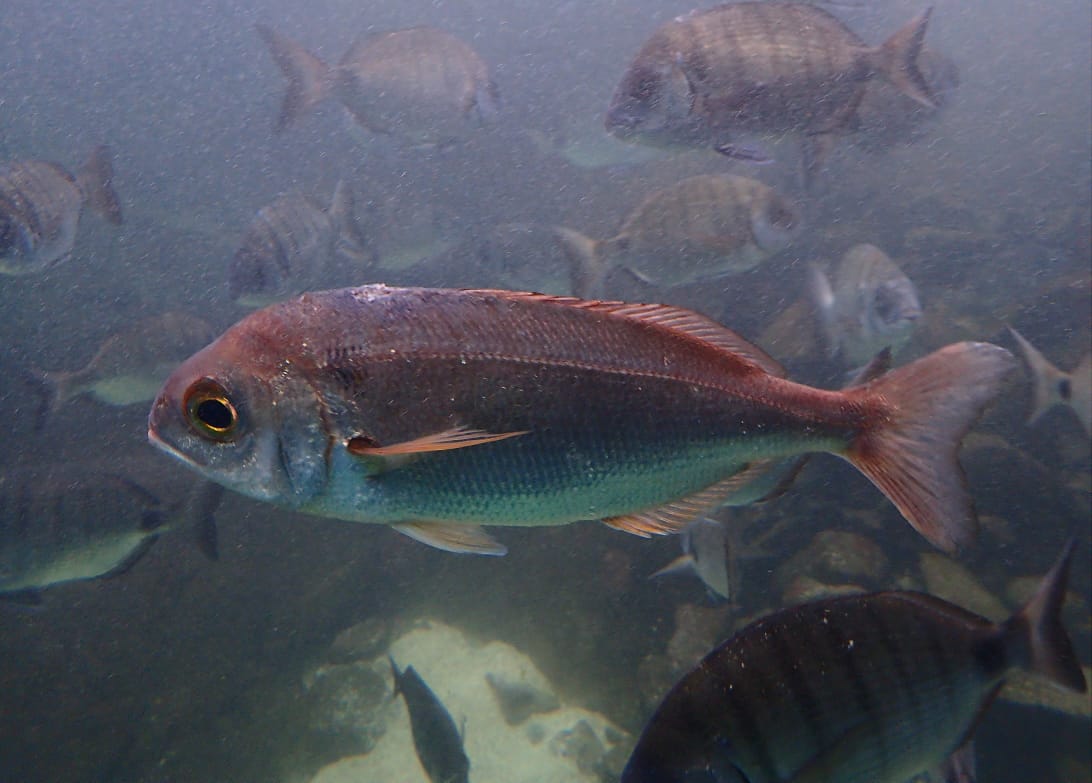
During the 48th session, fifteen proposals were discussed, many aimed at amending existing recommendations. After a week described by many as long and difficult, the Commission adopted a set of management and compliance measures, including major amendments to the multiannual plan for demersal fisheries in the Strait of Sicily, a new long-term plan for pink dentex in the Alboran Sea, and an update of the regional compliance framework.
Key changes included the gradual implementation of compliance categories, revisions of catch and effort limits for key species such as hake, deep-water rose shrimp, and pink dentex, the introduction of scientific rules for catch monitoring, strengthened seasonal closures, new minimum sizes for fish, and a permanent ban on recreational fishing for certain stocks. Collectively, these measures reinforce the Commission’s transition toward a more adaptive, science-based fisheries governance system.
On the surface, these steps reflect growing awareness of the seriousness of stock depletion. Yet experts point to the slow pace of implementation, particularly given the lack of sufficient human and financial resources in some member states. Some recommendations will not become applicable until 2027 or even 2028. Decisions regarding vessel tracking systems or mandatory international vessel numbers, while technically symbolic, do not address the core issue: overfishing continues to deplete ecologically sensitive areas, especially in the Alboran and Adriatic basins.
“Regional Cooperation”… Slogan or Genuine Commitment?
Among the achievements celebrated was the granting of “full compliance” status to several countries, including Morocco, Algeria, and Turkey. But this classification raises questions: some observers see it more as a political reward reflecting procedural compliance than as evidence of real ecological outcomes. The true challenge lies in regulating bottom trawling and dredging practices, which continue to spark sharp scientific and environmental debates due to their damaging effects on marine ecosystems, particularly along North African coasts.
Between “Sustainable Aquaculture” and Expanding Commercial Production
The Commission seeks to promote sustainable aquaculture as a “green alternative” to reduce pressure on natural resources. However, some independent reports view this orientation as more market-driven than environmentally motivated, opening the door to private investments that could increase coastal pollution and deepen inequalities between technologically advanced and less developed countries.
Ukraine’s Accession… Political Dimension in Environmental Garb
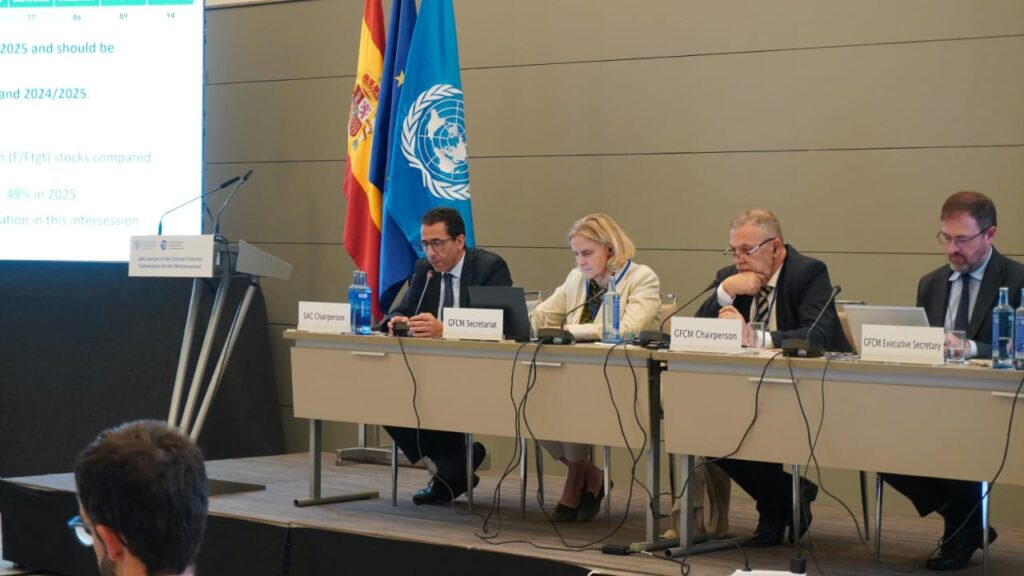
The Commission welcomed Ukraine as a new member, a step described as “historic.” Yet this accession carries political implications, especially amid geopolitical tensions in the Black Sea. Here, the marine environment also serves as a diplomatic card to expand regional influence, rather than being a purely technical matter.
New Governance or Recycling of Positions?
The meeting concluded with the announcement of the Commission’s new executive bureau, expected to lead it toward a “more comprehensive vision.” But observers note that such changes often remain symbolic rather than substantive, as institutional influence continues to be dominated by countries with strong economic presence in the fishing sector, weakening the representation of small coastal communities in decision-making.
Toward the 2025 Report: What Reality Behind the Numbers?
The Commission promises a comprehensive report on “the state of fisheries in the Mediterranean and Black Sea,” documenting improvements in biomass and sustainable production. Yet the question persists: do these figures reflect genuine progress or merely improved assessment methodologies? Between the lines, a stark paradox emerges: while the organization speaks of “sustainability successes,” scientists and civil society voices warn of a “silent ecological fatigue” caused by ongoing trawling activities, coastal pollution, and weak monitoring in some Mediterranean ports. The core question remains: do these numbers reflect the sea’s reality or just methodological refinements?
A critical reading of the Málaga conference reveals that marine sustainability in the Mediterranean remains a project suspended between institutional ambition and field reality. Between optimistic official rhetoric and scientific facts sounding the alarm, the GFCM appears as an institution navigating a sea of contradictions: a sea driven by intertwined economic interests, powerful fishing lobbies, and coastal communities struggling for livelihoods in an environment where resources shrink year after year.
A Voice from Libya… Security and Compliance Challenges
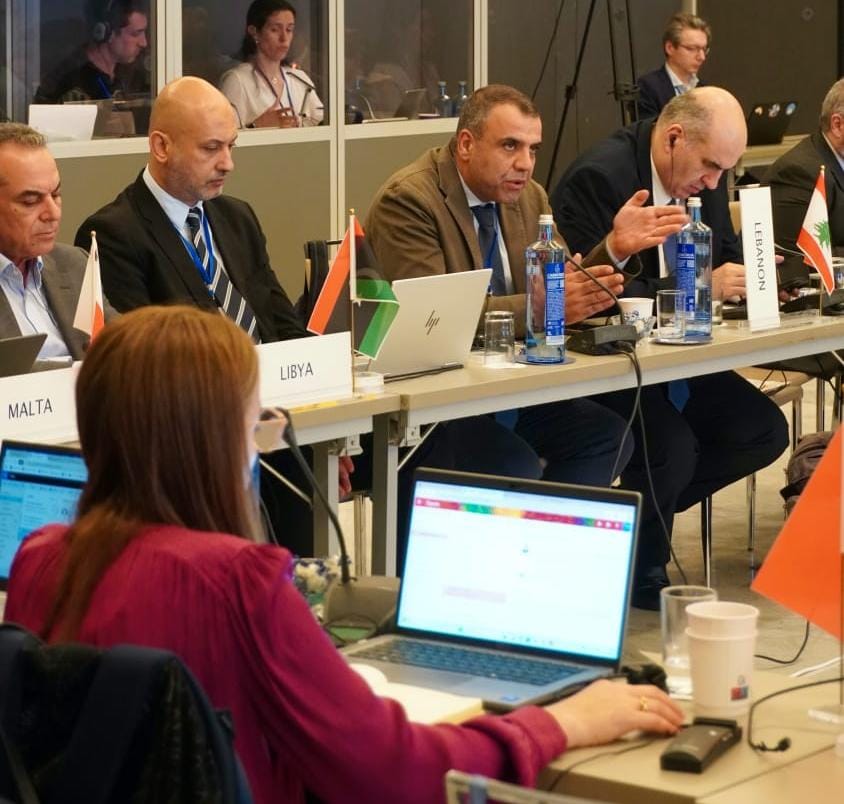
Firas Al-Jabri, representative of Libya’s General Authority for Marine Wealth, told “marocenv” on the sidelines of the 48th GFCM session that Libya maintains official records of fishing vessels and operating licenses, noting that his country cooperates regularly with the Commission in training and monitoring programs.
He explained that current security conditions make inspection and maritime monitoring more complex, despite ongoing efforts to strengthen oversight of fishing activities. He emphasized Libya’s longstanding participation in GFCM meetings and studies on shared fish stocks, highlighting the importance his country attaches to the Commission’s recommendations. He added that this year’s summit was distinctive in combining the Compliance Committee meeting with the annual Commission session, enabling constructive discussions on key challenges facing the region’s fishing sector. The meetings resulted in a package of decisions and recommendations aimed at enhancing sustainability of marine resources and providing alternative, sustainable income sources for fishers and coastal communities.
He concluded by stressing Libya’s need for an international support plan, including training programs, modern equipment, and scientific capacity-building, to align national frameworks with GFCM and International Maritime Organization standards. Libya seeks to develop its fishing sector and support sustainability to preserve biodiversity and fish stocks through plans and programs in cooperation with the GFCM.
The GFCM session represents a decisive moment in collective reflection on the future of this shared sea, embodying the unity of environmental, economic, and social destinies of its countries. With its decisions and recommendations, the urgent need remains to transform commitments into concrete actions that restore balance to the marine system and ensure the sustainability of fishery resources for future generations.
This gathering, with its messages and visions, opens the door to broader discussions on marine governance, blue financing, and the role of coastal communities in resource conservation. These themes will be central to follow-up and analysis in the coming stages, to bring policies closer to field realities and build more coherent and equitable Mediterranean cooperation.
The deliberations in Málaga reveal that the future of marine sustainability in the Mediterranean will not be shaped by slogans or recommendations alone, but by the ability of states and institutions to translate commitments into realistic executive policies that balance economy, environment, and social justice. What is needed today is not more paper plans, but a new marine governance that makes transparency, monitoring, and accountability the pillars of any genuine reform. Only balanced cooperation between North and South, and the participation of coastal communities in decision-making, can open the horizon for a fairer and more sustainable Mediterranean, where resources are preserved and the sea’s memory safeguarded for generations to come.