Mohammed TAFRAOUTI
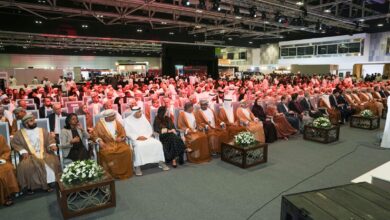
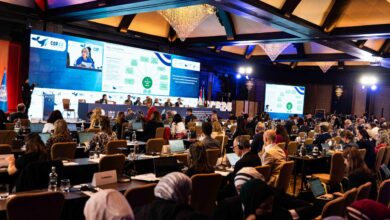
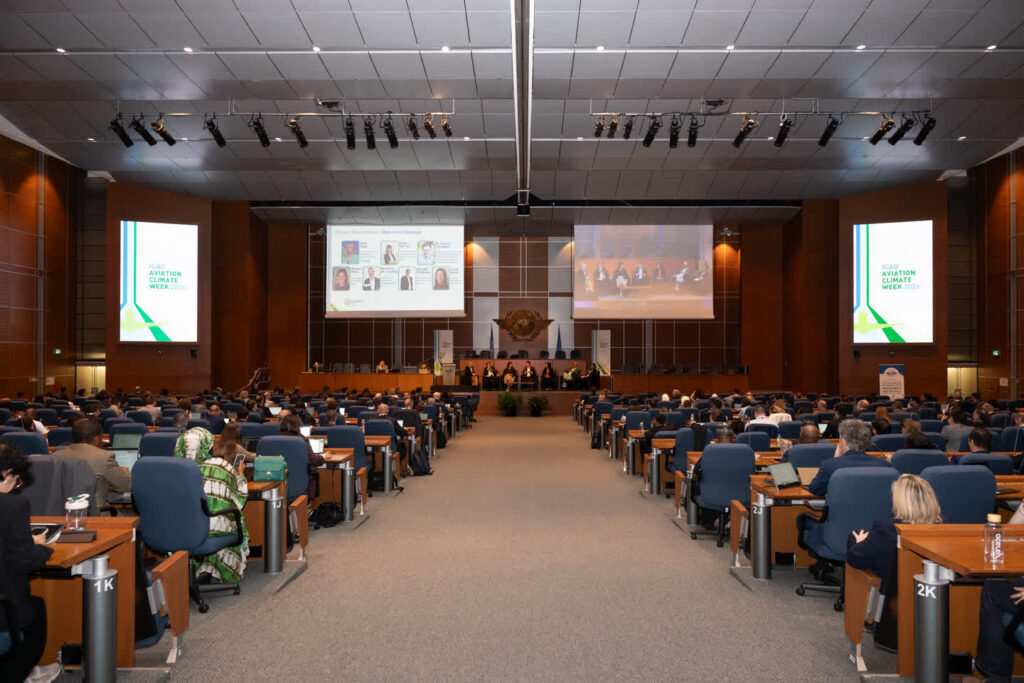
Aviation and air transport experts recently gathered at an international meeting held as part of Aviation Climate Week 2026, to exchange views and expertise and discuss issues that continue to shape the future of the sector, as well as emerging developments on the aviation and climate agenda. Through discussions and technical presentations, the meeting provided a space for the cross-fertilisation of ideas and experience on pathways towards more sustainable aviation, ranging from Sustainable Aviation Fuel (SAF) and cleaner energy to financing, innovation and emissions-reduction mechanisms.
The presentations showed that the environmental question surrounding aviation has become broader. It now involves energy, production, markets, finance and technology, while also raising questions about countries’ ability to develop their own projects, benefit from the green transition and assess whether the proposed solutions can deliver tangible reductions in emissions.
The deliberations of Aviation Climate Week 2026 therefore deserve particular attention. They offer a picture of the directions taking shape within the aviation sector, the options currently being tested and the choices that will influence the future of aviation over the coming decades.
At the forefront of these choices is Sustainable Aviation Fuel (SAF), one of the main pathways being pursued to reduce aviation’s carbon footprint. The presentations devoted considerable attention to policies related to SAF, market development and new technological pathways, alongside preparations for the Fourth Conference on Aviation and Alternative Fuels (CAAF/4).
The presentations outlined efforts to build an integrated SAF ecosystem, beginning with policy and planning, moving through regulatory frameworks and implementation support, and extending to financing. The challenge is substantial: sustainable aviation fuel production requires feedstocks, conversion technologies, supply chains, sustainability certification, markets capable of absorbing the fuel and investments that can move projects from demonstration to commercial-scale production.
The figures presented during the week provide a clear indication of the scale of the challenge. SAF production reached approximately 1.9 million tonnes in 2025, while the projections presented indicate a need for around 23 million tonnes per year by 2030 from cleaner energy sources to achieve a 5 percent reduction in carbon dioxide emissions. Current production capacity for fuels eligible under the Carbon Offsetting and Reduction Scheme for International Aviation (CORSIA) stands at approximately 5.7 million tonnes per year.
These figures point to significant movement in the market while also revealing the scale of the gap ahead. Climate ambitions require a rapid expansion of production, infrastructure capable of supporting that expansion and long-term investment that gives producers and consumers greater certainty about the future of the market.
The presentations also highlighted innovative pathways for sustainable fuel. The proposed future of SAF draws on a wide range of feedstocks and technologies, including different carbon sources, electricity-based processes, carbon capture and storage, and new pathways currently being assessed and considered within CORSIA.
This diversity reflects extensive scientific and technological activity within the aviation sector. At the same time, it opens a broader environmental discussion about what sustainability actually means. The feedstock used to produce the fuel, the source of energy used during manufacturing, water consumption, impacts on land and effects on biodiversity all form part of the final environmental footprint.
This is where the concept of life-cycle emissions becomes particularly important within the CORSIA-eligible fuel framework. Fuel certification has evolved to include sustainability criteria, life-cycle emissions calculations and certification and verification systems.
According to the presentations, the number of economic operators accredited within the supply chain for CORSIA-eligible fuels increased from 370 in 2025 to more than 700 in 2026. The CORSIA-eligible fuel produced so far relies on waste-based feedstocks, with an average life-cycle emissions reduction of approximately 81 percent.
These figures point to an important shift in the way sustainable fuel is assessed. The term “sustainable” is increasingly linked to a system of standards, calculations and certification, while verification has become an essential component of the credibility of the emerging market.
In this respect, CORSIA has a role that goes beyond emissions accounting. It contributes to shaping an international market for eligible fuels and emissions units, while establishing rules governing what can be counted under the scheme and what requires evidence and certification.
Transparency is therefore crucial. As the market for sustainable fuels and emissions-reduction and offsetting mechanisms expands, the need for accurate data, independent verification systems and safeguards against double counting becomes increasingly important.
One of the topics that attracted particular attention during the presentations was the Assistance, Capacity Building and Training for Sustainable Aviation Fuels programme (ACT-SAF). The programme represents an important mechanism for strengthening capacity and supporting countries interested in developing sustainable aviation fuel production. It presented the results of its first years of work, including completed studies, new studies, capacity-building projects, feasibility studies and partnerships.
This pathway is particularly important for countries with feedstock resources or significant renewable-energy potential that require knowledge, expertise, studies and financing to move towards production.
Here, I see an issue that deserves deeper discussion.
The expansion of sustainable aviation fuel production gives developing countries an opportunity to establish new positions within the green aviation economy through the development of feedstocks, manufacturing, services and expertise across the value chain.
At the same time, these countries need a meaningful position within that value chain, so that their natural resources can generate local industrial and knowledge-based opportunities, while national expertise, companies and institutions find a place within the emerging aviation economy.
This raises an economic and environmental question about the position of countries producing feedstocks within the new value chain: will their resources be transformed into SAF locally, or will they leave their countries as raw materials while the industrial and technological value is created elsewhere?
This question leads to a broader issue concerning the fairness of the green transition.
The transition towards more sustainable aviation requires substantial resources, and the aviation industry naturally seeks the most suitable sources of energy and feedstocks. Yet industrial interests need to intersect with the interests of local communities and economies, as well as the protection of ecosystems.
From my position as an environmental advocate, I look towards a model in which the green transition becomes an opportunity to build local capacities, develop technology, create value and jobs, while safeguarding the resources on which this emerging industry depends.
Financing occupies a central position in this equation. The presentations addressed the need to develop bankable projects and make use of debt instruments, equity, blended finance, guarantees and development-finance institutions.
The scale of the investment required gives this discussion even greater importance. The estimates presented indicate that investments by fuel suppliers in clean aviation energy could reach approximately US$3.2 trillion by 2050.
Financing therefore becomes part of climate policy itself. The journey from a feasibility study to a plant, and from a plant to the market, requires financial mechanisms capable of absorbing early-stage risks and giving promising projects the opportunity to reach production.
In this framework, the Finvest Hub, an aviation finance and investment platform, seeks to connect projects with investors, financial institutions, development banks and technical partners, while helping projects improve their readiness to secure financing.
From an environmental perspective, green finance needs a clear ecological compass. The size of an investment matters, as does a project’s economic return, yet every project should also be assessed according to its impact on the climate, resources, ecosystems and communities.
Another area discussed during the event was Direct Air Capture (DAC), a technology that could play a role in the future of aviation, particularly through the use of captured carbon dioxide to produce e-Sustainable Aviation Fuel (e-SAF).
The technology offers important possibilities by opening a pathway for using carbon dioxide present in the atmosphere as a carbon source for certain fuel-production processes, with the possibility of geological storage or other applications for part of the captured carbon.
From an environmental perspective, this technology deserves research, development and attention, alongside a full life-cycle assessment. The energy required for direct air capture, water consumption, the source of electricity and the method used to store carbon all determine its actual climate value.
Environmental innovation derives its strength from its ability to address a problem while safeguarding the resources upon which life itself depends.
This brings us to the partnerships that formed another important component of Aviation Climate Week. International organisations, governments, airlines, energy companies, financial institutions, manufacturers and technology partners came together during the sessions in an effort to build a broad network around cleaner aviation energy.
This diversity of expertise matters greatly. Aviation is a global industry, and the energy system on which it depends is too complex for a single actor to manage. Successful transformation requires cooperation among laboratories, universities, governments, companies, investors and international institutions.
This is where the value of the cross-fertilisation of ideas and expertise becomes particularly visible. Each actor holds part of the solution, while the complete picture requires these elements to be brought together within a common vision.
The presentations indicate that aviation is moving towards a new phase in which technology intersects with economics, energy with the environment, and finance with climate policy.
As an environmental advocate, I see many reasons for optimism in this transformation, together with a greater responsibility.
I look forward to more efficient aviation, more sustainable fuels, cleaner technologies and investments directed towards solutions with genuine environmental benefits. At the same time, I hope that the understanding of sustainability will encompass water, land, biodiversity, natural resources and fairness in the distribution of transition opportunities.
Climate is a fundamental part of the equation, while the environment extends across a much broader system.
This makes the future of aviation an issue that goes beyond the aircraft itself.
The aircraft flies in the sky, but its fuel comes from the land. Energy requires resources, airports occupy land, water is involved in numerous processes, feedstocks come from different natural systems, and emissions ultimately reach the atmosphere.
I therefore look forward to a stage in which environmental impact assessment in aviation becomes more comprehensive, and every step in the transition is connected to a simple yet profound question:
What has actually changed in the environment?
This is ultimately where the success of all these efforts can be measured.
Programmes matter. Conferences matter. Partnerships matter. Figures matter. Technology matters. The ultimate value of this entire system, however, will emerge through sustained reductions in climate and environmental impacts, more responsible use of resources and fairer opportunities for countries and communities.
In my view, this is the message that can be drawn from Aviation Climate Week 2026: the aviation sector has begun to chart a new course towards cleaner energy, supported by a growing range of tools, technologies, programmes and partnerships.
The final destination will depend on our ability to make this journey more compatible with the planet’s ecological limits and fairer for those who live on it