Cairo: by Mohammed Tafraouti
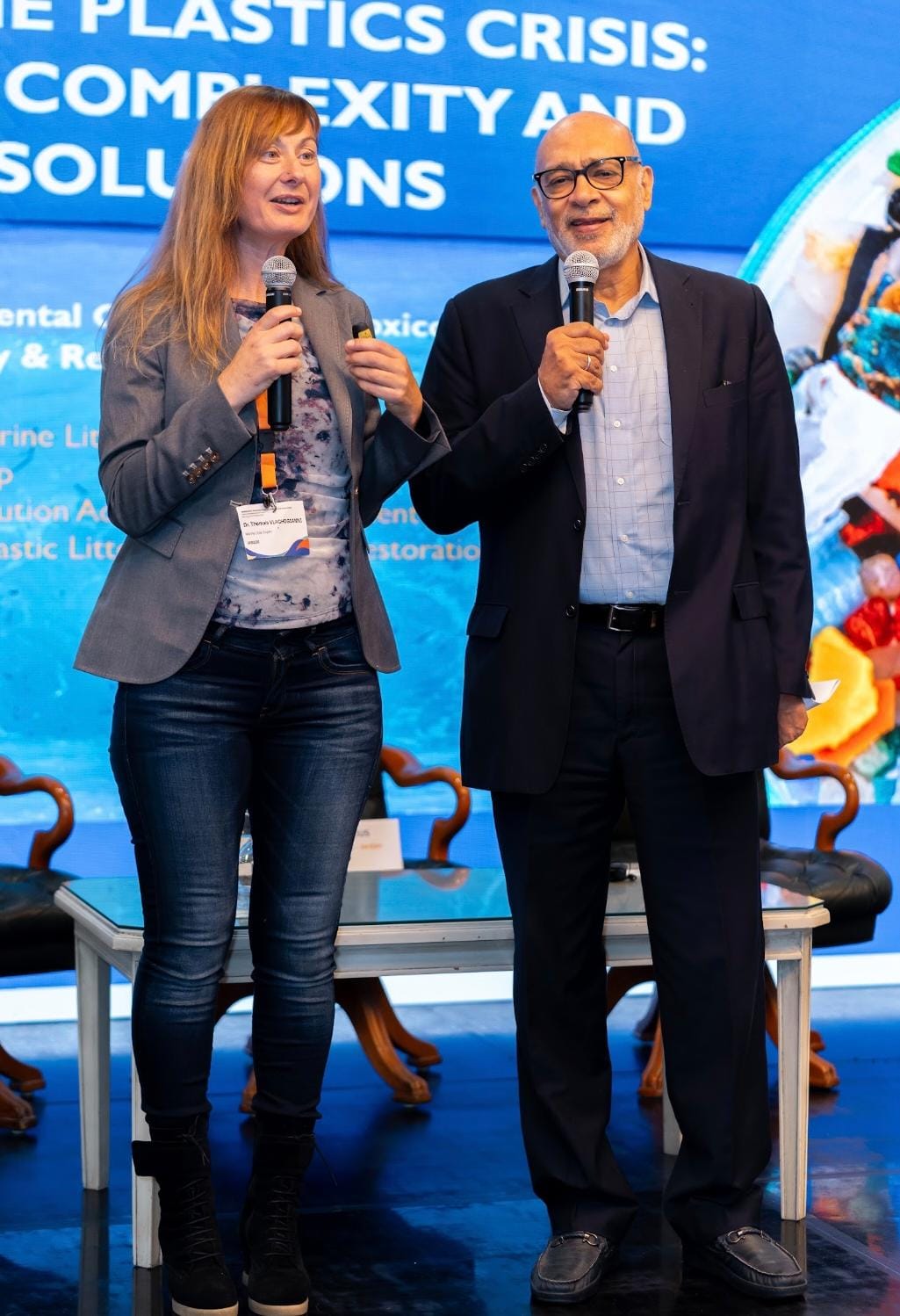
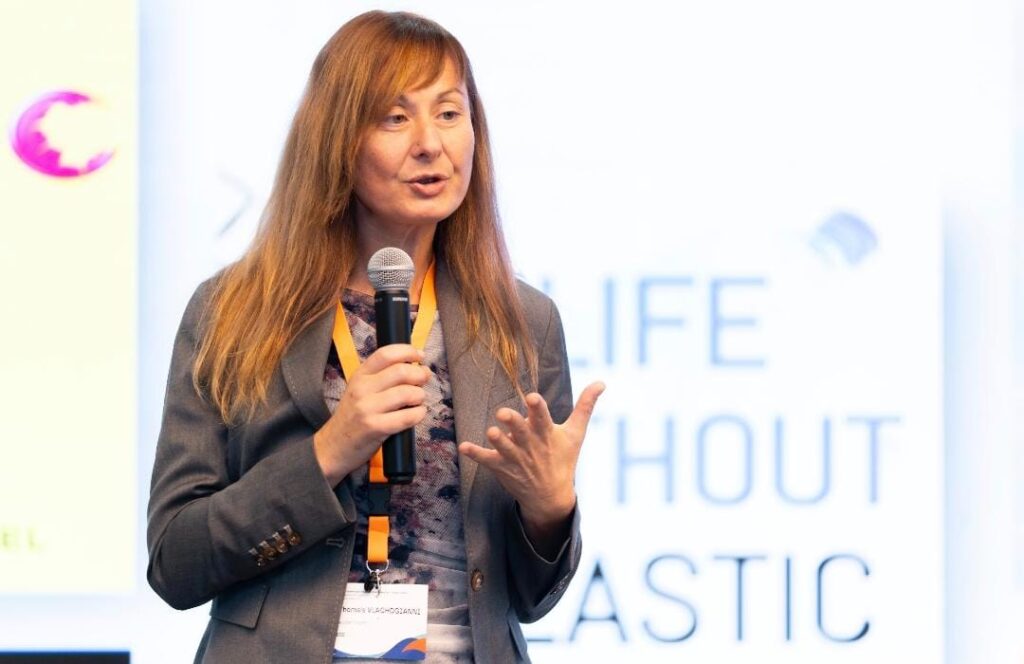
In a decisive scientific session during the Regional Forum held in Cairo, Dr. Thomais Vlachogianni, a leading expert on marine litter pollution at the Mediterranean Information Office for Environment, Culture and Sustainable Development (MIO-ECSDE), warned that the planet has entered a new and perilous era, “the Plastic Age.” She stressed that there are no magic solutions to the plastic crisis, and that addressing it effectively requires comprehensive, science-based solutions and a radical shift in production and consumption patterns.
The session, titled “Untangling the Plastics Crisis: Responsibility, Complexity, and Science-Based Solutions,” was organized within a framework of the Mediterranean Stakeholder Forum on Environment and Climate Action, supported by the supported by the European Union, the Mediterranean Action Plan of UNEP, the Union for the Mediterranean, the League of Arab States and the Ministry of Environment of
Egypt. It brought together some 130 NGO representatives, youth, scientists, educators,
parliamentarians, journalists, local leaders and regional bodies.
From Industrial Miracle to Environmental Challenge
Vlachogianni emphasized that the “industrial miracle” represented by plastics has turned into a global environmental challenge. Its impacts have surpassed planetary boundaries, becoming an inseparable part of both terrestrial and marine ecosystems. driven by overconsumption and the absence of effective waste management.
A Stark Warning: “Green” Alternatives Alone Cannot Solve the Problem!
In one of the most striking messages of the session, the expert debunked widespread misconceptions, asserting that so-called biodegradable or bio-based plastics are no magical fix but rather a “major misconception and/or a distraction” in the marine context.
Quoting directly from her presentation, she said: “The belief that ‘bio- based plastics or ‘biodegradable’ plastics are a magical solution is a serious misconception. Biobased plastics are merely produced from renewable resourses and should not be seen as a solution to marine litter pollution. The same applies for biodegradable plastics that a pollute the marine environment just as much because they do not fully degrade under natural marine conditions. Moreover, when mixed with conventional plastics during recycling, they may compromiste the quality of the recycled materials.”
The Limits of Recycling and the Real Path to Solutions
Vlachogianni underscored that technical solutions alone are insufficient. Mechanical
recycling, she explained, faces challenges of material quality degradation and high cost associated with infrastructure and processing, while chemical recycling is, energy intensive, produces greenhouse gas emissions and requires/emits chemicals.
Instead, she advocated for a shift toward a “wise use of plastics” model based on circular economy principles, preventing waste generation at its source, applying the polluter-pays principle to hold producers accountable, and integrating a source-to-sea approach for comprehensive pollution management.
A Call to Action: Social Innovation Is the Key
The expert stressed that the real battle is one of culture and behavior, calling for the promotion of social innovation and community-driven initiatives that foster shared responsibility.
She concluded: “Real change begins with redefining our relationship with plastics and reshaping the dynamics of how we produce, distribute, and consume plastic products.”
Interactive Dialogue and Diverse Perspectives
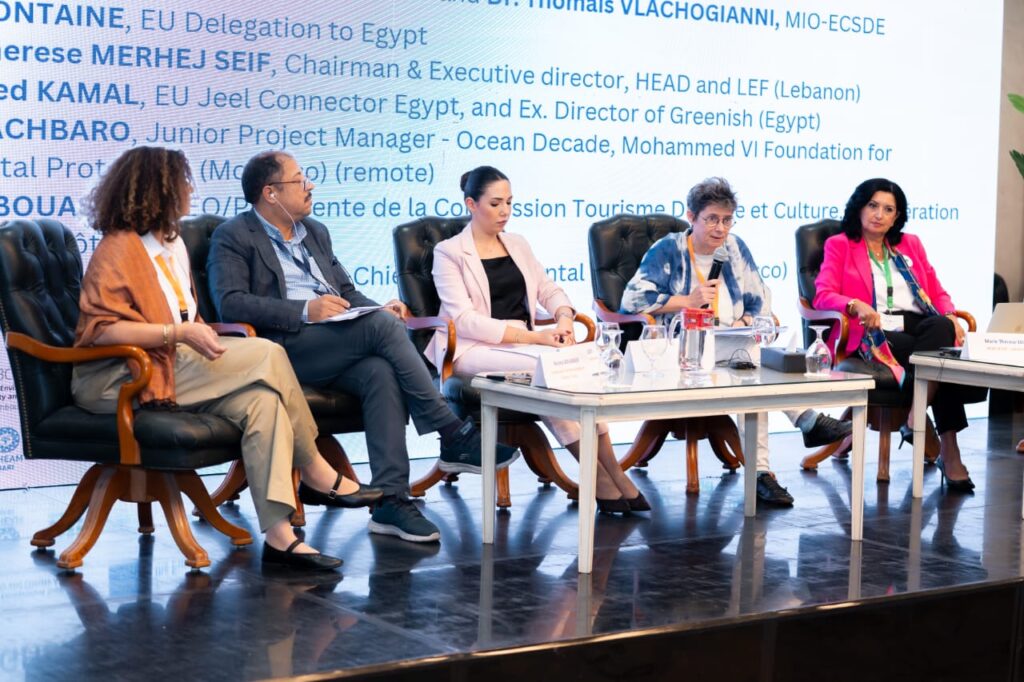
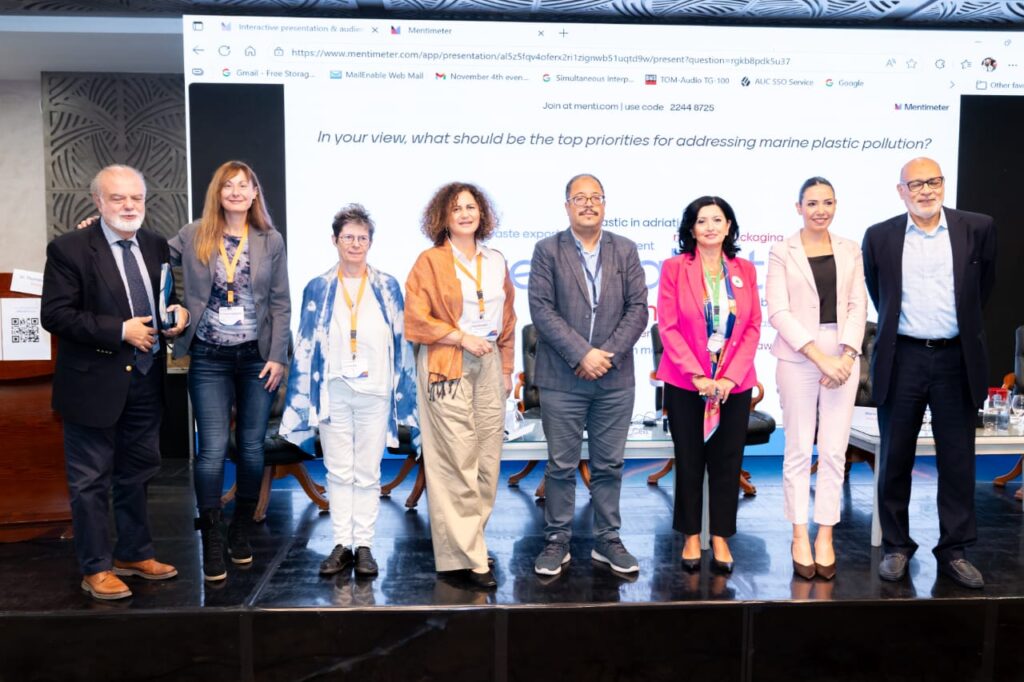
The interactive discussion featured Dr. Emad Adly (WES-BCA Project and RAED Network) alongside Dr. Vlachogianni, and included contributions from: Marie-Thérèse Merhej Saïf (Lebanon): President & Executive Director.Mohamed Kamal (Egypt): Founder of “Greenish” and EU Youth Delegate in Egypt.Ayoub Achbarou (Morocco): Senior Project Manager, Ocean Decade, Mohammed VI Foundation for Environmental Protection (joining remotely). Nargis Bouaskar (Tunisia): CEO and Chair of the Sustainable Tourism and Culture Committee at the Tunisian Hotel Federation. Mohammed Tafraouti (Morocco): Editor-in-Chief of Afak Al-Bi’ah (Environmental Horizons). Rand Al-Ghazous (Jordan): Member of the Jordanian Parliament.
Expanding the Discussion: Regional Links and Blue Economy Initiatives
Participants enriched the debate with multidisciplinary perspectives, highlighting flagship regional initiatives such as Morocco’s “Blue Belt Initiative”, which seeks to transform ocean-related challenges into opportunities by promoting a sustainable blue economy, protecting marine biodiversity, and supporting food security in the face of climate change.
This presentation formed part of the eighth scientific session of the forum, which featured a dynamic exchange on the plastic crisis as part of regional efforts to combat marine plastic pollution in the Mediterranean, efforts grounded in policy frameworks such as the EU Directives, the Barcelona Convention, and in anticipation of the forthcoming International Treaty on Plastic Pollution.