Amman – By Mohammed Tafraouti
“How did you end up in the pond?”
When a Nobel Prize becomes an existential question in a science journalism training workshop.
It was no ordinary exercise.
In one of the most striking and thought-provoking moments of the workshop, a silent skit was performed. A character wins the Nobel Prize and is celebrated in an unconventional way. They are lifted high amid applause and laughter, only to be suddenly thrown into a pond. As the applause continues, a lone voice pierces the scene to ask: “How did you end up in the pond?”
Some laughed at first, then a heavy silence fell.
That moment, with all its irony, became a symbolic entry point for understanding the essence of science journalism—not through lecturing, but through experience, surprise, and interpretation. A visual scene embodying a profound ethical question: can science, at the height of its achievement, become a tool of downfall if it lacks a human compass?
The participants engaged deeply. When do awards become burdens instead of honors? When do scientific discoveries shift from achievements to disasters?
The pond, in this context, was more than a theatrical element—it was a powerful metaphor. Every glorious scientist has a moral shadow. Every discovery entails responsibility. Every science journalist carries a dual mission: to deliver knowledge and to question it.
The name of Gavrilo Princip was invoked—the teenager whose two bullets changed history and led to a global war that still echoes today.
Just as a small act can alter humanity’s path, a single word or headline can reshape public awareness.
An Adventure into the Heart of the Ice
As part of the training, an exceptional media experience was shared: a scientific expedition aboard the Canadian icebreaker Amundsen to the Arctic, one of the most fragile areas on Earth.
There, where the ice is silent and warming speaks, the impacts of climate change were observed firsthand. Scientific observations were transformed into vivid reports that conveyed the experience in powerful language and authentic testimonies.
This journey was a leading example of field-based environmental investigation, where the journalist does not simply gather data, but fully immerses in the event, reporting with commitment and a conscious scientific lens. Environmental writing here becomes a testimony of presence, not merely a remote coverage.
From Models to Vision: A Training Program with a Taste of Change
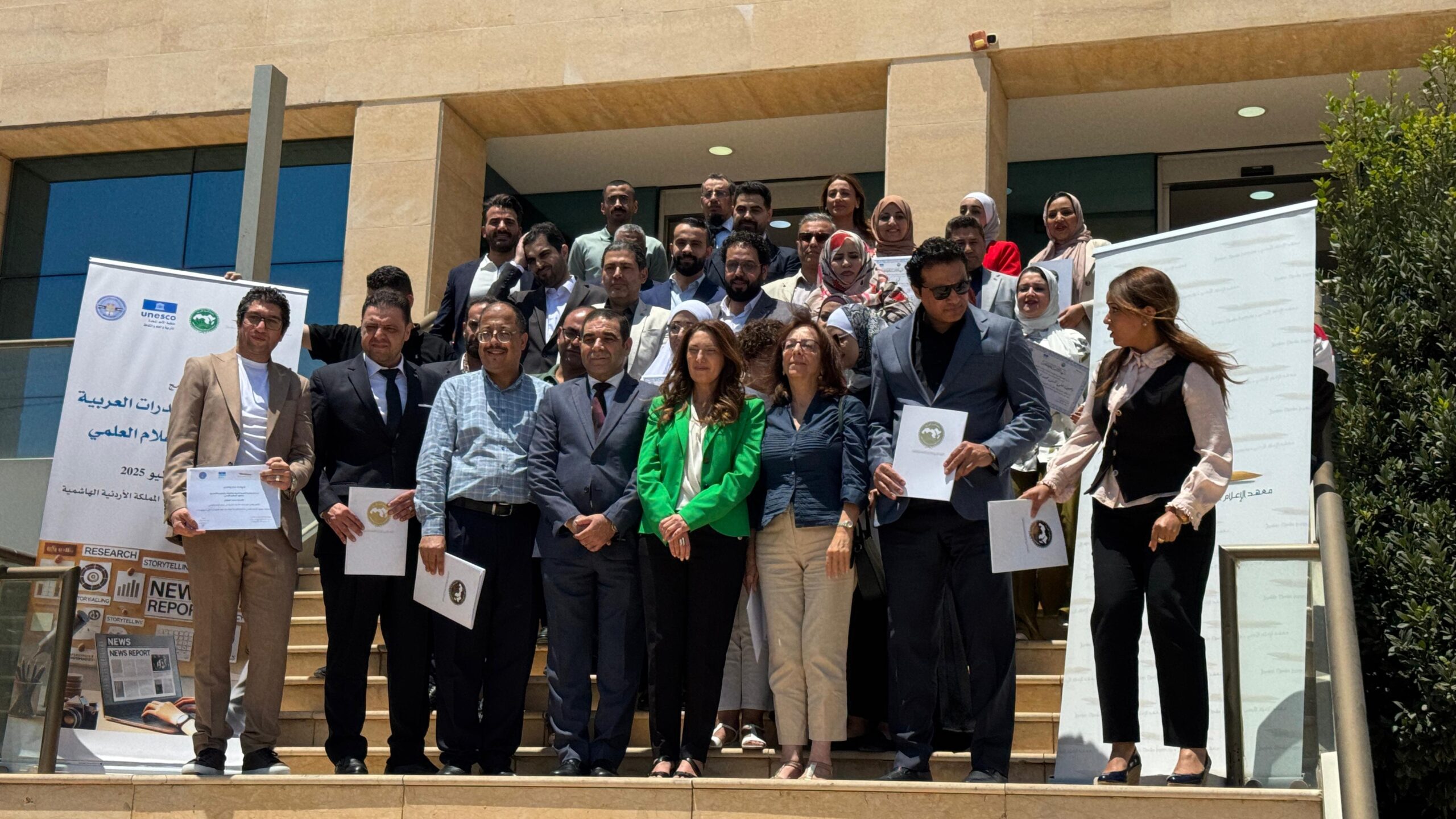
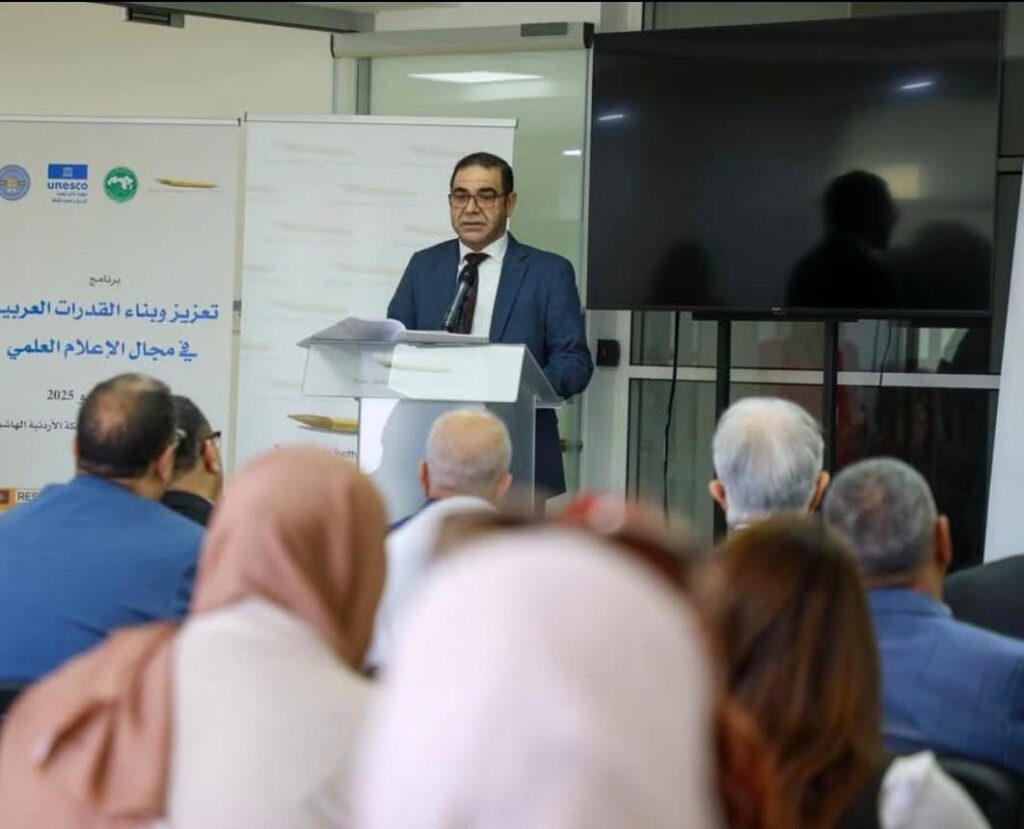
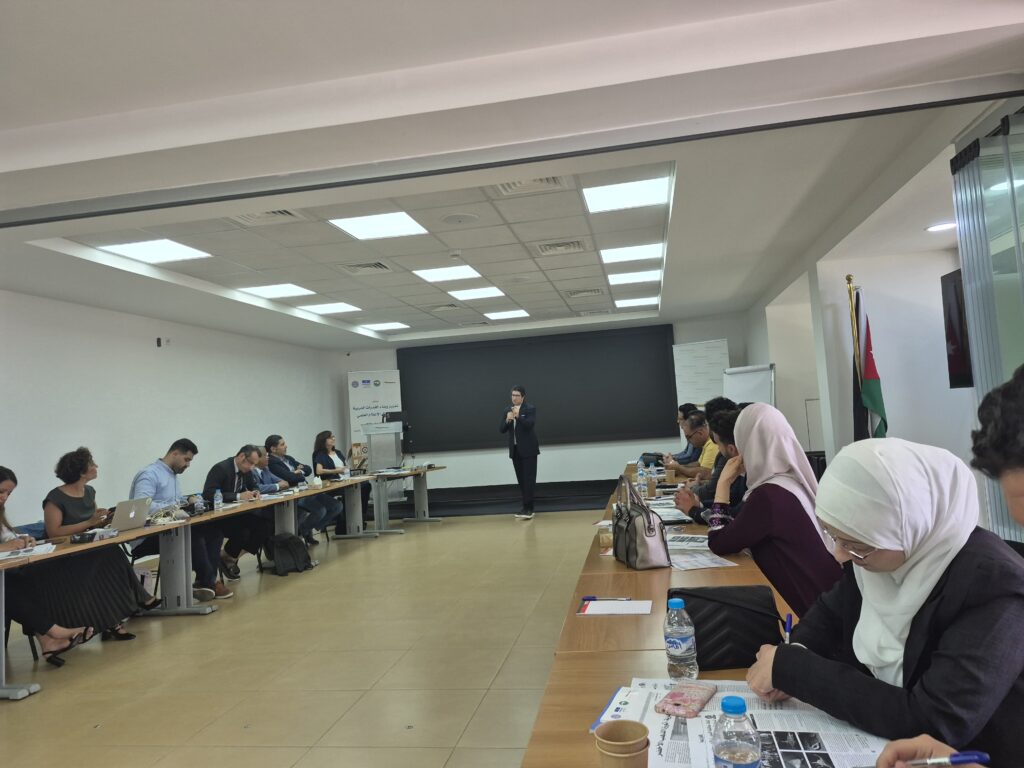
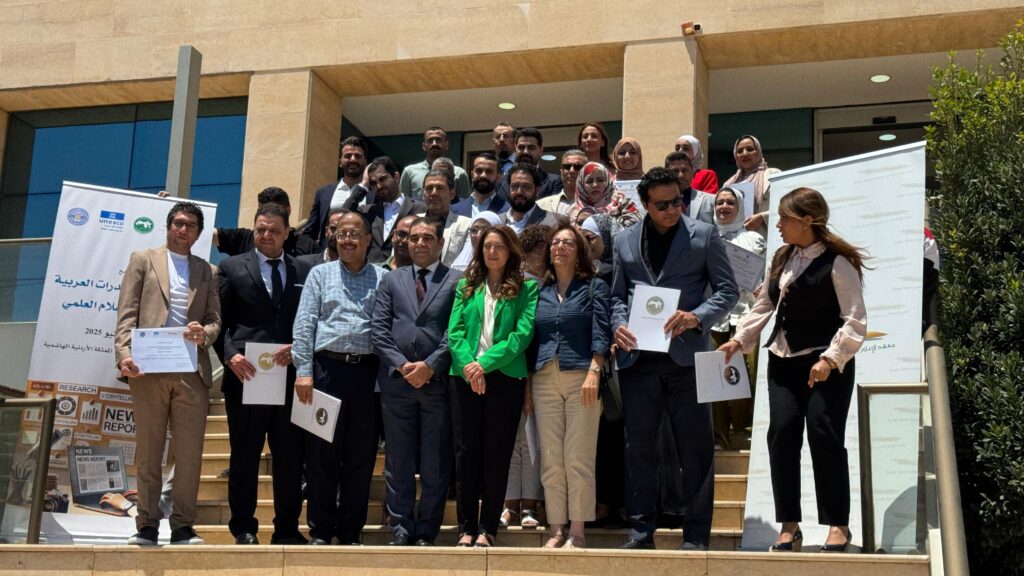
The training program, “Enhancing and Building Arab Capacities in Science Journalism,” was organized by the Science and Scientific Research Department of ALECSO, in collaboration with UNESCO’s Gulf States and Yemen office, hosted by the Jordan Media Institute, and under the patronage of Princess Rym Ali. It provided participants with a unique experience in understanding and practicing science journalism.
ALECSO, as the main partner in this initiative, played a pivotal role in its success, demonstrating a firm commitment to supporting scientific culture and elevating knowledge-based and educational media in the Arab world.
Believing that the development of the Arab individual begins with equipping them with tools of scientific understanding and analysis, ALECSO continues its leadership in embedding science in public discourse and promoting pride in scientific accomplishments as integral to Arab cultural and intellectual identity.
Selected articles were used as case studies addressing local and global environmental and scientific issues: sea turtles, blue crabs, the argan tree and carbon storage, and the exploitation of deep-sea minerals. A session was also dedicated to the role of cinema in raising scientific awareness, adding a visual and aesthetic dimension to topics often discussed in dry academic language. The program evolved from technical training into an intellectual and human journey, merging journalistic tools with storytelling, data accuracy with narrative warmth.
Foundational Pillars for Effective Science Journalism
Understanding First: Basics of Science Journalism
The workshop opened with an introductory session on key concepts and the importance of science journalism. In the Arab world, science journalism still suffers from limited attention and selective interest, highlighting the need to systematically integrate it into media platforms and train a new generation of journalists capable of understanding and communicating science effectively.
Science Journalism and Sustainable Development
The second theme focused on science journalism’s role in achieving sustainable development goals, especially Goal 4 on quality education. Science journalism is not merely a form of media; it is a bridge between knowledge and society.
From skills to practice, and topic selection to audience analysis, the workshops delved into choosing topics, understanding the target audience, and the need to turn dry subjects into engaging human stories by deeply understanding the culture and social context.
Environmental Journalism and Climate Change: Between Advocacy and Knowledge
In the age of climate transformation, environmental journalism requires sharp analytical tools and the ability to connect phenomena to international policy. Sessions emphasized the need for training in covering environmental conferences and crafting impactful media messages from complex negotiations.
Honoring Arab Scientists: From Oblivion to Recognition
This section highlighted the need to portray Arab scientists in media as relatable role models, not isolated elites. Participants proposed ways to conduct accessible interviews in human language that showcases their contributions in inspiring ways.
A practical segment trained participants to transform research into journalistic science stories. Simplifying knowledge does not mean stripping it of meaning; it requires linguistic and narrative intelligence to build a bridge between the lab and the reader.
Environmental Cinema as a Tool for Impact: “Take Half and Leave Half for the Bees”
In one session, a documentary on food waste was screened, along with an analysis of the film Honeyland, which tells the captivating story of a woman living in deep harmony with bees and nature. Her repeated phrase, “Take half and leave half for the bees,” was not just agricultural advice but a full ecological philosophy promoting balance and warning against human greed.
These examples demonstrated how environmental documentaries can add visual and emotional depth to science articles, enhancing credibility through the power of imagery, message depth, and storytelling appeal. When the camera meets the pen, knowledge becomes a lived experience capable of touching minds and hearts.
Participants also discussed how to use digital platforms to broaden impact, emphasizing the importance of fact-checking tools, visual media production, and managing scientific content in line with technological developments.
An interactive session titled “Humanizing Scientific Stories: When Science Speaks the Language of the Heart” explored how to add a human dimension to science stories through characters, experiences, and real-life situations. These approaches showed how humanizing the narrative increases engagement and turns science journalism into a living bridge between people and science.
On the Title: When Words Become Birds Flying Above the Text
The choice of title, From the Pond to the Ice: When Science Journalism Tells a Story of Knowledge and Accountability, follows the journalistic feature style, which does not just describe content but weaves a narrative journey. It draws on the “bird model” of headline creation: capturing a symbolic, soaring idea and turning it into a visual and emotional gateway for the reader.
The “pond” represents a symbolic moment of soulless celebration.
The “ice” stands for the pinnacle of field-based credibility in science and experience.
The “story” blends meaning, impact, and message.
This title doesn’t just tell us “what we are reading about”; it asks with us: why do we tell stories? How? And for whom?
Just as Princip’s two bullets changed history, a single title can reshape perception and leave an unforgettable mark.
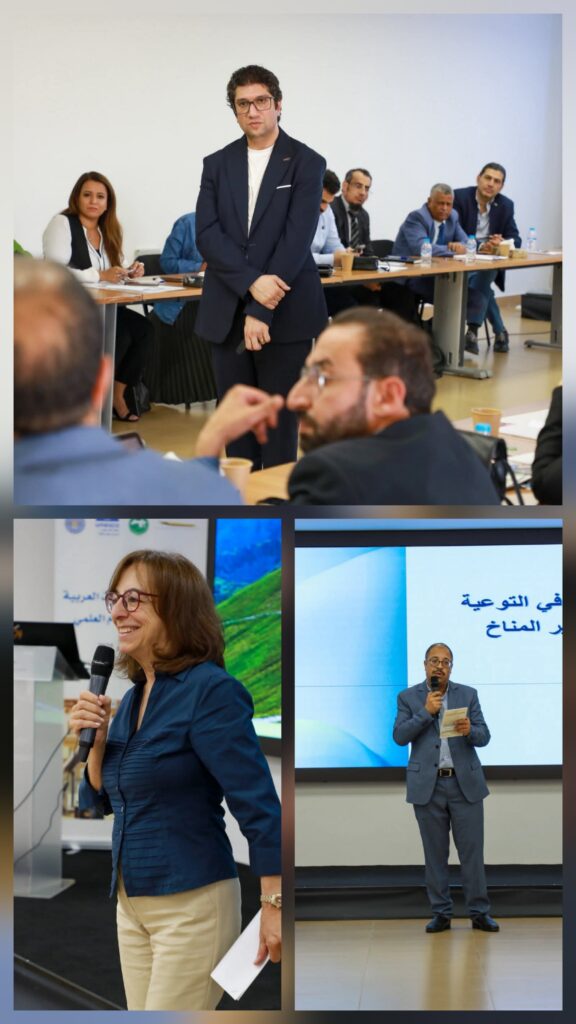
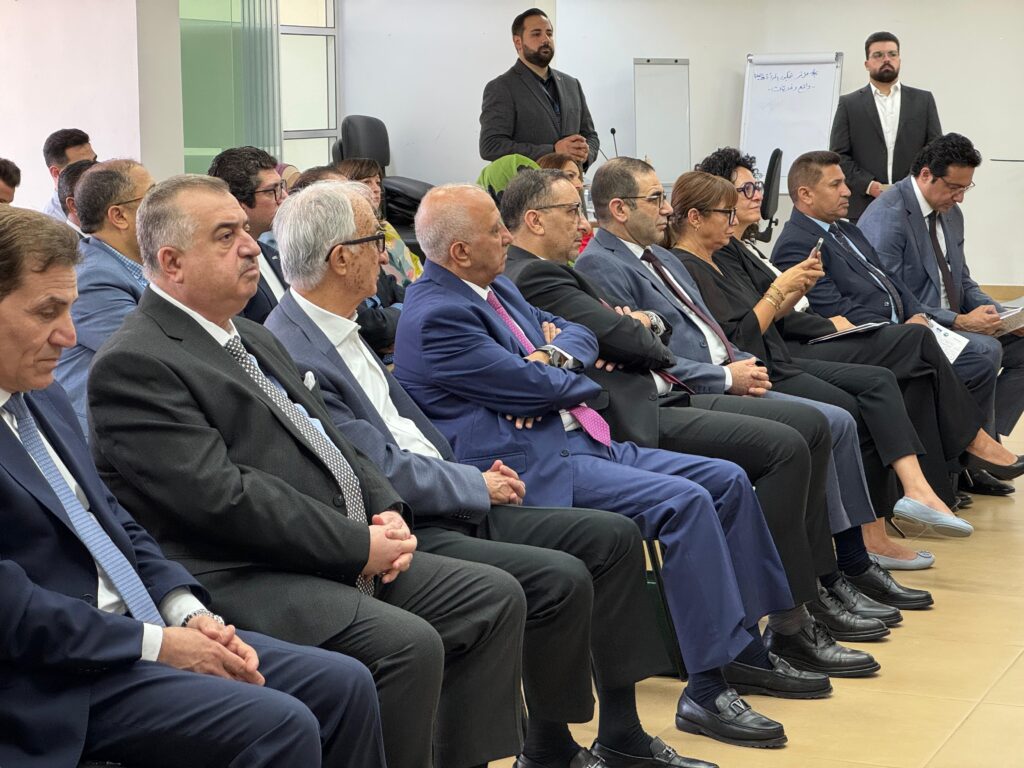
The training program hosted around 20 journalists from 16 Arab countries, along with deans and staff from media institutes and Arab universities. The sessions were led by Professors Mohamed El-Houari, Raghida Haddad, and Mohammed Tafraouti, combining knowledge-building, practical exercises, and open discussions about the future of science journalism in the Arab world.