By Mohammed TAFRAOUTI
On the occasion of the International Day of the Argan Tree: A scientific seminar in Agadir reveals the results of the DARED project
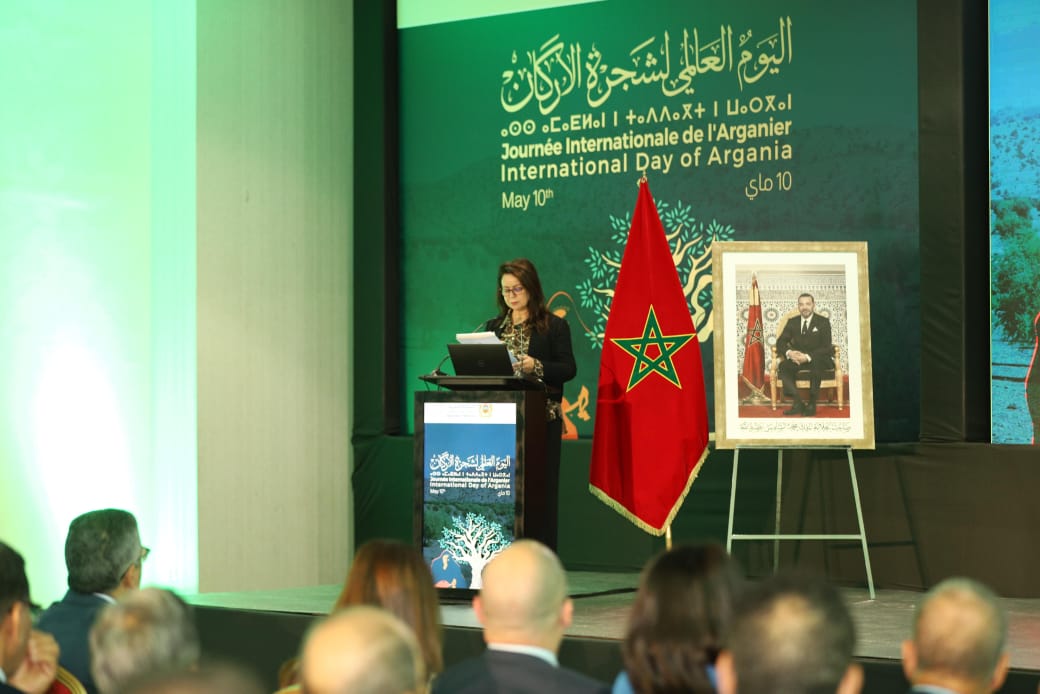
To mark the International Day of the Argan Tree, the National Institute of Agronomic Research (INRA) and the National Agency for the Development of Oases and Argan Zones (ANDZOA) organized a scientific seminar in Agadir. The event presented the outcomes of the Development of Arganiculture in Vulnerable Areas (DARED) project, a strategic partnership launched in 2020 with joint funding from the Green Climate Fund.
An ambitious national vision to preserve the argan tree and ensure sustainable development
The seminar began with an opening address by Mrs. Latifa El Yakoubi, Director General of ANDZOA, who expressed pride in celebrating this iconic tree, a natural, cultural, and human heritage. She highlighted the national vision for preserving this unique ecosystem, mentioning major achievements through sectoral agreements, including the rehabilitation of over 176,000 hectares of argan forests and the planting of 10,000 hectares of arganiculture, with a goal to double these figures by 2030.
Mrs. El Yakoubi emphasized that the DARED project, implemented in partnership with INRA and supported by the Green Climate Fund, serves as an innovative model for developing sustainable arganiculture. It acts as a scientific, economic, and social lever benefiting rural populations, particularly women. She commended the role of scientific research and multi-stakeholder cooperation in improving production techniques, assessing carbon sequestration capacity, and promoting innovation in response to climate change.
The argan tree facing climatic and anthropogenic challenges
Mrs. Lamiae Ghaouti, Director General of INRA, reminded that the argan tree is threatened by climatic factors and human activities leading to the degradation of its forest ecosystem and the continuous decline of its vegetation cover. To address these challenges, the Ministry of Agriculture, Maritime Fisheries, Rural Development, and Water Resources has paid special attention to arganiculture within the framework of the national strategies “Green Morocco Plan” and “Green Generation,” with the support of a project funded by the Green Climate Fund.
The project is based on the creation of argan plantations on private lands adjacent to natural forests, with beneficiaries committed to sustainably managing these forests through shared management approaches. It aims to plant 10,000 hectares of modern orchards, including 2,000 hectares integrated with aromatic and medicinal plants, and employs rainwater harvesting techniques in line with national commitments to climate change adaptation. This program is part of national efforts to reduce greenhouse gas emissions by 42% by 2030.
Mrs. Ghaouti stressed that scientific research is at the core of this project, formalized by a 2020 agreement with ANDZOA to develop a sustainable and resilient economic model of arganiculture. This agreement focuses on improving cultivation techniques, monitoring physiological and agronomic performance, assessing carbon sequestration, and monitoring surrounding forests. Significant results have been achieved in collaboration with universities and scientific institutions, particularly in technical innovation, carbon footprint analysis, and biodiversity monitoring.
INRA is also working on additional areas, such as developing new high-yield and high-quality oil varieties, analyzing genetic fingerprints, vegetative cloning techniques, and improving disease control. Mrs. Ghaouti concluded by affirming that these efforts are paving the way for a sustainable agricultural model that strengthens communities’ resilience to climate change while preserving a unique natural and economic heritage.
The Role of ANDZOA in Arganiculture Development
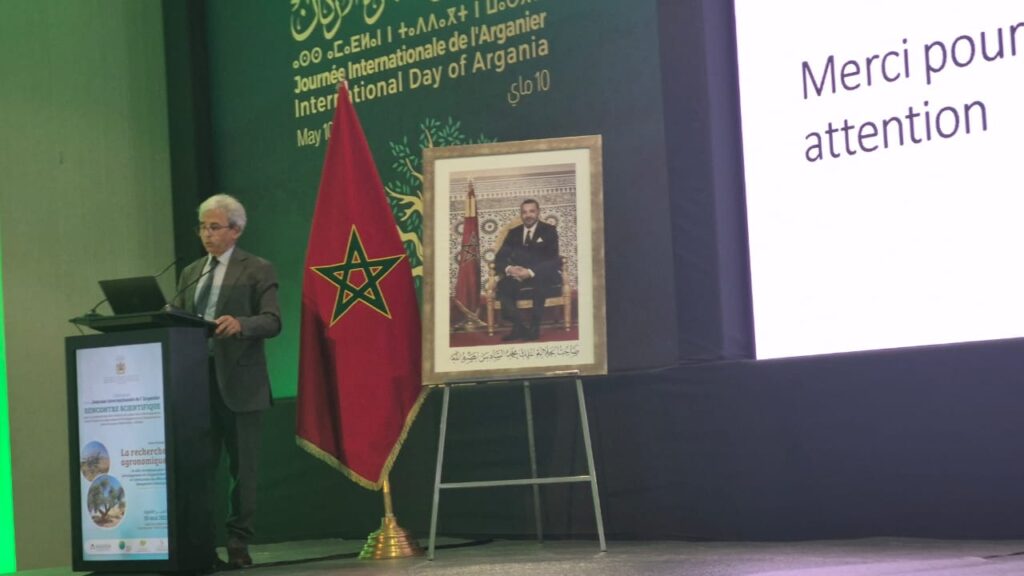
In his introductory speech, Mr. Abderrahmane Aitlhaj, Head of Research Support at ANDZOA, highlighted the central role of the agency in ensuring coordination between stakeholders in the research and sustainable development of the argan ecosystem. He emphasized that ANDZOA mobilizes partners and coordinates efforts through research and development projects, providing the necessary resources and expertise.
Mr. Aitlhaj explained that ANDZOA’s strategy is based on three main missions: knowledge management through monitoring, documentation, and dissemination; interpretation of the natural heritage of the Argan Biosphere Reserve; and the valorization of its components using appropriate tools and support, while considering conservation and development challenges.
Among the major achievements he highlighted are the monitoring and valorization of scientific research results through publication mechanisms, the organization of reference scientific events, and the launch of a digital knowledge management platform (https://pgc-argane.ma), which serves as a strategic tool for data collection and decision support.
He added that the agency supports young researchers, accompanies their projects, and utilizes Geographic Information Systems (GIS) to develop predictive productivity models, citing the DARED project (Development of Arganiculture in Vulnerable Areas) as a pioneering model in this regard. ANDZOA aims to improve arganiculture techniques through applied research and the dissemination of its results to relevant stakeholders.
He stated that three priority axes guide ANDZOA’s strategy: the involvement of stakeholders in research and development, the enhancement and dissemination of research results, and the strengthening of the capacities of local and institutional actors.
Regarding future perspectives, Mr. Ait Lhaj revealed a proposed research project on carbon and voluntary carbon markets, in partnership with Mohammed VI Polytechnic University (UM6P), the National Institute of Agronomic Research (INRA), and the African Plant Nutrition Institute (APNI). A predictive productivity model for argan trees is also being developed, alongside projects aimed at ensuring the sustainability of arganiculture through the diversification of agricultural activities and their integration into agroforestry systems. The knowledge management platform remains a strategic lever to support decision-making and enhance coordination among stakeholders.
The forum was an opportunity to present the main results of the DARED project, which aims to improve the performance of the argan sector and strengthen its ecological resilience through data-driven, scientific, and technical approaches, modern agricultural technologies, and partnerships with academic and research institutions.
This project seeks to enhance the resilience of the argan production chain in the face of climate change and environmental degradation through an integrated approach based on improving agricultural techniques within argan orchards, including monitoring the agricultural and physiological behavior of trees, thereby contributing to improving production quality and ensuring sustainability. The project also assesses the ability of the argan tree, within its entire agroecological system, to sequester carbon dioxide, reinforcing its role in mitigating the effects of climate change. Additionally, it pays particular attention to observing and monitoring the state of argan forests surrounding agricultural areas to preserve natural ecosystems and ensure their balance.
This exemplary collaboration illustrates the commitment of INRA and ANDZOA to inclusive and resilient development in vulnerable areas, where arganiculture serves as an essential environmental, economic, and social lever for the benefit of local communities.
The natural ecosystem of the argan tree is currently facing severe threats to its balance and sustainability in a context of accelerated climate change and increasing environmental pressures. Weakened by cumulative human and climatic pressures, it requires new, more comprehensive, and forward-looking approaches to ensure its sustainable regeneration.
In this context, the innovative DARED project (Development of Arganiculture in Vulnerable Areas) was launched, implemented in partnership between ANDZOA and INRA, with the support of the Green Climate Fund.
A shift: from forest to field
What sets this project apart is its transition from traditional forest management of the argan tree as a fragile natural environment to a modern agricultural model based on intensive and organized argan tree cultivation, valuing scientific research and innovative techniques. An ambitious goal has been set: to plant 50,000 hectares of argan orchards, marking a strategic direction to secure raw materials and ensure a sustainable income for farmers, especially in vulnerable rural areas.
A scientific and field-based approach
The DARED project is not limited to a simple agricultural plan but has adopted an integrated scientific model implemented in six provinces of the argan tree’s range: Taroudant, Essaouira, Chtouka Ait Baha, Tiznit, Sidi Ifni, and Guelmim. More than 120 demonstration and monitoring sites were established, involving cooperatives, associations, and local farmers in this participatory dynamic.
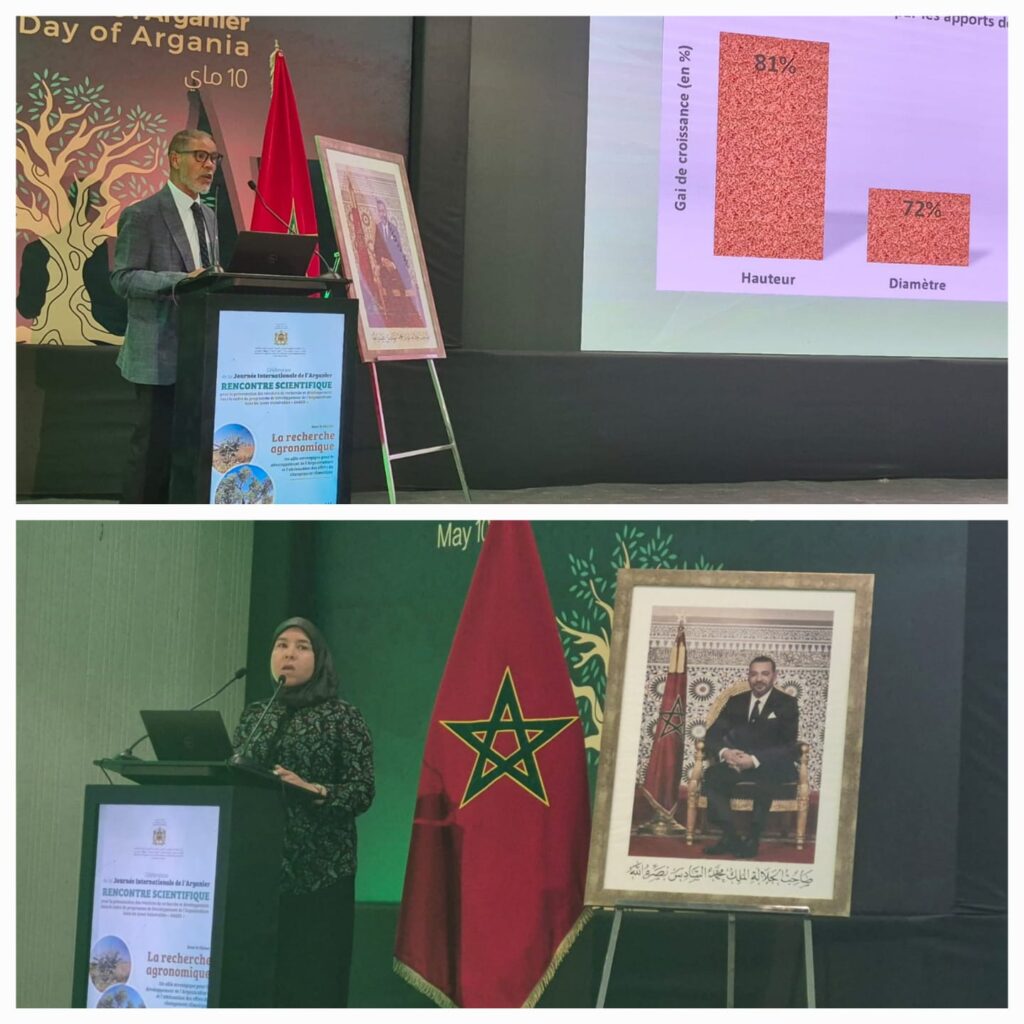
The project integrated farmers and researchers in the field through a participatory approach under the supervision of scientific teams from INRA and Moroccan universities. Monitoring focused on the growth, production, and resilience of planted trees to climate change, as well as soil properties, irrigation techniques, and the compatibility of medicinal and aromatic plants with the argan tree.
A human and developmental dimension
Beyond numbers, the true added value of the DARED project lies in its impact on people and local communities. It provided a training space for dozens of students and young researchers, brought universities closer to the field, and encouraged farmers to adopt a modern, profitable agricultural model.
The project transformed the argan tree from a threatened resource into an economic and social opportunity based on sustainable scientific foundations, considering the specificities of the territory and its population.
Promising scientific results and environmental and economic impact
The forum presented various scientific presentations covering all stages of the argan sector: plant quality, cultivation techniques, joint valorization with medicinal plants, analysis of the economic and environmental impact of agricultural practices, and highlighting the role of arganiculture in carbon sequestration and sustainability enhancement.
As a sign of the importance given to training and capacity building, several doctoral students shared their research results as part of this project, which led to the publication of 13 scientific articles, the supervision of 8 doctoral theses, and 11 master’s dissertations. The knowledge and technologies produced were transferred to field actors through technical sheets and reference guides distributed at the 7th International Argan Congress held in 2024 in Essaouira.
Over the years of implementation, the project has achieved remarkable scientific achievements: the publication of 13 peer-reviewed scientific articles (with 7 others under publication), the completion of 8 doctoral theses, 11 master’s dissertations, the development of 15 technical sheets, 3 practical guides, and a technical reference guide on good arganiculture practices. Scientific sessions were also organized as part of the Essaouira Congress in 2022.
Scientific indicators have been developed to measure the ability of the argan tree to sequester carbon, thereby contributing to the shift toward climate-smart agriculture, with the establishment of the first carbon balances for the argan tree value chain.
Finally, the closing conference of the project, organized on the occasion of the International Argan Tree Day, allowed for the sharing of these findings with partners. The participants recommended strengthening the research results, expanding the experience at the national level, establishing new partnerships to enhance applied research, providing technical support and continuous training to farmers, and developing the value chains of argan agriculture, from production to commercialization.
They also called for the adoption of the customary “Agdals” system to protect argan forest areas from all threats facing them.