Training Workshop in Agadir on the Impacts of Climate Change on Women’s Rights and Possible Solutions
By Mohamed Tafraouti
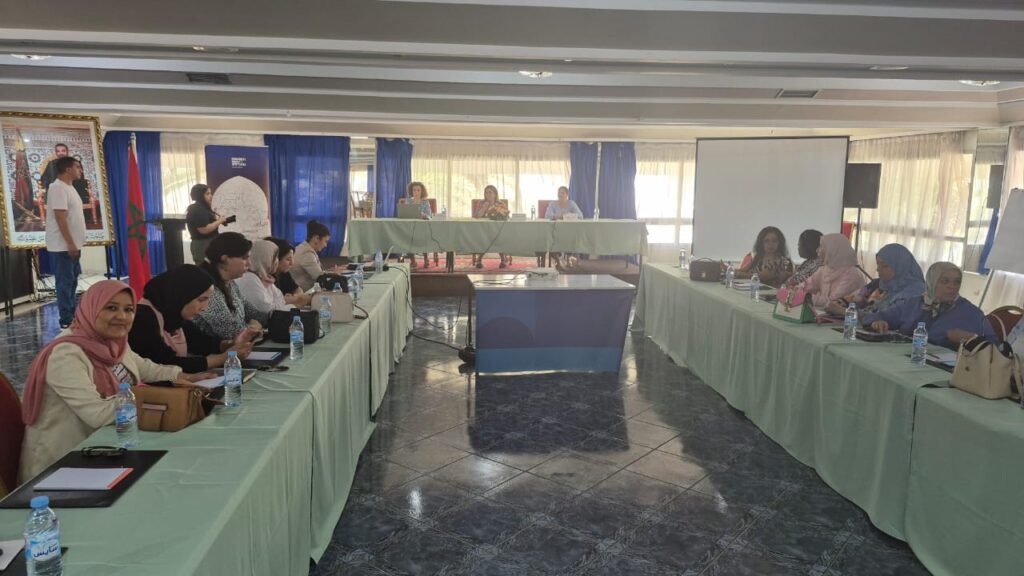
As part of its commitment to climate justice and gender equality, the “Forum for Parity and Equality,” in partnership with the Friedrich Ebert Foundation – Morocco Office, organized a training workshop titled “Impact of Climate Change on Women’s Rights and Possible Solutions,” held from July 4 to 6, 2025, at the COS ONE Center in Agadir.
This training session served as a framework for guidance and exchange, during which the regional and national context of the climate crisis and its increasing impact on women and vulnerable groups were analyzed.
Women at the Heart of Climate Policies: From Victims to Decision-Makers
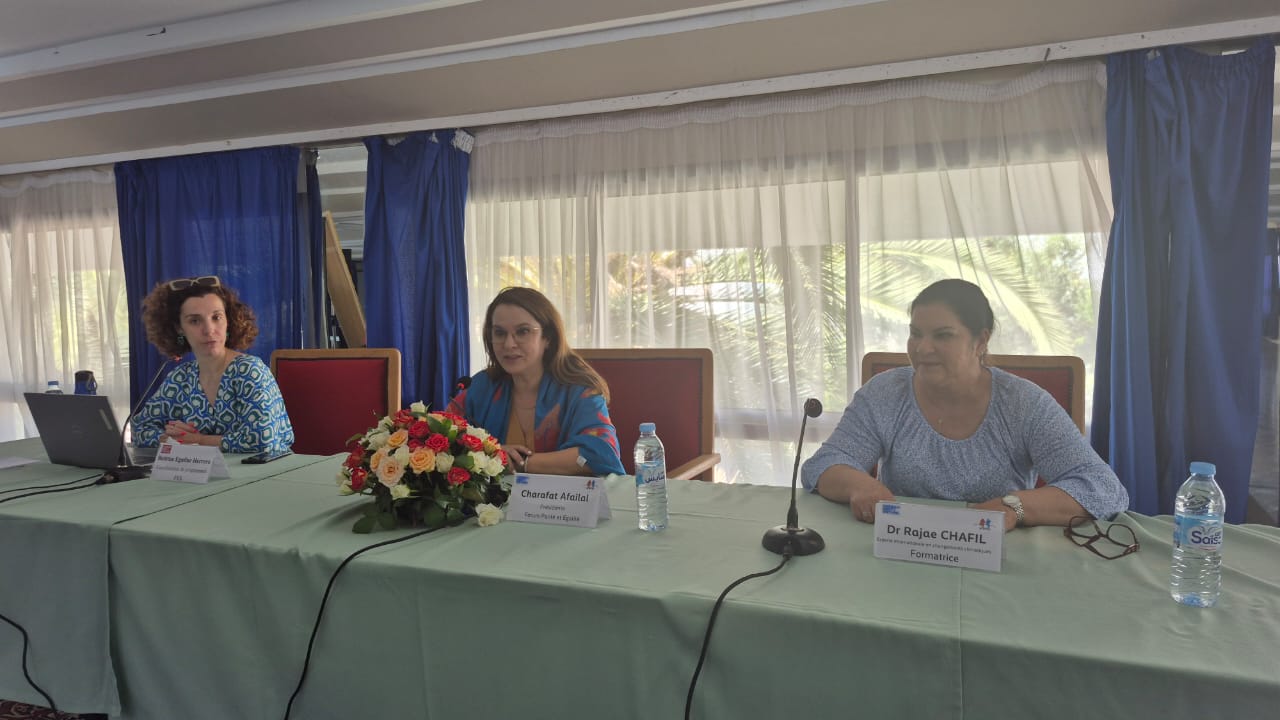
In her opening speech at the regional forum held in the Souss-Massa region, Ms. Chafaqat Afailal, President of the Forum for Parity and Equality, discussed the reasons and context for organizing this meeting, emphasizing the importance of strengthening the capacities of women, especially female elites influential in territorial governance: elected officials, active members of associations, members of consultative bodies for women’s rights, entrepreneurs, and cooperative managers.
She highlighted the particular relevance of the topic, given the climatic risks and emergencies the region has experienced, whose effects are already visible on women and families in general. She notably mentioned the consequences of heat waves, droughts, and floods, citing the floods in Tata as a striking example of the severity of these phenomena.
Ms. Afailal stressed that women are disproportionately affected during crises and emergencies, due to their responsibility to protect children and property, compounded by limited resources and lack of mechanisms and information enabling their empowerment in facing these challenges. She noted that women’s economic and social vulnerability amplifies the impact, calling for more equitable and just approaches to risk management.
However, she insisted that women are not just frequent victims: they possess skills and capacities for adaptation and innovation, even in contexts of scarce resources. Many experiences have proven, according to her, women’s ability to find simple and effective solutions, thanks to inherited wisdom and accumulated life experience.
Within this framework, Ms. Afailal affirmed that the “Tawazon” project, implemented with the support of the Friedrich Ebert Foundation, is part of efforts to support women’s rights in Morocco by training female elites at the regional level—not only to equip them with necessary tools and concepts but also to strengthen their influence in local affairs.
She emphasized the ultimate goal of ensuring a genuine presence of women in risk management policies, so they become partners in decision-making alongside men, within fair public policies that consider everyone’s needs.
Addressing the participants, she said: “We chose women from this region because we believe in your ability to play key roles within local communities, whether as elected officials, members of consultative bodies, cooperative members, or active civil society actors. You possess the knowledge and skills necessary to contribute effectively and convincingly to the development of territorial public policies.”
Ms. Monika Friederike Ellert, representative of the Friedrich Ebert Foundation, expressed her happiness to participate in the second regional capacity-building session for local actors on the effects of climate change on women and possible solutions.
In her opening remarks, she thanked the participants for responding to the invitation and praised the Forum for Parity and Equality for its commitment to defending women’s rights and promoting equality. She emphasized the importance of working jointly towards gender-responsive climate justice, recalling that women in Morocco, as elsewhere in the world, are disproportionately affected by the impacts of climate change, whether during disasters or the phases of recovery and reconstruction, yet are often excluded from decision-making venues and climate strategy formulation.
She stressed that this exclusion weakens the effectiveness of climate policies and undermines their adaptive capacity, calling for recognition of women’s local knowledge and their role in building resilient communities. She underlined that empowering women and enhancing their active participation in environmental policies is key to succeeding in addressing the climate crisis.
She concluded by renewing the Foundation’s commitment to supporting initiatives aimed at capacity building and promoting climate justice and gender equality, emphasizing the importance of listening to women’s voices at all levels of decision-making.
A Training Program That Strengthens Capacities and Develops Local Solutions from a Female Perspective
Ms. Rajae Chafil presented the content of the training program spanning three days, highlighting its main axes and formative dimensions.
She explained that the program was designed to include both theoretical and practical aspects aimed at strengthening participants’ understanding of the links between climate change and women’s rights and equipping them with the necessary tools and approaches to address climate justice issues from a female perspective.
The training covers integrated themes dealing with the conceptual framework of women’s rights and equality, climate change and its impact on vulnerable groups, as well as interactive workshops on advocacy mechanisms and the integration of gender perspectives in territorial policies.
Ms. Chafil emphasized that the program is not limited to knowledge transfer but aims to create a local dynamic that values women’s role as key actors in sustainable development and the formulation of equitable climate solutions.
Facilitated by international climate change expert Dr. Rajae Chafil, the workshop aimed to deepen participants’ understanding of climate change challenges and its differentiated impacts on women while proposing concrete solutions integrating gender perspectives in environmental and climate policies.
This initiative seeks to enhance women’s capacities and enable them to play a leading role in combating climate change through integrated policies and participatory approaches responding to the needs of groups affected by the global environmental crisis.
Practical Proposals for Climate Risk Management from a Gender Perspective
The training workshop saw active participation from attendees, addressing several axes related to the issue of climate change and women’s rights during various sessions.
Discussions covered general concepts of the climate crisis, its causes, and global effects, as well as relevant international agreements, notably the Paris Agreement and the Kyoto Protocol. A thorough analysis of the Moroccan context was also presented regarding climate challenges and the national legal and institutional framework governing this field.
The sessions also provided a space to analyze the impact of climate changes on vulnerable groups, particularly women, highlighting the increased precarity of these groups amid repeated climate crises.
Interactive workshops addressed agriculture, drought, floods, and energy issues from a gender perspective, with open debates on the role of local actors, especially territorial communities and parliamentarians, in strengthening effective and inclusive mechanisms to manage climate crises.
These topics were enriched by live testimonies from participants who shared their personal experiences and views on the climate crisis and possible solutions at local and national levels.
The second day was dedicated to exploring key concepts such as mitigation, adaptation, climate justice, loss and damage, highlighting the Moroccan legal framework related to climate, and emphasizing differences in climate disaster impacts between women and men, along with their unequal social and economic consequences.
The final day was devoted to collective workshops focused on the most urgent climate challenges, particularly in agriculture, floods, drought, and energy, where participants proposed a set of practical recommendations to integrate gender perspectives in climate policies, thereby strengthening climate justice and ensuring fair distribution of roles, resources, and opportunities in the fight against climate change.
In a world undergoing accelerated climate shifts and facing complex environmental challenges, the need to include women not only as affected parties but also as solution creators and partners in policy-making becomes more urgent by the day.
This workshop demonstrated that real empowerment stems from knowledge, training, and networking, and that climate justice cannot be achieved without considering women’s voices, knowledge, and experiences.
Embarking on this path, despite its difficulties, remains the best guarantee for a more equitable and sustainable future where women’s voices are a cornerstone in building resilient societies capable of overcoming crises and transforming challenges into opportunities for progress and empowerment.