Mohammed Tafraouti
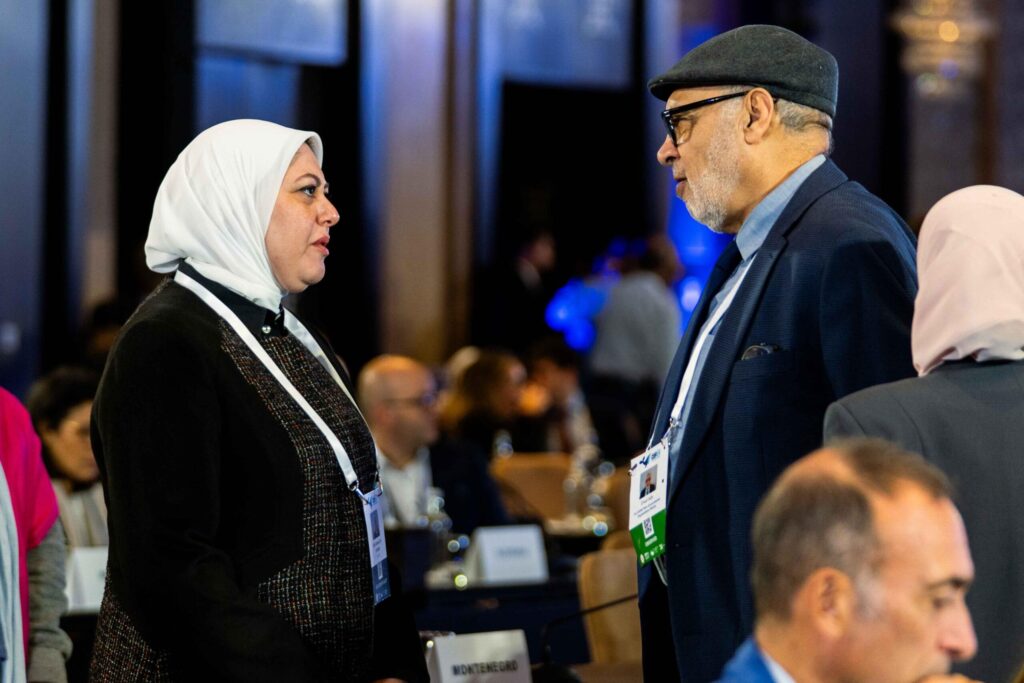
Inside the conference hall in Cairo, amid celebrations marking fifty years of the United Nations Environment Programme / Mediterranean Action Plan (UNEP/MAP) and thirty years of the Barcelona Convention, the voices of civil society rose, represented by Professor Michael Scoullos and Dr. Emad Adly, to remind environment ministers that the path toward sustainability cannot be pursued without a genuine partnership with non-governmental organizations.

Scoullos: Constructive Criticism and a Call for New Governance
Scoullos began his remarks by recalling a key historical milestone: “The Seventh Conference of the Parties in 1991 was the first occasion on which NGOs were officially given the opportunity to express their views.”
This reminder places participants before an essential reality: civil society participation is not a concession, but an established tradition that must be strengthened and institutionalized.
He then turned to the current environmental predicament: “The triple planetary crisis is extremely deep and, unfortunately, it is here to stay.”
This assessment reflects a profound awareness that environmental challenges are not temporary disruptions but structural and long-term conditions confronting humanity, conditions that demand transformative responses rather than cosmetic or short-term fixes.
In a frank and critical tone, Scoullos added: “Despite efforts and initiatives, governments seem to be running just to catch up.”
This statement highlights the growing gap between available scientific knowledge and feasible solutions on the one hand, and the slow pace of institutional implementation on the other. Yet Scoullos did not stop at criticism; he proposed an alternative vision centered on the active engagement of civil society, which he described as “the healthiest and most vibrant part of society.” He also commended the shift toward integrated approaches: “I congratulate you on your commitment to implementing integrated governance approaches such as the Water–Energy–Food–Ecosystems Nexus.”
This endorsement reflects civil society’s support for frameworks like the WEFE Nexus, which are considered a cornerstone of the blue economy and sustainable development across the Mediterranean region.
Adly: Civil Society as a Beacon of Hope
For his part, Dr. Emad Adly painted a vivid picture of civil society mobilization in the Mediterranean, referring to a major gathering held in Cairo two months earlier: “More than 170 civil society organizations met here in Cairo, bringing together youth (23 percent), women, parliamentarians, journalists, and academics.”
This statement underscores the remarkable diversity of the civil society base and demonstrates that this movement is not elitist, but inclusive of various social groups, despite limited resources.
Dr. Adly then addressed the major challenges facing civil society: “There are significant challenges linked to the shrinking of civic space globally and the difficulty of accessing financial resources.”
This diagnosis puts a finger on the core issue: civil society is ready and willing, but it requires a supportive legal and financial environment to sustain innovation and effective partnership.
In closing, Adly delivered a powerful appeal: “We want to demonstrate our determination to hope. And we need our youth with us, actively engaged.”
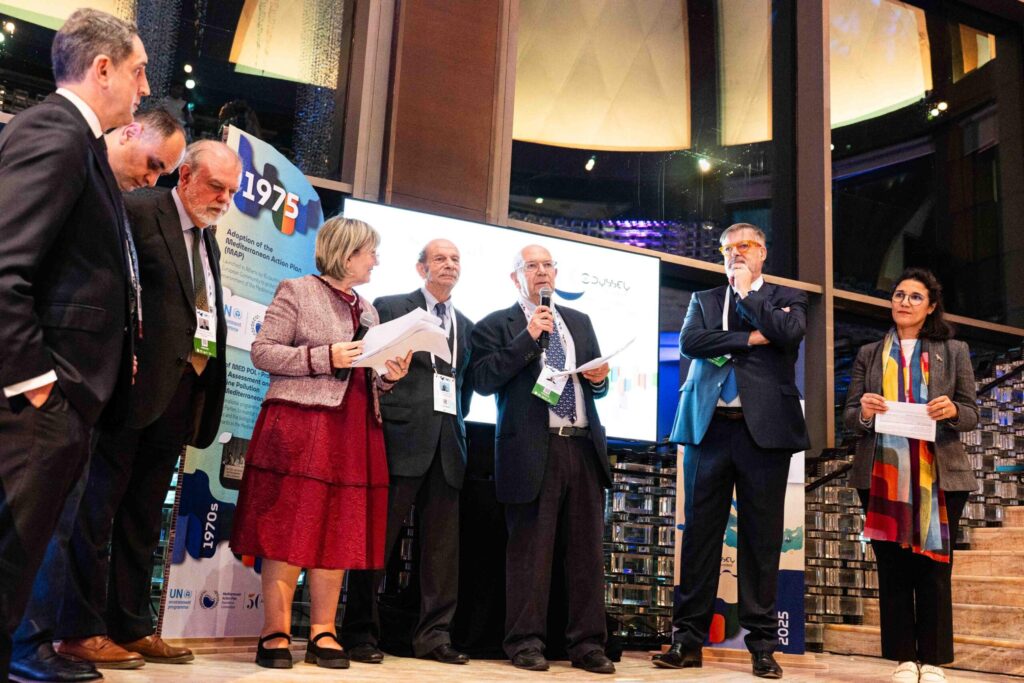
This message encapsulates the spirit of the discourse, hope, resilience, and the engagement of youth as a fundamental condition for achieving the objectives of the Convention and confronting environmental degradation. It highlights the human and ethical dimension of the intervention, which goes beyond diagnosis to open horizons for renewal through future generations.
The Voice of Civil Society at the Heart of the Conference
As the session concluded, it became clear that Professors Scoullos and Adly had delivered a strong and mobilizing message, bringing civil society advocacy and awareness into the very heart of the conference. Their interventions reaffirmed that public opinion stands firmly alongside governments in shaping the future of the Mediterranean.
Their shared message constitutes a powerful affirmation that civil society in the Mediterranean is present, aware, and determined to be a key partner in shaping a more just and sustainable environmental future. They carried to ministers a collective voice calling for good governance, sustainable financing, and the meaningful inclusion of youth and women, so that the Mediterranean remains a space of life and hope, rather than crisis and despair.