By Mohammed Tafraouti
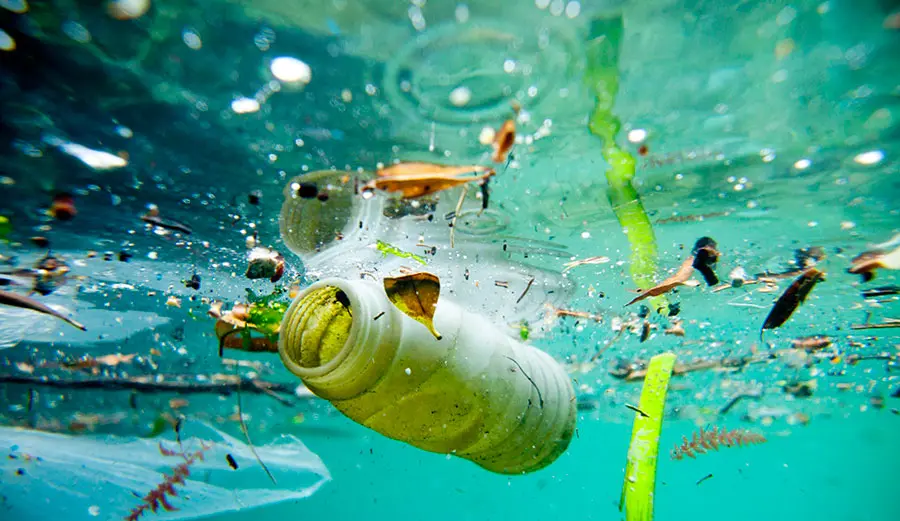
The Mediterranean Sea, one of the world’s most biodiversity-rich areas and a key economic hub, is facing an escalating threat from marine plastic pollution. As this global environmental challenge worsens, experts are striving to accelerate the transition from research and policy discussions to science-based practical solutions.
At the seventh edition of the ALIOTIS exhibition in Agadir, Morocco, this critical environmental issue was highlighted through two sessions organized at the European Union pavilion. Distinguished presentations were delivered by Dr. Thomais Vlachogianni, an environmental chemist and specialist in ecotoxicology, who is among the leading experts in marine waste.
التلوث البلاستيكي البحري: تهديد عالمي متزايد
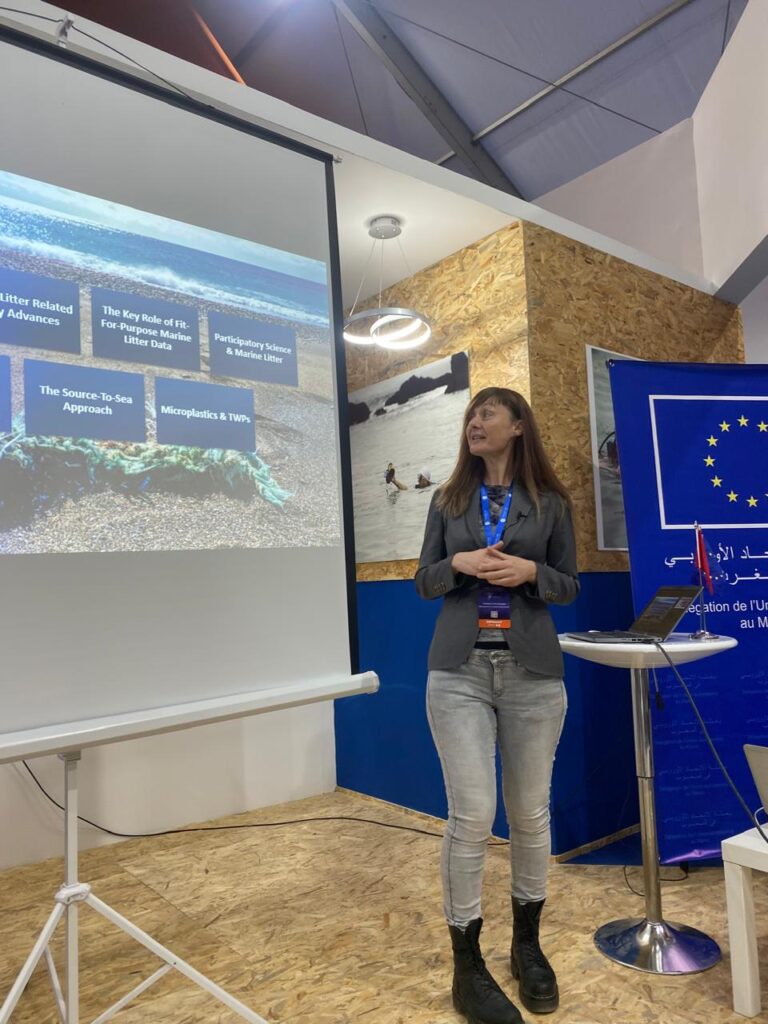
Dr. Thomais Vlachogianni emphasized that marine plastic pollution is one of the most pressing environmental issues today, impacting ecosystems, economies, societies, policies, and cultures. It is considered a planetary threat due to its widespread distribution, the difficulty of reversing its effects, and its potential to endanger marine ecosystems. Addressing this threat requires reliable and consistent scientific data to support decision-making and environmental policy development.
She further noted that, despite significant progress in recent years, misconceptions about plastic use, recycling, and mitigation strategies continue to hinder the implementation of effective measures. Overcoming these challenges demands coordinated efforts to raise awareness and develop stricter and more sustainable policies.
Toward Smart Plastic Use: A Comprehensive Sustainability Strategy
Achieving a smart and sustainable approach to plastic use requires an integrated strategy that balances efficiency and environmental responsibility, according to Dr. Vlachogianni.
This approach emphasizes the principles of a circular economy, ensuring that materials are used for as long as possible to minimize waste generation. It also incorporates a life cycle perspective, taking into account the environmental impact at every stage of production and consumption. Effective waste management plays a crucial role, prioritizing prevention, reuse, and recycling over disposal. Additionally, the strategy enforces the ‘polluter pays’ principle, holding plastic waste producers accountable for their environmental footprint. To further mitigate pollution, a ‘source-to-sea’ approach is adopted, addressing contamination at its origin before it reaches marine ecosystems.”
Marine Litter in the Mediterranean: What Do We Know?
The Mediterranean is one of the most heavily impacted regions by plastic pollution worldwide, with waste density levels comparable to those observed in the five major ocean gyres, Dr. Vlachogianni noted.
The 2023 State of the Mediterranean Report by the United Nations Environment Programme (UNEP/MAP) reveals that 84-86% of Mediterranean beaches do not meet good environmental standards. The Eastern Mediterranean is the most affected, with 64% of its beaches classified as “poor” or “very poor,” followed by the Adriatic Sea (60%) and the Western Mediterranean (58%). These figures underscore the urgent need for bold interventions to combat marine plastic pollution.
From Diagnosis to Solutions: Turning Science into Policies and Actions
Dr. Vlachogianni concluded that transitioning from diagnosing the problem to implementing tangible solutions is crucial. Among the effective measures explored were the promotion of reusable alternatives, including the development of sustainable distribution systems for cups and tableware, as well as the encouragement of innovation to drive new solutions for reducing plastic waste. The discussions at Halieutis Fair highlighted a growing commitment to translating scientific knowledge into practical policies, paving the way for a cleaner and more sustainable Mediterranean.