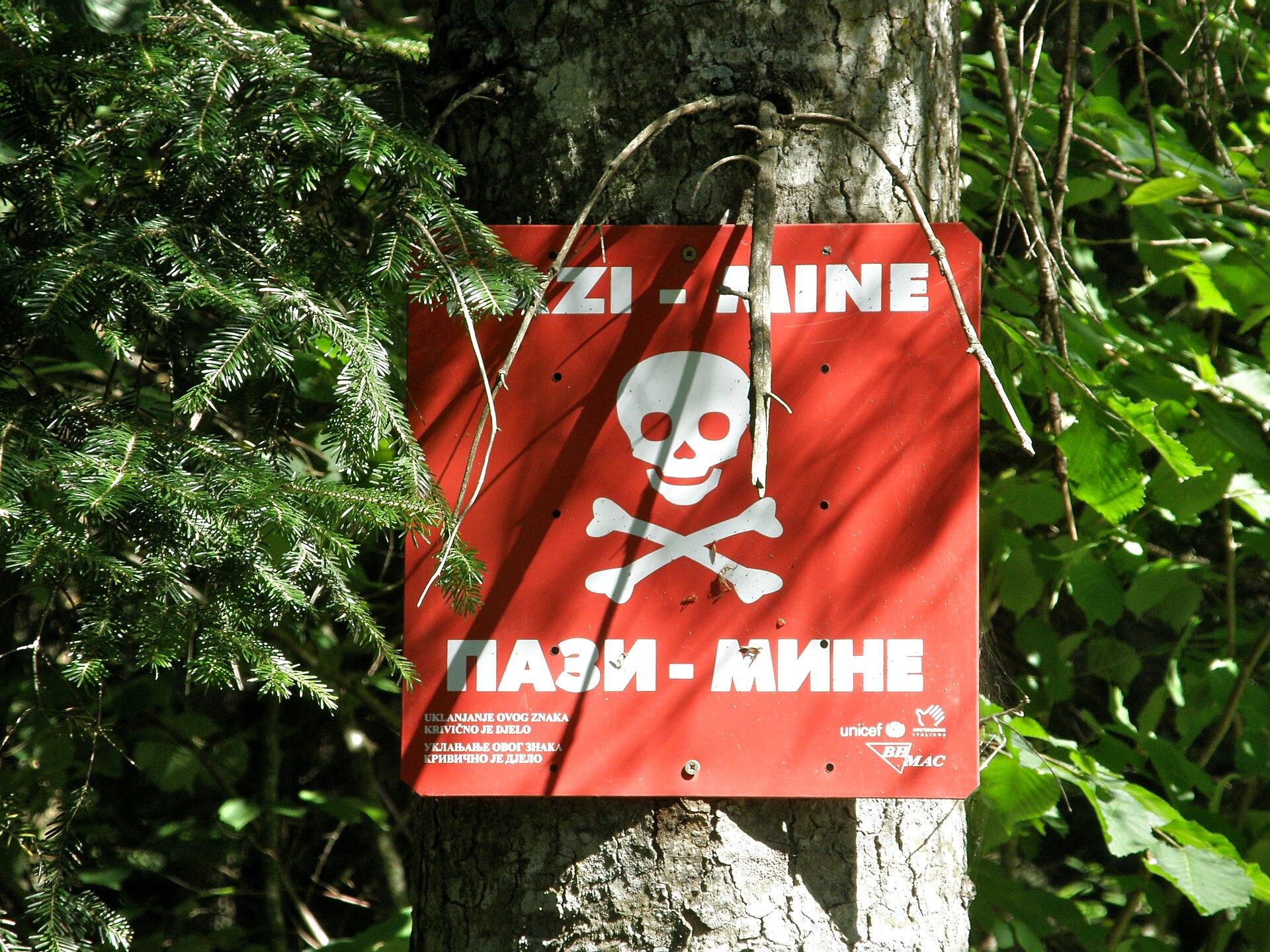
Casualties from landmines and unexploded ordnance climbed to a five-year high in 2025, according to the Landmine Monitor 2026 report by the International Campaign to Ban Landmines, whose findings were published on Tuesday, November 24. The conflict in Myanmar and the return of displaced people to Syria were the main drivers of the rise.
The report recorded 6,929 casualties worldwide in 2025. Civilians made up about 84 percent of the victims, and half of those civilian casualties were children.
Myanmar Tops the List for a Third Year
Myanmar recorded 1,891 casualties in 2025, the highest of any country for the third consecutive year. Both the military government and armed groups are using landmines there, and the report estimates that an average of five people are killed or injured by mines every day. Contamination now affects almost two-thirds of the country’s townships, according to Yeshua Moser-Puangsuwan, a co-author of the report, who described the situation as having moved “beyond crisis to catastrophe.”
Myanmar, together with Cambodia, Laos, Vietnam and other countries in the region, accounted for 27 percent of global landmine casualties last year, despite having only around 8 percent of the world’s population.
Syria’s Returnees Face Hidden Dangers
Syria saw casualties rise by more than 50 percent, to 1,602 in 2025. The increase followed the return of large numbers of civilians to their home areas after the fall of former President Bashar al-Assad in late 2024. Moser-Puangsuwan said the country faces a post-war crisis and needs to scale up its mine clearance capacity sharply.
Pressure on the Mine Ban Treaty
The campaign continues to urge more states to join the 1997 Mine Ban Treaty, which prohibits the use, stockpiling, production and transfer of antipersonnel mines. During the reporting period, however, Finland, Estonia, Latvia, Lithuania and Poland withdrew from the treaty, citing the security situation in their region. Ukraine informed the United Nations that it was suspending implementation of the treaty, a step the report notes is not provided for under its terms.
Russia, which is not a party to the treaty, has used mines widely during its invasion of Ukraine, and the Landmine Monitor found that Ukraine had also used them.
On the positive side, Lebanon, the Marshall Islands and Tonga joined the treaty during the period covered, bringing the number of states bound by it to 162.
A landmine warning sign in Bosnia and Herzegovina (file photo). Photo: Darij & Ana / Wikimedia Commons, CC BY 2.0 (source).