Morocco has been ranked second in Africa and 89th out of 194 countries in the United Nations’ E-Government Development Index (EGDI), according to the E-Government Survey 2026 released on Thursday, November 19, by the UN Department of Economic and Social Affairs (UN DESA).
The kingdom recorded an index score of 0.7350, up from 0.6841 in the previous edition of the survey published in 2024, an improvement of about 7.4 percent. The new score places Morocco well above the global average, which rose to 0.6675 from 0.6382 two years earlier.
Africa’s Leading Performers
South Africa remains the best-ranked African country, placing 52nd worldwide. Morocco follows in second place on the continent, ahead of Mauritius, ranked 92nd globally, and Tunisia, which climbed 21 places to 96th. Morocco is therefore the highest-placed North African country in the 2026 ranking.
The survey, titled “From Digital Government to Agentic Government”, reports that Africa’s average index score rose by about 10.5 percent since 2024, the second-fastest regional increase after Oceania. However, it notes that most of the continent’s population still lives in countries scoring below the global average.
How the Index Works
The EGDI is a composite measure published every two years. It combines three components of equal weight: the availability and quality of online public services, the state of telecommunications infrastructure, and human capital, which reflects education levels. Moroccan media reports on the survey said telecommunications infrastructure was the country’s strongest component, while online services and human capital scored lower.
At the global level, South Korea tops the 2026 ranking, followed by Denmark and Singapore. Saudi Arabia ranks fourth and the United Arab Emirates fifth, while Bahrain is 14th, making them the only Arab states in the “very high” group of the index.
Context of Digital Reform
Morocco has made the digitalisation of public administration a policy priority in recent years, under its national digital strategy, which aims to expand online procedures for citizens and businesses, extend broadband coverage and train digital talent. The government has also created a dedicated ministry in charge of artificial intelligence.
The UN survey is widely used by governments as a benchmark to compare progress in digital public services, and its next edition is expected in 2028.
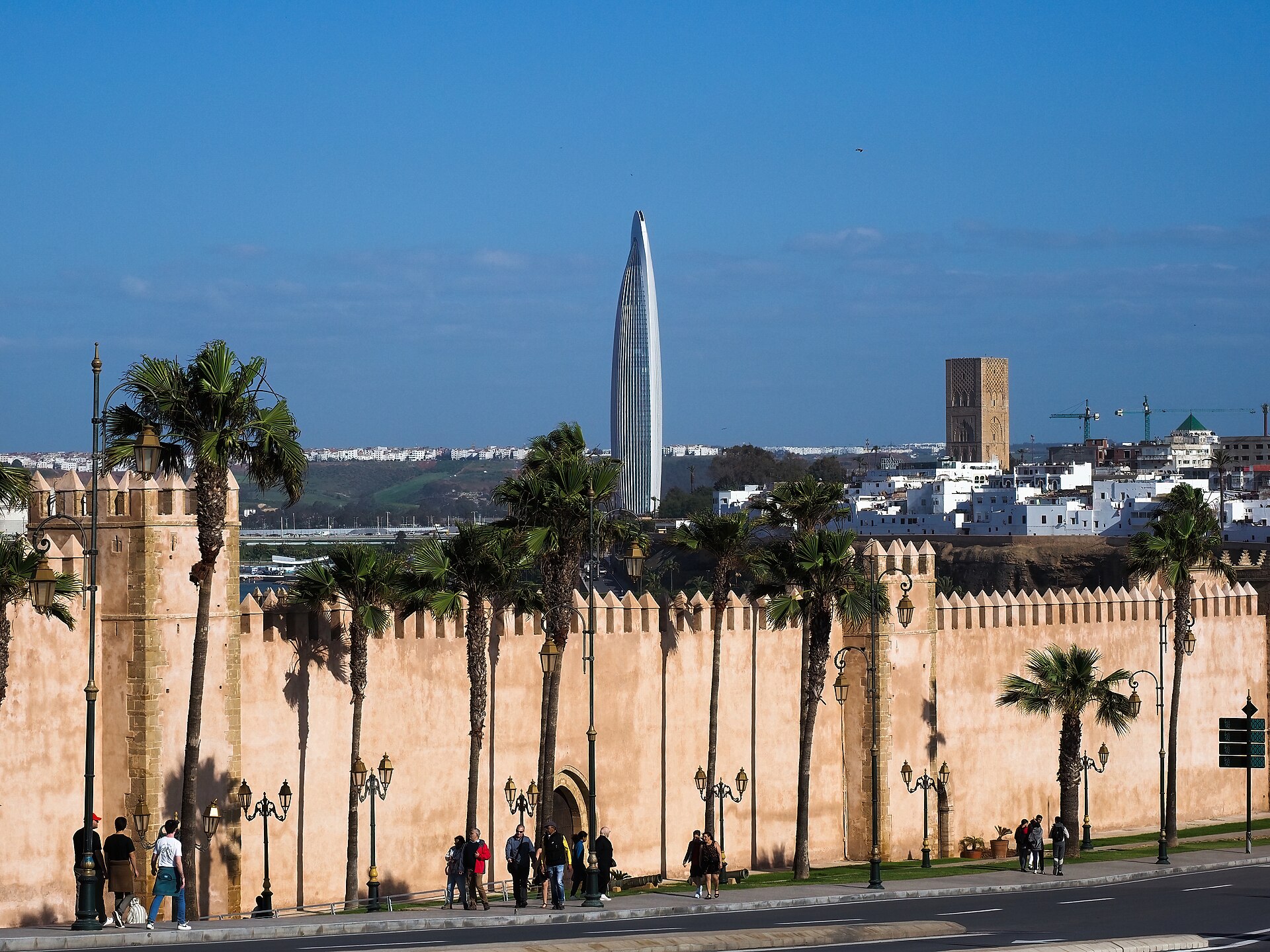
The walls of the Kasbah of the Udayas and the Mohammed VI Tower in Rabat (file photo). Photo: Petar Milošević / Wikimedia Commons, CC BY-SA 4.0 (source).