School enrolment in Nigeria’s northeastern Borno State has nearly doubled since the 2017-2018 academic year, according to state government figures reported on Tuesday, November 24, as the region rebuilds an education system devastated by more than a decade of Boko Haram violence.
Public and private schools in the state enrolled 1,418,279 learners in 2025, up from 766,551 in the 2017-2018 session, the Borno state government said. Officials nevertheless estimate that almost 800,000 children remain out of school.
Rebuilding After the Conflict
Boko Haram’s armed campaign, which began in 2009, forced the closure of schools across the northeast and displaced large numbers of families. Some institutions shut during the violence, such as the Higher Islamic College in Baga in Kukawa local government area, are now resuming classes.
Governor Babagana Umara Zulum said in March that his administration had built 104 new schools and rehabilitated 2,931 classrooms and related facilities. According to the governor, the number of out-of-school children has fallen from around 2.2 million at the height of the crisis to fewer than 800,000.
Borno’s Commissioner for Education, Science, Technology and Innovation, Lawan Abba Wakilbe, said the rise reflects renewed confidence among parents, saying communities “once again trust our schools with their children’s future.”
The state is also working through its Arabic and Sangaya Education Board to bring traditional Islamic learning into a system that awards recognised qualifications.
Questions Over the Figures
The state’s annual school census, released in September, recorded 1,801,295 learners across the wider education sector, with public primary and secondary enrolment at about 1.3 million in the 2025-2026 session. These categories are not directly comparable with the 1.4 million figure, making a precise growth rate difficult to establish.
Enrolment data also do not show regular attendance, the quality of teaching, or whether children who lost years of schooling are catching up. Shortages of qualified teachers and learning materials remain a concern, and flooding has damaged classrooms in parts of the state.
In rural areas, distance, insecurity and financial pressure on households continue to keep many children away from school, and the available figures do not show how evenly progress has been shared between towns and the countryside.
Borno, which borders Niger, Chad and Cameroon, has been the epicentre of the insurgency in the Lake Chad region, where the conflict has killed tens of thousands of people and displaced millions.
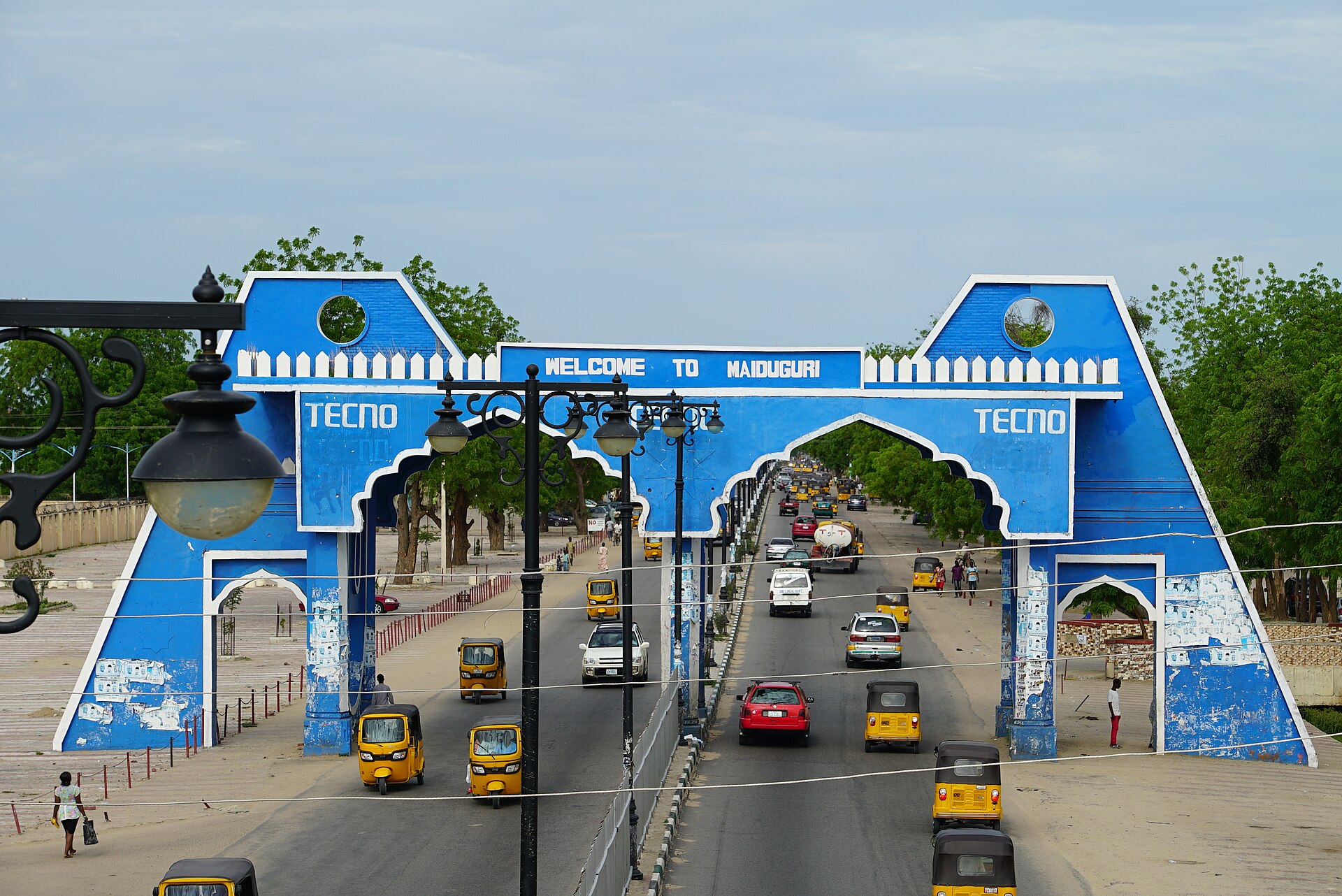
The city gate of Maiduguri, capital of Borno State, Nigeria (file photo). Photo: Ifeatu Nnaobi / Wikimedia Commons, CC BY-SA 4.0 (source).