Mohamed TAFRAOUTI
It is difficult to celebrate the rhetoric of sustainability without confronting a paradox that deserves serious reflection: how can management plans be expanded, compliance mechanisms developed and regional cooperation strengthened, while failing to take one further step towards protecting the deep sea from one of the fishing activities most damaging to its natural habitats?
The Mediterranean Sea has no delegation to negotiate on behalf of its depths, no fleet to defend its habitats and no independent seat at the decision-making table. All it has is the vulnerability of its ecosystems, a long history of depletion and a natural right to survive and regenerate.
I had hoped that Rome, as the host city of the General Fisheries Commission for the Mediterranean (GFCM), would enter the history of marine conservation as the city where wisdom prevailed over greed, environmental responsibility took precedence over short-sighted economic calculations, and Mediterranean coastal states succeeded in curbing the dominance of industrial interests over the sea’s right to live and regenerate.
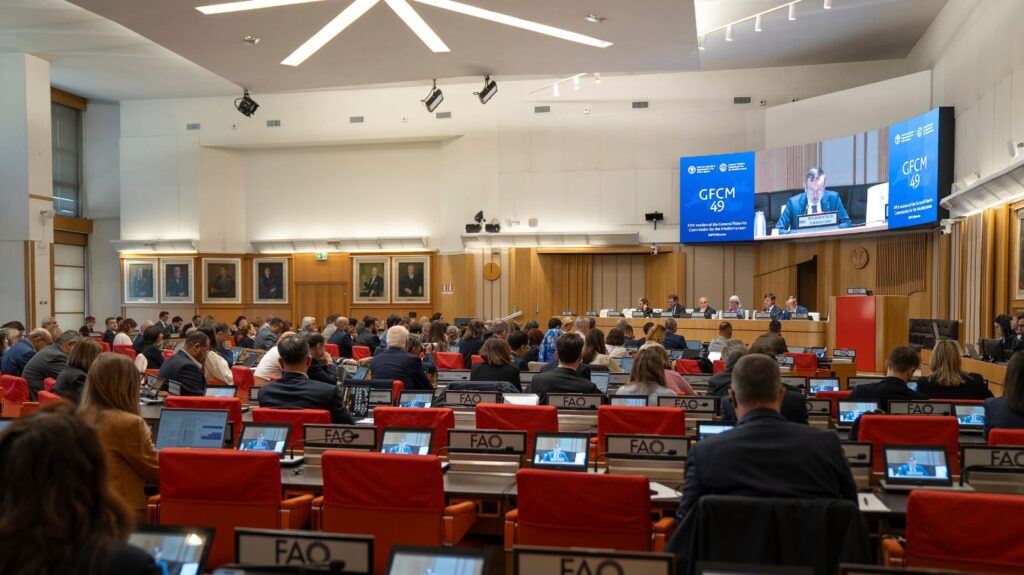
Having closely followed the proceedings of the Commission’s 49th Session, I had hoped that this meeting would deliver a historic decision, restoring the importance of science and environmental warnings, and affirming that the future of shared marine resources extends far beyond the calculations of fishing fleets and the balance of power. The expectation was that wisdom would prevail over short-term interests, and that the countries opposing the expansion of protection measures would recognise that the Mediterranean faces challenges far greater than the profit-and-loss considerations of the fisheries sector.
Yet, as the Commission’s meeting came to a close, Rome failed to write the historic chapter I had hoped for. Negotiations ended, meetings concluded, and decisions and recommendations were adopted, while one of the Mediterranean’s most important conservation challenges remained unresolved. Italy and Spain opposed the proposal to extend the ban on deep-sea bottom trawling by lowering the depth threshold from 1,000 metres to 800 metres.
An opportunity was therefore missed, one that could have made this session a genuine turning point in protecting deep-sea ecosystems.
This is a disappointment, but also a shock at the persistence of narrow-interest politics, particularly when dealing with a unique sea whose resources and risks are shared by its coastal states, even though they do not all possess equal influence over decision-making.
One Mediterranean Sea… but Unequal Political and Economic Power Dynamics
The Turkish proposal, supported by Morocco, Egypt, Lebanon and Montenegro, sought to extend the existing ban on bottom trawling in waters deeper than 1,000 metres to include the 800–1,000-metre depth range. It was a precautionary measure designed to protect deep-sea habitats, which constitute important reservoirs of biodiversity and refuges for marine species, while also helping strengthen ecosystem resilience to climate change.
Despite the importance of this proposal, Member States failed to reach a consensus. Italy and Spain opposed its adoption, even after a two-year transitional period was proposed to allow the sector to adapt to the new measure, according to information reported by environmental organisations following the negotiations.
This moment exposed the nature of the power dynamics shaping certain decisions within the Commission. While countries speak of shared responsibility and regional cooperation, the limits of that cooperation become apparent as soon as concrete resource protection measures are considered, particularly when environmental safeguards come into conflict with the interests of major industrial fishing fleets.
This is where a paradox emerges, one that deserves serious consideration: some Mediterranean countries advocate stronger protection measures on scientific and environmental grounds, while others oppose them. At the same time, the size of fishing fleets and the economic considerations of certain maritime powers appear capable of tipping the balance of negotiations.
This is not about creating a simplistic confrontation between the northern and southern Mediterranean, nor about questioning the right of each country to defend the interests of its maritime sector. The real issue concerns the fairness of regional decisions and the ability of countries with smaller industrial fleets to influence the future of a resource shared by all parties.
Is it reasonable for the protection of a shared marine ecosystem to remain dependent on the calculations of a limited number of industrial fishing fleets? Can we genuinely speak of balanced Mediterranean governance when the will to preserve natural resources carries less weight than the influence of commercial interests?
The picture almost becomes caricatural: one sea, shared resources and climate risks that spare no one, yet a conservation decision is blocked by the interests of fleets representing only part of the fishing activity in this basin. It is as though the Mediterranean must obtain the approval of every industrial vessel before it can claim its right to protection!
Maghreb Positions in Support of Deep-Sea Protection
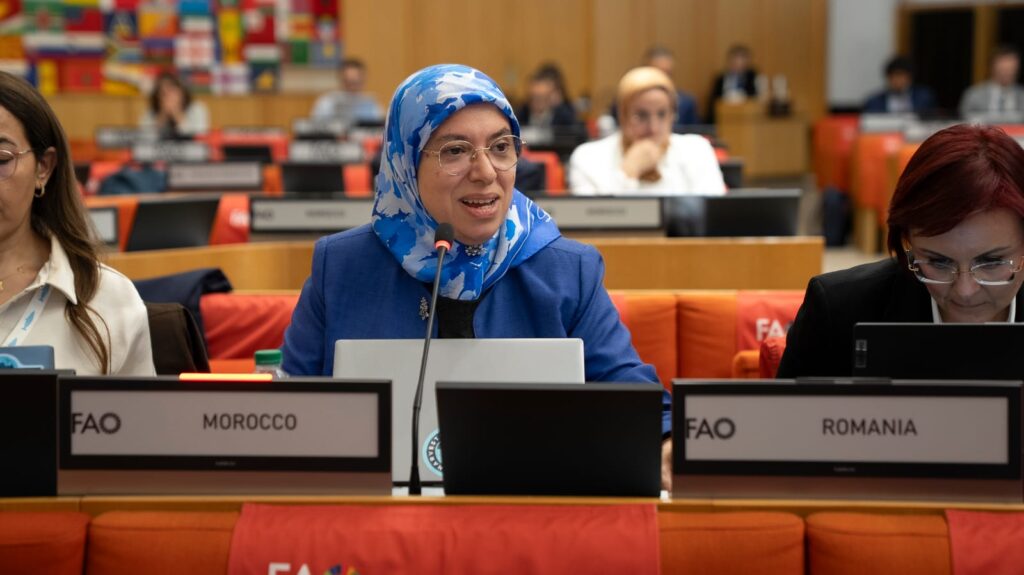
Amid these differences, Morocco, which supports extending the ban on deep-sea bottom trawling, clearly expressed its backing for the measure. The head of the Moroccan delegation, Fatima Zahra El Hassouni, explained the foundations of this position as follows:
“Morocco’s position is supported by scientific and socio-economic studies, within the framework of preserving vulnerable resources and marine ecosystems in the Mediterranean, and in accordance with the recommendations of the Convention on Biological Diversity’s post-2020 Global Biodiversity Framework.”
She further clarified that any national measure envisaged in this direction would first be subject to consultation with the relevant professionals in the maritime fisheries sector, in order to take into account the social and economic dimensions associated with fishing activities.
This position comes against a backdrop in which Morocco is also among the countries whose level of compliance with regional commitments has been recognised. The Kingdom was classified in Compliance Category I, alongside Albania, Montenegro, Türkiye and the European Union.
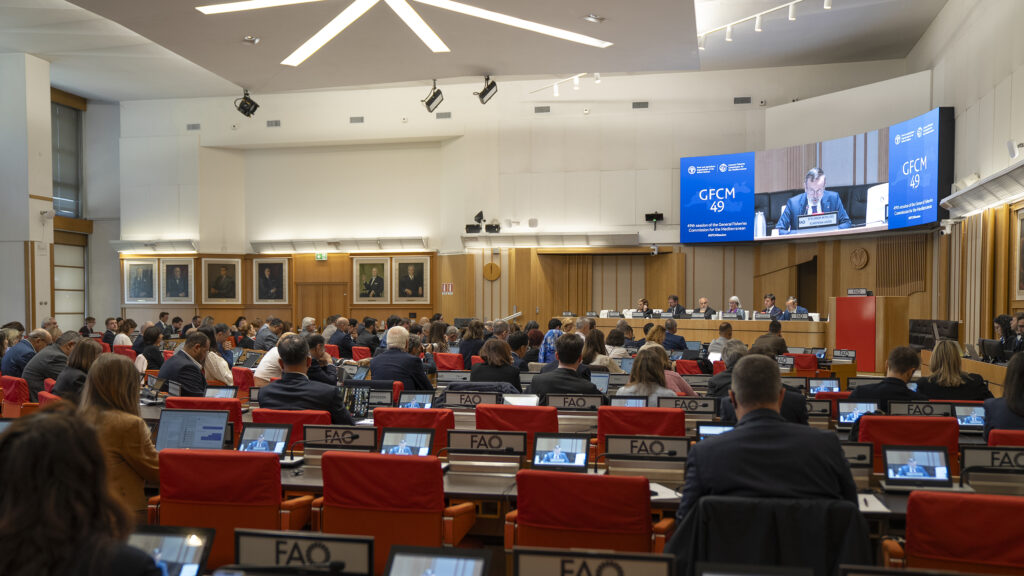
This classification reflects compliance with the recommendations adopted by the Commission, particularly regarding the submission of required data and information, as well as the obligations and procedures established by the regional organisation.
It also provides an institutional indication of Morocco’s participation in regional fisheries governance mechanisms and its commitments to the sustainable management of fishery resources.
Beyond this statement, an essential question arises: how can a commitment to strengthening marine protection be translated into concrete measures while ensuring the effective participation of fishing professionals in their design and implementation?
In the same context, Mr. Firas Elagabri, a member of the Libyan delegation attending the 49th Session of the General Fisheries Commission for the Mediterranean (GFCM) outlined, in a statement to MAROCENV, the main priorities defended by his country regarding deep-sea fisheries management and the protection of marine ecosystems.
“Regarding the proposal to prohibit bottom trawling beyond a depth of 800 metres, while some countries have requested more time to conduct studies and adopt a gradual approach to assessment, Libya supports banning fishing at these depths in order to ensure the highest possible level of protection for vulnerable marine environments and limit the negative impacts of bottom trawling, while continuing the necessary scientific studies and assessments,” he stated.
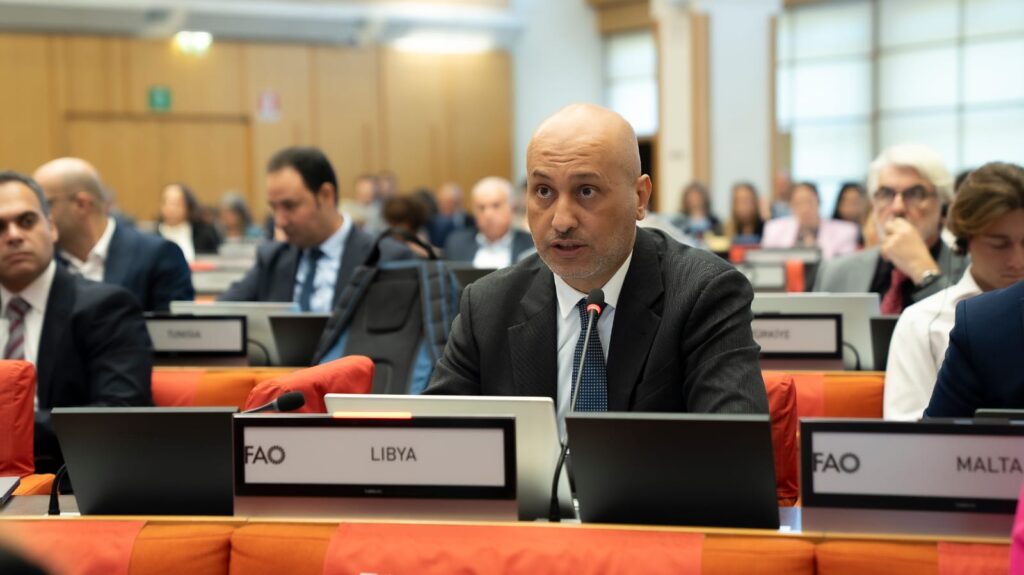
The Libyan representative also highlighted a broad range of priorities discussed under the 2026–2028 work programme. These include strengthening the monitoring of sensitive species and testing mosaic management approaches for deep-water shrimp fisheries.
Discussions also covered regular annual assessments of deep-water shrimp stocks, the integration of socio-economic indicators into evaluations of management plan effectiveness, and improvements to scientific advice intended to guide decisions towards sustainability objectives.
Other areas of work included updating regional spatial planning tools for Allocated Zones for Aquaculture (AZAs), strengthening training and capacity-building programmes, addressing budgetary matters, and improving systems for collecting and exchanging data among Member States.
The positions expressed by Morocco and Libya therefore demonstrate a degree of Maghreb convergence in favour of stronger protection for deep-sea marine ecosystems, with particular emphasis on scientific research and the consideration of socio-economic dimensions. However, this convergence was insufficient to overcome differences among countries or secure the adoption of the proposal to extend the bottom-trawling ban.
Environmental Warnings Against Another Year Without Stronger Protection
In another assessment of the session’s outcome, Esther Wozniak, Advocacy Manager at The Pew Charitable Trusts, working globally to promote sustainable fisheries, particularly within regional fisheries management organisations in the Atlantic and Mediterranean, expressed disappointment over the failure of countries to reach agreement on proposals aimed at restricting fishing activities that could threaten sensitive marine habitats.
According to Wozniak, Mediterranean fisheries, which have contributed to food security and the economies of dozens of countries for thousands of years, have paid a heavy price for overfishing and poor management. These pressures have depleted important fish stocks and degraded several local marine ecosystems.
She specifically warned that postponing decisions would delay the protection of the Mediterranean’s largest coralligenous reefs by at least another year. These are the only reefs currently continuing to expand, alongside other deep-sea habitats.
She called on Mediterranean governments to use 2027 to strengthen cooperation, prevent the same deadlocks from recurring at the next session and ensure that the necessary protection measures are adopted without further delay.
At the same time, Wozniak acknowledged progress in improving fisheries management. She welcomed the agreement on science-based management strategies for European hake in the Strait of Sicily and giant red shrimp in the Ionian Sea. These measures are expected to improve the regulation of fishing activities and guide the exploitation of these species towards more sustainable levels, while supporting the markets and economic activities associated with them.
For her part, Vera Coelho, Executive Director and Vice President of Oceana in Europe, strongly denounced the failure of the negotiations, pointing to the obstruction by Italy and Spain:
“This inability to act is shameful: Italy and Spain can hold the entire Mediterranean region hostage to the interests of a handful of industrial deep-sea trawlers, even though the economic impacts would be minimal. As the region experiences intense heatwaves, the precautionary principle should prevail to protect the essential role of deep-sea ecosystems as climate refuges. This outcome also raises concerns about the EU’s proclaimed leadership and its ability to translate its ocean conservation commitments into action.”
This setback leaves vulnerable deep-sea habitats exposed to the impacts of fishing activities, despite their importance for marine biodiversity, climate resilience and the recovery of overexploited fish stocks with high commercial value, particularly deep-water red shrimp.
In a rapidly warming Mediterranean, increasingly affected by intense marine heatwaves, the rejection of this measure is particularly concerning. This is all the more significant given that pilot studies conducted by the GFCM in the region have demonstrated that the expected socio-economic impacts of such a ban on the fishing sector would be limited.
Meanwhile, Domitilla Senni, Director of MedReAct, called on governments not to abandon this objective and to continue their efforts towards adopting the measure in 2027, adding:
“We also welcome the leadership of Türkiye, as well as that of the countries that have already introduced national bans on bottom trawling beyond 800 metres, including Egypt, Montenegro and France.”
In the same vein, Zafer Kızılkaya, President of the Mediterranean Conservation Foundation (Akdeniz Koruma Vakfı), emphasised Türkiye’s leading role in defending the measure, while expressing regret over the opposition of Italy and Spain:
“Türkiye has demonstrated that a Mediterranean country can play a leading role in protecting the deep sea, with the support of countries on both shores of the basin. It is deeply disappointing that Italy and Spain have chosen to block a measure whose costs to the fishing sector are negligible and whose benefits for biodiversity and fish stocks would be long-lasting.”
Taken together, these reactions highlight the paradox of the 49th Session: tangible progress in certain areas of fisheries management, but failure to adopt preventive measures designed to protect particularly sensitive deep-sea habitats.
This additional year of waiting therefore represents far more than a simple administrative postponement. It means another year during which these ecosystems will remain exposed to the pressures generated by fishing activities.
Deep-Sea Habitats: The Ecological Cost of a Postponed Decision
What makes this outcome even more concerning is that the Mediterranean is undergoing rapid climate transformations, experiencing increasingly intense marine heatwaves and facing cumulative pressures on its resources and fish stocks.
In this context, protecting deep-sea habitats becomes even more important, given their vulnerability and the slow recovery of many of their biological components following disturbance or destruction.
Furthermore, the proposal to extend the ban is not based on abstract considerations. The Commission has scientific studies and data on the management of deep-sea fisheries. Environmental organisations supporting the proposal, for their part, emphasise that the expected economic consequences of the measure would be limited compared with the anticipated environmental benefits.
The question therefore extends beyond institutional negotiations: what leads certain countries to accept the risks associated with continued pressure on deep-sea habitats when the cost of transitioning towards stricter preventive measures is presented as relatively limited?
Is prevention not less costly than repairing the damage caused by ecosystem degradation and the depletion of fish stocks?
Giving priority to the environmental dimension does not mean ignoring the social and economic challenges facing maritime fisheries, nor overlooking the situation of fishers and coastal communities. It does, however, require clear limits on exploitation to ensure that immediate economic interests do not ultimately undermine the natural foundations upon which maritime activities themselves depend.
Numerous Decisions… but a Strategic Test Failed
It would be fair to acknowledge that the 49th Session was not without positive outcomes. The Commission adopted 11 binding recommendations and two decisions, bringing the total to 13 regulatory measures intended to strengthen the sustainable exploitation of major fish stocks and promote responsible aquaculture in the Mediterranean and Black Sea.
The eleven adopted recommendations cover several fisheries management measures in the Mediterranean and Black Sea.
They include extending multiannual management plans aimed at ensuring the sustainable exploitation of giant red shrimp and blue and red shrimp stocks in the Ionian Sea, the Strait of Sicily and the Levant Basin.
They also address strengthening the management of demersal fisheries in the Adriatic Sea, setting catch limits for small pelagic species in 2027, adopting technical measures for turbot fisheries in the Black Sea, and extending transitional management measures for spiny dogfish fisheries.
Other provisions concern the extension of the Bari Canyon Fisheries Restricted Area and the long-term management of spotted seabream in the Alboran Sea and common dolphinfish in the Mediterranean.
In the field of aquaculture, two resolutions were also adopted. The first establishes guidelines to improve the welfare of farmed fish in the Mediterranean and Black Sea. The second concerns the management of abandoned, lost or discarded aquaculture equipment at sea, with the aim of preventing its loss, improving recovery efforts and reducing its environmental impacts.
Among the session’s main outcomes was the transformation of several multiannual management plans covering different marine species into long-term adaptive management plans.
These include European hake in the Mediterranean, deep-water red shrimp in the Strait of Sicily, the Ionian Sea and the Levant, as well as European hake and pink shrimp in the deep waters of the Strait of Sicily.
This approach reflects an intention to move towards more flexible management, capable of adapting to changes in fish stocks and based on continuous scientific assessment.
In the Adriatic Sea, the Commission adopted a new seven-year management plan covering five demersal fish species, with the aim of consolidating the results achieved under the previous management plan.
The management plan for black corb in the Alboran Sea was also updated, with reductions in fishing quotas and permitted fishing effort for 2027 compared with 2026 levels. New quotas were also adopted for small pelagic fisheries in the Adriatic Sea.
In the Black Sea, the Commission approved technical amendments concerning turbot fishing using gillnets. These include the introduction of a new mesh size of 360 millimetres, in addition to the size already authorised, as well as the mandatory use of acoustic deterrent devices designed to alert harbour porpoises and reduce their accidental capture in fishing nets.
At the governance level, the assessment of the new compliance system, following one year of implementation, was one of the session’s main areas of focus.
This initiative forms part of broader efforts to strengthen Member States’ compliance with their fisheries management commitments.
Regional cooperation in monitoring and control was also developed, particularly through vessel monitoring systems and joint inspection programmes, alongside enhanced information exchange and the launch of the regional legal database GFCM-Lex.
This database brings together national legislation relating to fisheries and aquaculture, thereby strengthening transparency and facilitating access to the legal frameworks in force across Member States.
Attention also focused on the aquaculture sector, which now accounts for more than 45% of aquatic food production in the Mediterranean and Black Sea, according to Commission data.
In this context, countries approved guidelines on the welfare of farmed marine fish, based on scientific and technical work to which the University of Crete contributed within the framework of the Mediterranean Marine Aquaculture Reference Centre.
The Commission also adopted guidelines concerning abandoned, lost or discarded aquaculture equipment, with the aim of preventing its loss, improving reporting and recovery, encouraging reuse and recycling, and reducing environmental impacts.
These measures confirm that the session achieved tangible results in improving fisheries management, strengthening monitoring and control mechanisms, and promoting responsible aquaculture.
The transformation of several management plans into long-term adaptive frameworks also demonstrates a shift towards management more firmly grounded in scientific evidence and more responsive to changes in marine ecosystems.
Nevertheless, the growing number of decisions should not overshadow the failure recorded on a highly sensitive strategic issue.
The success of a regional institution is not measured solely by the number of recommendations it adopts, but also by its ability to take difficult decisions when natural resources face real threats and the interests of a shared ecosystem demand that short-term national calculations be set aside.

From Rome to Ankara: A New Opportunity for Mediterranean Deep-Sea Protection
Türkiye has announced its intention to resubmit the proposal to extend the ban at the Commission’s next session, expected to take place in Ankara in 2027.
This prospect offers a renewed window of hope and confirms that the struggle to protect deep-sea habitats is far from over.
The positions supporting the proposal, particularly Morocco’s, also carry significant weight in demonstrating the possibility of building a regional coalition that moves beyond traditional divisions and places marine resource protection at the forefront of shared priorities.
Responsibility, however, remains collective.
The environmental leadership expected in the Mediterranean cannot be confined to one country or a limited group of states. The European Union is also being called upon to clarify the gap between its declared commitments to ocean protection and its actual positions within regional institutions.
This is particularly important given that the European Commission initiated discussions on extending the ban in 2023 and announced its support for this approach in June 2026, before disagreements among some of its members prevented a consensus from being reached.
The Ankara session will carry additional significance, as it will coincide with the celebration of the Commission’s 75th anniversary and the preparation of a new ministerial declaration intended to define the main directions of regional cooperation for the coming period.
It will provide a genuine opportunity to assess whether countries are willing to transform sustainability rhetoric into more ambitious and explicit commitments.
I had hoped that Rome would enter history as the capital of a victory for the protection of Mediterranean deep-sea habitats. Instead, it leaves history open to another chapter in which industrial interests continue to weigh heavily on the future of the sea.
I say this with disappointment, as I had expected far more from this session than a simple administrative record of recommendations and decisions.
I had hoped it would become a moment of victory for scientific reason, for a long-term environmental vision and for political will capable of setting limits on greed and overexploitation.
I do not wish to reduce an entire session to a single decision, nor deny the progress achieved in other areas. But the protection of the Mediterranean’s deep-sea habitats deserved a more courageous position.
Rome could have become a decisive milestone in the history of Mediterranean cooperation for the conservation of marine resources.
The conference is over, but the question it leaves behind goes far beyond a disagreement over 200 metres of depth.
It concerns the model we want to adopt for managing our seas: do we want a sea whose resources are governed according to the principles of sustainability, equity and shared responsibility, or one in which conservation decisions remain subject to the balance of power imposed by major fishing fleets?
And if countries failed in Rome to agree on strengthening the protection of the Mediterranean’s depths, how much longer must the sea wait for competing interests to reach a consensus before it can simply claim its right to survive?